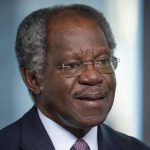


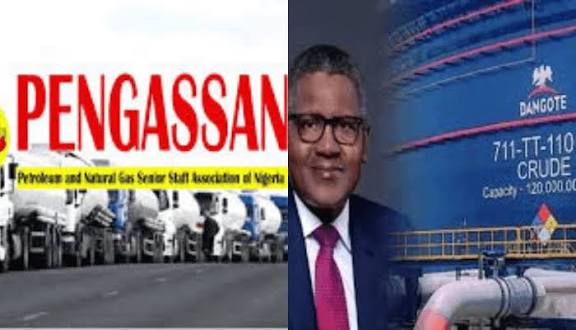
Former Nigeria Labour Congress president and current Senator, Adams Oshiomhole, has strongly criticized the Petroleum and Natural Gas Senior Staff Association of Nigeria for escalating its disagreement with the Dangote Refinery into a nationwide shutdown of oil facilities, labeling the action as hasty and unfair to other workers.
Speaking in an interview with Arise Television on Friday, Oshiomhole argued that while unions possess the right to defend their members, they must exercise this right without creating broader economic hardship.
He cautioned against the sweeping nature of the strike, stating: “I think that in seeking to protect a particular set of workers, you do not then risk the jobs of several other workers. When you are pursuing a dispute, the tools you deploy must be such that they do not undermine other people’s jobs.”
Oshiomhole noted that the oil union’s decision to shut down facilities of the Nigerian National Petroleum Company Limited (NNPC Limited) and other firms due to issues confined to the Dangote Refinery was ill-considered.
He recounted the immediate public impact of the strike, saying: “I suddenly witnessed long queues at filling stations and people came to me to ask, ‘why are we not at work today, what has happened to the oil industry?’ And the reason was that PENGASSAN had decided that NNPC be shut down, several other companies shut down, all because of a problem in one refinery.”
Drawing from his extensive experience as NLC president, Oshiomhole maintained that industrial disputes should be directed solely at the specific employer involved.
He recalled a past instance to illustrate his point, stating: “We had a big battle with Union Bank of Nigeria over their policy on married couples working together. But even when we had the capacity to shut down all the banks, we didn’t. We recognised that the alleged offence of Union Bank could not be said to apply to others.”
The Senator also advised against rushing into strikes without fully assessing their widespread implications.
He used a poignant example to highlight the unintended victims of the action, cautioning: “In pursuing war, you have to recognise that the tools you deploy must not hurt innocent people, like the tomato sellers who cannot get fuel to move their goods because there is a quarrel between one refinery and one union.”
While firmly affirming that the right to unionize is fundamental, he stressed the need for balance, asserting: “Freedom of association is not just a constitutional right, it is a God-given right. But with that freedom comes responsibility, both the employer and employee must exercise their rights in a way that is fair.”
Oshiomhole further suggested that new private sector investors, such as Dangote Refinery, should be given adequate time to stabilize their operations before facing intense labour action.
He issued a warning about the long-term consequences of hasty strikes, saying: “An employer has to exist, mature and be strong enough to guarantee good-paying jobs. If you cripple a business before it even finds its feet, you are also destroying the jobs you claim to protect.”
The Dangote Refinery, which was commissioned in May 2023 by former President Muhammadu Buhari, is Africa’s largest single-train refinery with a capacity of 650,000 barrels per day.
PENGASSAN, one of the country’s two major oil unions, had last month ordered members to shut down operations across the industry to protest perceived anti-labour activities at the refinery.
The subsequent action triggered fuel queues in several states and drew sharp criticism from government officials and industry players, who warned that it could further destabilize Nigeria’s energy supply chain.