



Crude oil prices climbed after United States President Donald Trump issued a directive for a blockade against sanctioned tankers from Venezuela.
Meanwhile, equities saw general gains on Wednesday, though United States employment figures did not significantly increase the likelihood of another interest rate reduction in the coming month.
Trading sentiment has remained quiet recently because Federal Reserve officials suggest they might not lower borrowing costs for a fourth consecutive time. This cautious mood is further influenced by anxieties regarding technology company valuations and the scale of spending on artificial intelligence.
Market participants had been waiting for the delayed non-farm payrolls data, which revealed on Tuesday that the unemployment rate hit a four-year peak of 4.6 percent in November. This specific data point supported the belief that the American labor market is experiencing a slowdown.
Despite the rise in unemployment, an October jobs drop of 105,000 exceeded forecasts but was attributed to the prolonged government shutdown, with many workers expected to return to their positions. Additionally, the job growth of 64,000 recorded in November surpassed initial estimates.
Market analysts indicated that these statistics did little to change the outlook for interest rates. Bloomberg reported that investors have only priced in roughly a 20 percent probability of a rate cut occurring next month.
“The bleed higher in the unemployment rate plays to the (Fed policy board’s) concern about the labour market, which has supported the adjustment over the past three meetings,” wrote National Australia Bank senior economist Taylor Nugent.
“But it is unlikely to be enough to push them to further near-term easing,” he added. “It would take another jump (in unemployment) next month to shift things much on a January cut.”
Investors on Wall Street mostly ignored the employment data. Many expressed concern that the two-year rally led by technology stocks might be overextended and that the massive capital funneled into artificial intelligence may not yield quick returns.
Asian markets faced difficulties early Wednesday following a decline at the start of the week, though several regional indexes managed to recover and post gains by the end of the session.
Stock markets in Tokyo, Hong Kong, Shanghai, Seoul, Manila, Bangkok, and Jakarta finished higher. Conversely, exchanges in Sydney, Singapore, Taipei, Mumbai, and Wellington experienced losses.
London stocks rose after data indicated that inflation in the United Kingdom slowed more rapidly than anticipated during November. Markets in Paris and Frankfurt also moved slightly higher.
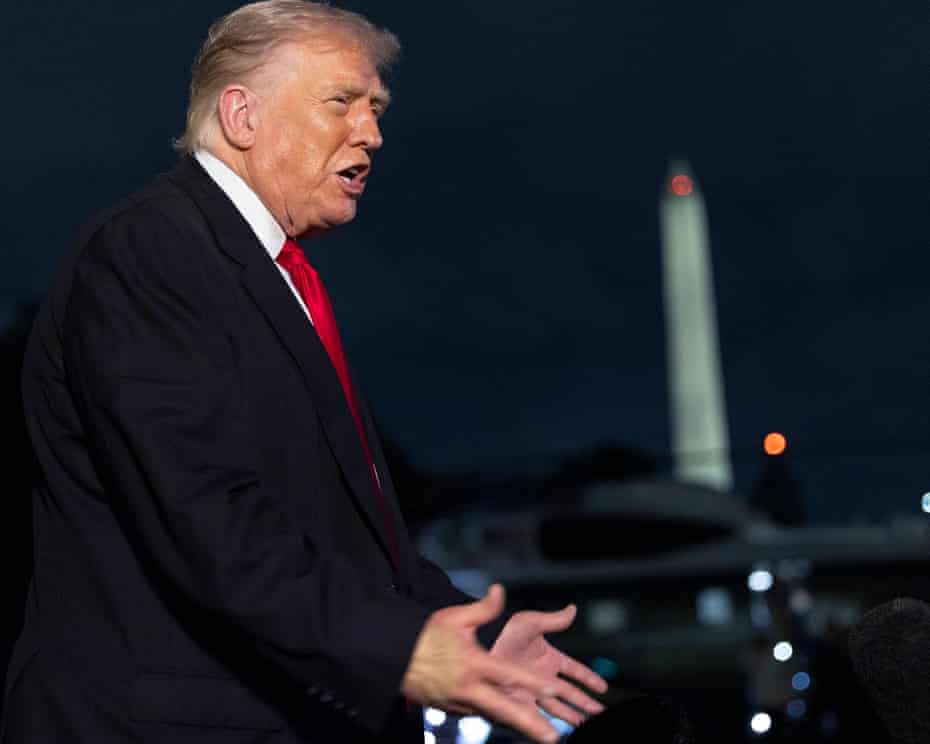
Oil prices increased by more than one percent following a post by Trump on his Truth Social platform stating he was “ordering A TOTAL AND COMPLETE BLOCKADE OF ALL SANCTIONED OIL TANKERS going into, and out of, Venezuela”.
This move represents a major escalation in the campaign against Venezuela and includes new demands for the country’s crude oil. It follows several months of military buildup in the Caribbean, which was originally justified as an effort to fight drug trafficking in Latin America.
The government in Caracas views these military operations as a strategy to remove Nicolas Maduro from power. Washington and various other nations currently consider Maduro to be an illegitimate president.
The rise in oil prices recovered some of the 2.7 percent loss seen on Tuesday. That previous drop occurred after the US president suggested that a diplomatic resolution to the conflict in Ukraine was closer than ever before.
A potential conclusion to the war in Ukraine might lead to the lifting of sanctions on Russian oil. Such a development would contribute to concerns about a global oversupply that is already impacting the market.
In currency trading, the yen gained strength against the dollar after the US jobs report. This movement comes just days before the Bank of Japan is expected to raise interest rates to a 30-year high this Friday.
The Indian rupee rose by one percent after the central bank stepped in to provide support. This intervention happened one day after the currency reached a record low against the US dollar.
The rupee has struggled significantly this year, becoming the worst-performing currency in Asia. Investors are worried about delays in a US trade deal, a current account deficit, and the outflow of foreign capital.
By the end of the day, the rupee strengthened to 89.9662 against the dollar, recovering from a low of more than 91 earlier in the session.
In the corporate sector, the Chinese semiconductor firm MetaX Integrated Circuits Shanghai saw its shares jump over 550 percent during its debut. The company raised $585.8 million through its initial public offering.
This massive gain follows a similar trend for Moore Threads, another semiconductor company that rose over 500 percent on its first day of trading earlier this month after a $1.1 billion IPO.
In Hong Kong, shares of the licensed cryptocurrency exchange HashKey dropped by about two percent on their first trading day. The company’s initial public offering had successfully raised $205 million.
Current market figures show the Nikkei 225 in Tokyo up 0.3 percent at 49,512.28 and the Hang Seng Index in Hong Kong up 0.9 percent at 25,468.78. The Shanghai Composite rose 1.2 percent to 3,870.28, while the FTSE 100 in London gained 0.8 percent to 9,759.85.
Currency values shifted with the dollar falling to 155.50 yen and the euro dropping to $1.1712. The pound fell to $1.3324, while the euro rose against the pound to 87.92 pence.
In energy commodities, West Texas Intermediate rose 1.6 percent to $56.13 per barrel and Brent North Sea Crude increased 1.5 percent to $59.81. The Dow Jones Industrial Average in New York closed down 0.6 percent at 48,114.26.

