




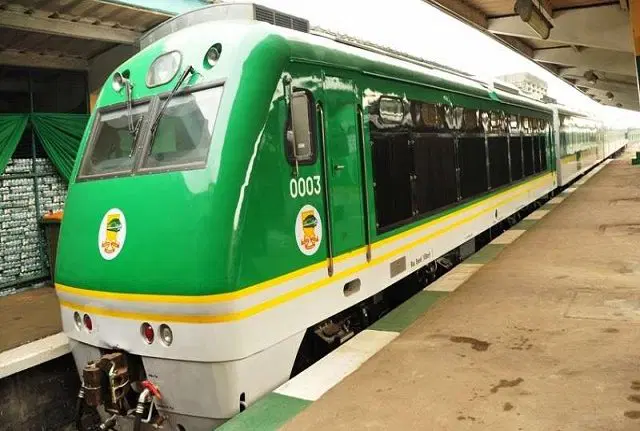
The Nigerian Railway Corporation has proposed to spend more than N10.1 billion on train acquisition and rehabilitation projects in its 2026 budget, as the Federal Government intensifies efforts to enhance rail services across the country.
Details of the proposed expenditure were contained in the 2026 budget documents published on the website of the Budget Office of the Federation.
According to the budget breakdown, the NRC received a total allocation of N34.24 billion for the 2026 fiscal year, with capital expenditure accounting for N11.65 billion of the overall sum.
From the capital allocation, N5.97 billion has been specifically earmarked for the acquisition of new trains, while N4.19 billion is designated for the rehabilitation and repair of existing railway infrastructure and assets.
Further analysis of the rehabilitation component shows that N1.95 billion is allocated for the repair of railway tracks and related infrastructure, N1.89 billion is set aside for the repair of office buildings, and N350 million is meant for the repair of roads within railway premises and corridors.
The substantial allocation to repair works reflects growing government concern over the poor condition of rail infrastructure, which has contributed to service disruptions, safety concerns and declining revenue generation.
In addition to rehabilitation efforts, the NRC has budgeted N420 million for the construction and provision of railways, signalling a modest expansion programme alongside the priority of restoring existing rail lines to optimal operational condition.
Other projects included in the 2026 capital budget are N770 million for the procurement of rail inspection vehicles, N700 million for the procurement of track materials, and N420 million for the construction of a station, platform and canopy at Kilometer 31 on the Itakpa–Aladja rail line.
Despite the significant capital investment proposals, the budget also highlights persistent structural challenges facing the NRC, with personnel costs amounting to N22.38 billion, making it the largest component of the corporation’s total allocation.
Overhead costs are pegged at N201.1 million, indicating limited financial flexibility for operational activities outside staff-related obligations.