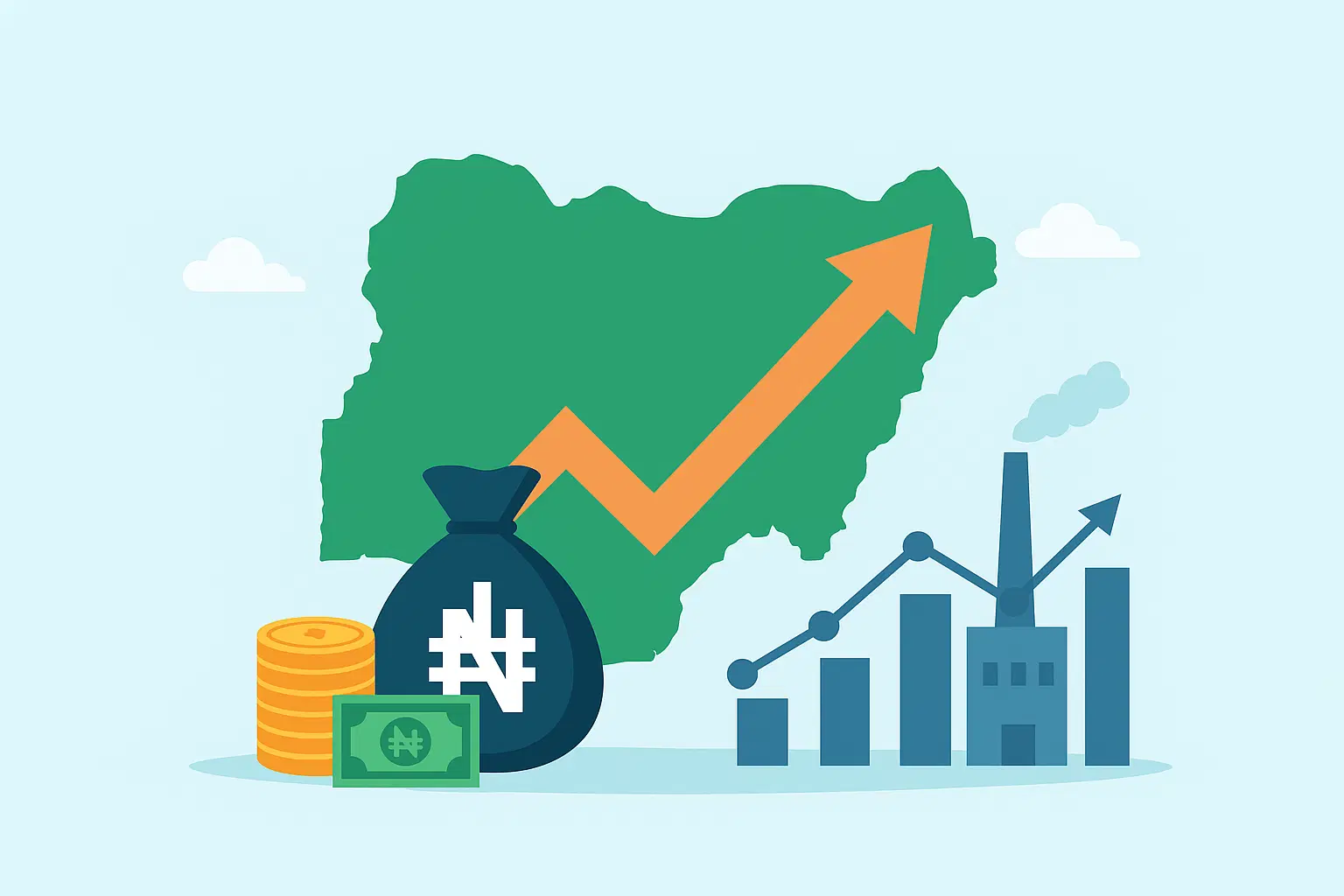


The Nigerian National Petroleum Company Limited posted a profit after tax of N502bn in November 2025, extending its profitability run even as crude oil and condensate production declined during the period.
The strong financial showing came as the state-owned energy company entered an intensifying price war in the downstream petroleum sector by cutting the pump price of petrol to below N800 per litre.
According to the NNPC Monthly Financial and Operations Report for November 2025, released on Wednesday, the company generated N4.36tn in revenue during the month, representing a marginal increase compared with October.
The report attributed the improved financial performance to stronger gas output, full pipeline availability and steady domestic fuel supply, which helped to offset challenges associated with crude oil production.
Crude oil and condensate production averaged 1.36 million barrels per day in November, recovering slightly from the 1.30mbpd recorded in October but remaining below the year’s peak of 1.77mbpd achieved earlier in 2025. The November figure marked the first rebound after three consecutive months of decline between August and October.
Gas production remained relatively resilient during the month. Output stood at 6,968 million standard cubic feet per day in November, compared with 6,997mmscf/d in October, highlighting gas as a stabilising factor in NNPC’s operations amid crude-related disruptions.
“NNPC said the N502bn profit recorded in November was driven by improved gas production, strong trading performance, and sustained infrastructure availability, despite operational challenges in some crude-producing assets,” the report stated.
The November profit represented a slight improvement on October’s performance and further consolidated the company’s strong earnings momentum in the second half of the year. Revenue for the month stood at N4.358tn, driven largely by gas sales, trading activities and improved infrastructure uptime.
Between January and October 2025, cumulative statutory payments to the Federation Account rose to N12.12tn, underscoring NNPC’s growing fiscal contribution to government revenues amid mounting pressure on public finances.
The sustained profitability was linked to the company’s post-commercialisation structure, improved cost discipline and expanding gas footprint, even as crude oil production continued to face operational setbacks and asset-specific disruptions.
Data from the report showed that crude and condensate output in November benefited from partial recovery at some assets following earlier disruptions. Production averaged 1.36mbpd, compared with 1.30mbpd in October, reflecting a month-on-month increase of about 60,000 barrels per day.
Despite the recovery, output remained below levels recorded in the first half of the year, when production averaged above 1.40mbpd between January and July. Output declined from 1.38mbpd in August to 1.37mbpd in September and 1.30mbpd in October before rebounding modestly in November.
NNPC attributed the subdued crude oil performance to ongoing repairs on the Forcados export line under OML 30, a force majeure at Egbema under OML 61, and delays in achieving first oil from the West African Exploration Project.
While recording strong earnings, NNPC also adjusted to shifting dynamics in the downstream market by lowering the pump price of Premium Motor Spirit below N800 per litre, responding to competitive pressures triggered by recent price cuts by the Dangote refinery.
The development occurred about three weeks after the Dangote refinery reduced its ex-depot petrol price from N828 to N699 per litre and instructed all MRS filling stations to cut pump prices to N739 per litre from around N900 per litre.
Checks showed that NNPC, which acts as a supplier of last resort, was selling petrol at about N875 per litre two weeks earlier when MRS stations began selling at N739 per litre. A week later, the company reduced prices to between N825 and N845 per litre, depending on location.
Many NNPC filling stations in Lagos and Ogun states reportedly struggled to attract customers as motorists opted for cheaper fuel at rival outlets, prompting the company to slash pump prices below N800 per litre in order to retain patronage.
Further checks on Wednesday confirmed that some NNPC filling stations along the Lagos-Ibadan Expressway were selling petrol at N785 per litre, enabling them to compete with nearby outlets.
The Nigerian Midstream and Downstream Petroleum Regulatory Authority disclosed that NNPC was among the biggest petrol importers in November, having imported fuel to build inventory and guarantee supply during the peak demand period. However, with a landing cost of about N828 per litre, importers such as NNPC struggled to compete with Dangote’s N739 per litre pump price and were forced to sell below cost.
Following the commencement of petrol production by the Dangote refinery in September 2024, the downstream sector became fully deregulated, leading to the disappearance of fuel queues at NNPC stations that were previously caused by price differentials.
Other marketers also adjusted their prices. Heyden sold petrol at between N840 and N850 per litre, while AP filling stations sold at prices ranging from N740 to N839 per litre, depending on location. Filling stations located close to MRS outlets were observed to have cut prices to avoid losing customers.
Some Nigerians who spoke with our correspondent praised Dangote for what they described as a Christmas gift and urged him to further reduce petrol prices in the new year, recalling his earlier pledge to enforce the new pricing regime.
“We are going to use whatever resources we have to make sure that we crash the price down. For this December and January, we don’t want people to sell petrol for more than N740 nationwide. Those who want to keep the price high to sabotage the government, we will fight as much as we can to make sure that these prices are down,” Aliko Dangote said.
Commenting on the price competition, the spokesperson of the Independent Petroleum Marketers Association of Nigeria, Chinedu Ukadike, warned that marketers who failed to reduce prices risked losing customers as bank interest charges mounted.
“We are in a situation where competition can be determined by price. Patronage will be determined by pricing. Nobody is against you; nobody is regulating you. You will regulate yourself. The market will regulate itself. The time has gone when people were queuing at NNPC filling stations. Wherever the fuel is cheap, that is where the marketers go. So, we are in a price war. Demand and supply determine the price,” Ukadike said.
The Group Chief Executive Officer of NNPC, Bayo Ojulari, assured Nigerians that the ongoing price competition in the downstream petroleum sector would ultimately benefit consumers.
He described the current market tensions as a natural outcome of Nigeria’s transition from full import dependence to domestic refining, stressing that NNPC no longer determines petroleum product pricing or regulation under the Petroleum Industry Act.
In contrast to crude oil output, gas production remained relatively stable throughout 2025. November gas output of 6,968mmscf/d was broadly in line with October’s 6,997mmscf/d, following a rebound from a sharp dip to 6,284mmscf/d in September. Gas production had earlier peaked at 7,722mmscf/d in July before moderating in the third quarter.
Gas sales, reported on a two-month lag basis, stood at 4,650mmscf/d in November, slightly lower than October’s 4,713mmscf/d but significantly higher than September’s 3,443mmscf/d. This sustained performance reinforced NNPC’s strategy to deepen gas monetisation as Nigeria positions itself as a regional gas hub and shifts towards a lower-carbon energy mix.
The report also revealed that upstream pipeline availability reached 100 per cent in November, helping to stabilise production and evacuation during the period.
On the downstream side, PMS availability across NNPC Retail Limited stations stood at 61 per cent, while the company’s nationwide wetness map indicated moderate to high fuel availability across most states, easing intermittent supply concerns experienced earlier in the year.
NNPC also reported progress on major gas infrastructure projects during the month. The Ajaokuta–Kaduna–Kano gas pipeline completed mainline welding and pressure testing and remains on track for completion in 2026.
Work also advanced on the Obiafu-Obrikom-Oben gas pipeline, with geotechnical data acquisition completed at the River Niger crossing and early construction activities underway ahead of drilling.
The company said it was strengthening collaboration with its joint venture and production-sharing contract partners to complete scheduled turnaround maintenance and position assets for improved output in 2026.
Beyond core operations, the NNPC Foundation recorded notable achievements in November, winning five awards at the 2025 SERAS Sustainability Africa Awards, including Most Responsible Organisation in Africa and Best in Gender Equality.
The Foundation also disclosed that the rehabilitation of three wards at the National Orthopaedic Hospital, Igbobi, Lagos, had reached 90.1 per cent completion as of November 30.