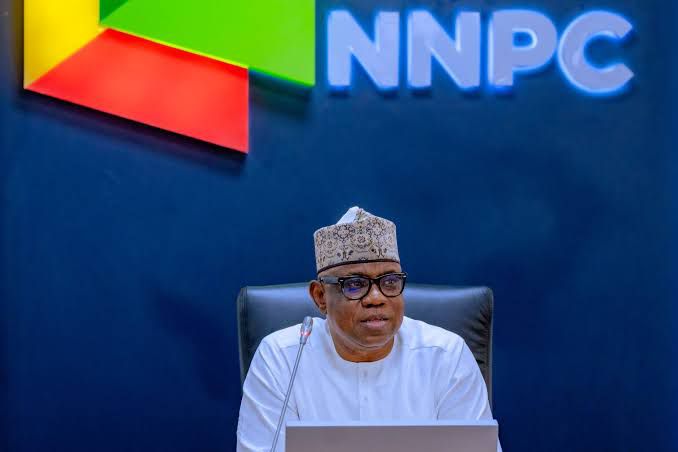





The Director-General of Nigeria’s National Information Technology Development Agency,
Kashifu Abdullahi, has called on African countries to develop their own data sets and computing infrastructure to fully leverage Artificial Intelligence.
He cautioned that reliance on foreign technologies and fragmented policies could hinder the continent’s AI progress.
Speaking at the panel “Shaping Africa’s Digital Future: Policy and Regulatory Frameworks for Accelerated Growth” during Hyperscalers Convergence Africa 2025 in Lagos, Abdullahi noted that AI has the potential to be even more transformative for Africa than the mobile revolution that reshaped telecommunications and payments across the continent two decades ago.
“The question is how can we harness it? One of the big challenges we are having in Africa is policy fragmentation and uncertainty. That’s why most of the big tech companies are not willing to come and invest and build in Africa. But do we have to wait for them? Can’t we build it ourselves?” he said.
He noted that Africa’s minimal legacy infrastructure offers a unique opportunity to leapfrog straight to AI-driven solutions designed for local contexts.
“We need to build-up our own data. The AI we are building should use our datasets – not data from other regions, and we need to have computing power that can help us achieve that,” he added.
The NITDA DG drew a parallel with Africa’s mobile-telephony leap, recalling how local innovators once proved doubters wrong by developing solar-powered networks in regions lacking electricity.
“When people doubted that Africans would buy mobile phones, pioneers built networks from the ground up. We can do the same with AI,” he noted.
Abdullahi stressed that inclusive policymaking is crucial for attracting investment and ensuring sustainability, warning that “Policy-making cannot be done by officials in isolation using abstract theories. We must engage industry players, innovators, and civil society, or the policy will simply end up on a shelf.”
He noted that Nigeria’s National AI Strategy was developed using this collaborative approach, involving local experts and practitioners to create practical, globally competitive frameworks.
He said Nigeria’s National AI Strategy exemplifies this collaborative approach, engaging local experts and practitioners to build practical, globally competitive frameworks, while stressing that as the US, China, and Europe race to dominate generative AI, chips, and large-scale computing, Africa must carve out its own path.