

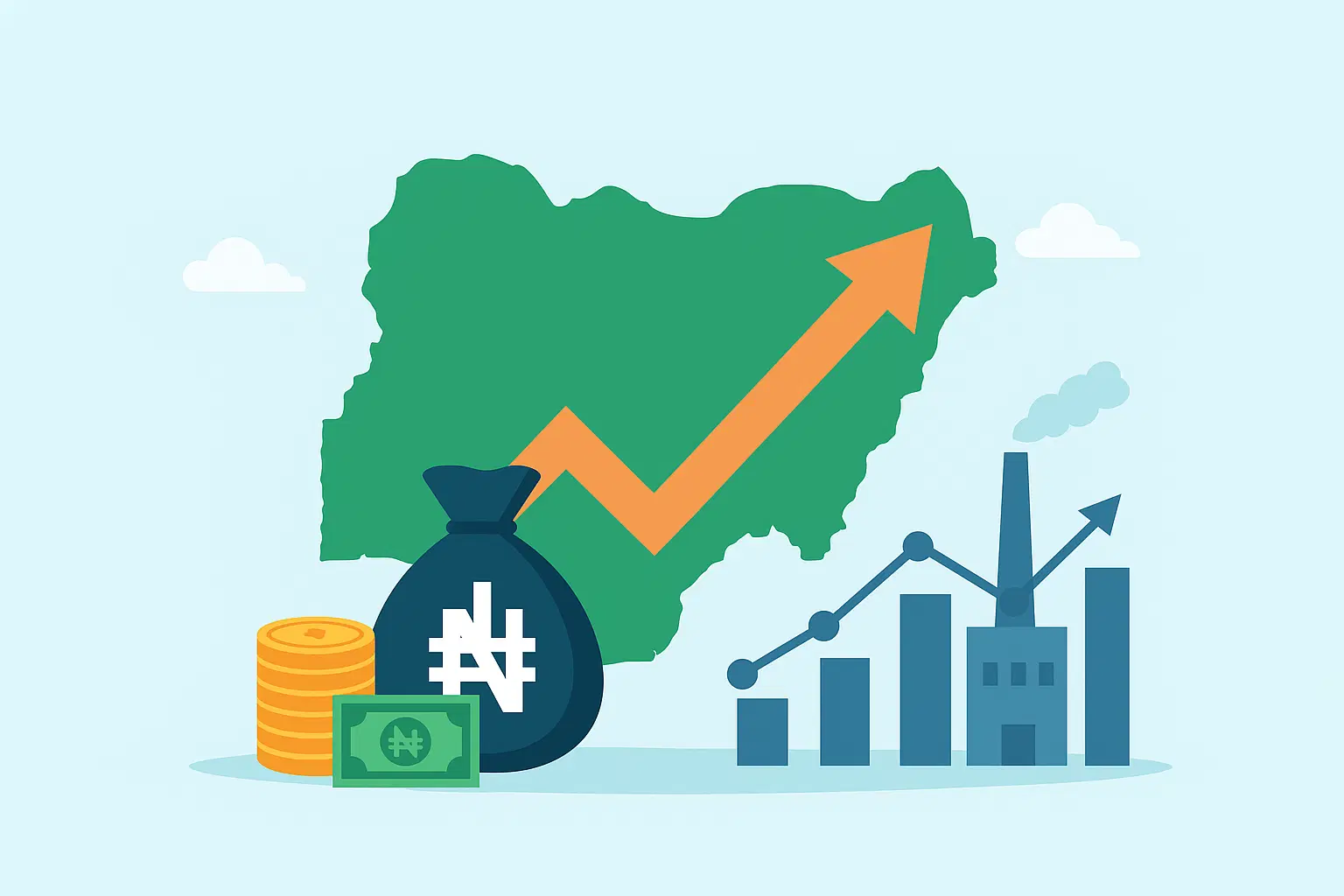
Nigeria has officially regained its status as the leading destination for energy capital in Sub-Saharan Africa, accounting for 38 per cent of all major energy project sanctions across the continent within the last 24 months.
This disclosure was made on Thursday by the Special Adviser to the President on Energy, Ms Olu Verheijen, in an update shared via X, formerly Twitter. She revealed that Nigeria attracted 5.3 billion dollars in upstream capital investment in 2025 alone.
Verheijen said the surge in investment came despite an 18 per cent decline in overall upstream spending across Sub-Saharan Africa, a development she described as evidence of a decoupled growth trajectory for Nigeria’s energy sector.
She noted that recent data shows a significant improvement in investor confidence. “The report highlights a dramatic turnaround in investor confidence. Between 2015 and 2023, Nigeria managed to secure only 4% (5 billion dollars) of sanctioned African Final Investment Decisions (FIDs), accounting for just 6 out of 44 projects. Under recent reforms, that figure has leaped to 5 out of 8 projects across the continent.”
According to Verheijen, the success reflects the impact of policy reforms in the sector. “Nigeria has been able to prove that this approach works. We moved from gridlock to greenlight, and investors responded,” she stated, adding that Nigeria currently offers the most attractive gas terms on the African continent.
She identified the Shell–Sunlink HI Field, also known as OML 144, as a central example of this progress. The shallow-water non-associated gas project reached Final Investment Decision in 2025.
“This project was made commercially viable by the Non-Associated Gas (NAG) incentives introduced in 2024, providing critical feedstock for the Nigeria LNG (NLNG) project,” Verheijen said.
She added that the reform agenda was deliberately structured to balance efficiency with local participation. “Our task was to design a system that eliminates rent-seeking while preserving the true meaning of local content—empowering Nigerian talent and enabling indigenous enterprise,” she stated.
Verheijen explained that the scale of Nigeria’s recovery becomes clearer when compared with performance over the previous decade.
“Between 2015 and 2023, Nigeria struggled to remain competitive, capturing only 4% of sanctioned African FIDs with just six projects totaling 5 billion dollars in nearly nine years. However, in just the last two years (2024–2025), the country has successfully secured 38% of the continent’s major projects, attracting a massive 8 billion dollars in capital through five high-impact project sanctions.”
She further disclosed that the administration’s data-driven benchmarking approach has significantly boosted Nigeria’s global standing. “The administration’s Data-Driven benchmarking has propelled Nigeria into the top quartile of global jurisdictions for investment competitiveness. With the Bonga North and Ubeta gas developments also advancing, the presidency expects this momentum to carry into 2026.”
Concluding, Verheijen stressed the importance of sustaining reforms as Nigeria enters a new phase of upstream investment. “As Nigeria enters a new cycle of upstream investment, we must strengthen local content as a catalyst for smooth and timely project delivery. Regulators must shed legacy mindsets and act as enablers of speed, clarity, and efficiency,” she said.