
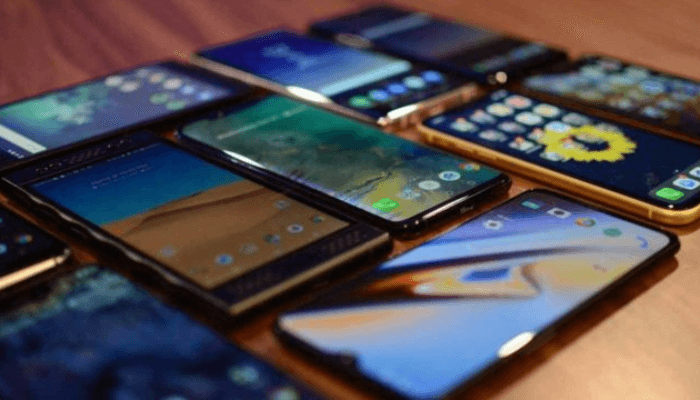
Smartphone ownership in Nigeria has climbed to 75 per cent, underscoring the growing role mobile devices play in how citizens engage with digital services across the country.
This finding emerged from the Nigeria Smartphone Study: A Nationwide Analysis of Smartphone Ownership and Digital Application Usage, a report produced by KPMG in collaboration with Orange Group Nigeria.
The study drew on responses from 13,251 participants spread across 12 major Nigerian cities and revealed that the rise in smartphone adoption is fueling greater engagement with digital applications spanning financial services, commerce, entertainment, education and transportation.
KPMG’s findings show that smartphone ownership in Nigeria climbed from 64 per cent in 2023 to 75 per cent in 2025.
The report linked this growth to several factors, including the country’s large and youthful population, improved network connectivity and the falling cost of smartphones, all of which are driving the shift away from feature phones toward internet-enabled devices.
“The country’s large, youthful and increasingly entrepreneurial population continues to drive digital adoption, innovation and technology-enabled economic activity,” the report said.
According to KPMG, smartphones have grown beyond their original role as tools for communication and convenience, now serving as key drivers of economic participation, innovation and enterprise.
The rise in smartphone ownership has occurred alongside a parallel increase in internet usage across the country.
“Smartphone ownership in Nigeria continues to grow significantly as consumers increasingly transition from feature phones to internet-enabled devices,” the report said.
Figures from the Nigerian Communications Commission (NCC), cited in the report, indicated that Nigeria recorded 157 million internet subscribers as of May 2026, with data consumption surpassing 1.5 million terabytes.
KPMG noted that these numbers illustrate the expanding scale and intensity of digital activity in the country as more consumers turn to mobile devices to access online services.
The report singled out financial services, telecommunications, commerce, entertainment, education and transportation as sectors being reshaped by the growth in smartphone and application usage.
However, despite the rise in ownership figures, the report pointed to persistent gaps in the quality and depth of digital access nationwide.
“More than a third of mobile subscribers were still on 2G as of May 2026, highlighting the continuing disparity in the depth and quality of digital access,” said Lawrence Amadi, Partner & Head, Technology, Media & Telecommunications, KPMG Africa.
The report further identified infrastructure limitations, affordability challenges, gaps in digital literacy and cybersecurity concerns as factors that could shape the pace and inclusiveness of Nigeria’s digital development going forward.
It noted that continued dependence on older network technology means that the rise in smartphone ownership alone does not eliminate other barriers standing in the way of full digital participation.
The growth in smartphone ownership comes even as Nigeria continues to grapple with both rapid growth in digital usage and a notable mobile internet usage gap.
In September, it was reported that Nigeria accounted for roughly 140 million people within the global mobile internet usage gap in 2025, according to the GSMA. This figure refers to individuals who reside within the coverage area of mobile broadband networks but do not actively use mobile internet services.
Data consumption among Nigeria’s connected population has also kept rising. In August, it was reported that Nigerians consumed a record 1.5 million terabytes of data in May 2026, while active mobile internet subscriptions rose from 154.3 million in April to 157 million that same May.