

The United Nations Children’s Fund has expressed serious concern that rapid urbanisation in Nigeria is outpacing sanitation infrastructure, worsening the practice of open defecation and exposing millions of people to preventable public health risks.
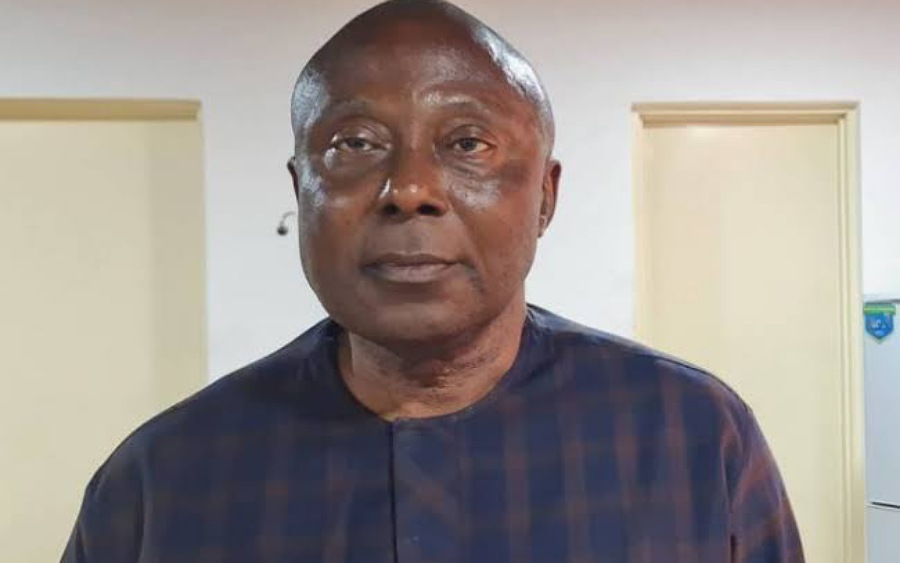
Mr. Monday Johnson, the WASH Specialist at the UNICEF Lagos Field Office, made this revelation on Thursday in Ilaji town, Ibadan, during a media dialogue focused on improving Urban Water, Sanitation, and Hygiene.
The workshop was organized by the Oyo State Ministry of Information in collaboration with UNICEF, and drew participants from the six Southwest states and Edo.
Referencing the WASH National Outcome Routine Mapping 2021, Johnson noted that Nigeria’s increasing urban population, which now accounts for over half of the total population, is expanding faster than the country’s sanitation systems can cope.
He provided specific figures, stating: “As of 2023, approximately 54.3 per cent of Nigeria’s population, which is about 123.7 million people, live in urban areas, up from 29.7 per cent in 1990.”
He stressed the rate of increase, adding that “This growth, at an annual rate of 3.51 per cent, is outpacing the expansion of sanitation infrastructure.”
He further explained the consequence, observing: “Overcrowded urban slums with limited space, inadequate containment systems, and poor access to safely managed sanitation are exacerbating open defecation and environmental health risks,” he said.
The UNICEF WASH specialist pointed out that Nigeria’s sanitation crisis mirrors a broader regional trend in West and Central Africa, which is one of the fastest-growing regions in the world.
He provided a projection for the region, stating: “Across the WCA region, urban populations are projected to grow from 52 per cent in 2023 to as high as 68 per cent by 2050,” he said.
Johnson highlighted disparities in access, stressing that while 85 per cent of Nigeria’s urban population now has access to basic drinking water, only 45 per cent enjoy safely managed water systems. He added that access to safely managed sanitation remains “critically low,” with just 25.4 per cent of urban residents covered, while over 150 million Nigerians still lack basic sanitation services.
He confirmed the persistence of the problem, saying: “Open defecation persists in many urban areas.” Access to basic hygiene services is also alarmingly low, as “less than 35 per cent of the urban population having handwashing facilities,” he said.
According to Johnson, inequality is also a major obstacle to achieving universal sanitation coverage, with marginalized groups, including women, children, and persons with disabilities, facing higher barriers to accessing safe water, sanitation, and hygiene.
He identified limited human capacity, outdated policies, and weak institutional coordination as factors that have slowed Nigeria’s progress toward the Sustainable Development Goals.
Finally, he identified the lack of an urban sanitation coordination framework as a key governance gap and called for immediate reforms to strengthen institutional and human capacity.