


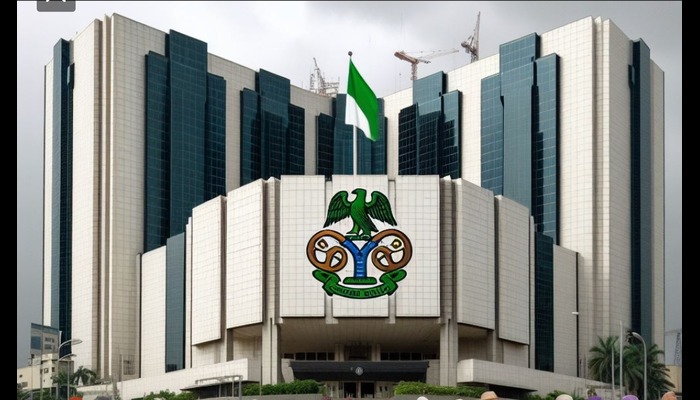
The Central Bank of Nigeria has been named Central Bank of the Year by Central Banking magazine.
This recognition is in honour of sweeping reforms that restored macroeconomic stability and investor confidence in Nigeria.
The award underscores what the magazine described as a “return to policy orthodoxy” under the leadership of CBN Governor, Olayemi Cardoso.
Cardoso’s team has led efforts to stabilise the economy after years of policy distortions and market uncertainty.
According to the magazine, Nigeria’s economy was in a precarious state before the current reforms.
It was characterised by surging inflation, a sharply weakened naira, depleted foreign exchange (FX) reserves and loss of investor confidence.
The situation was further compounded by multiple exchange rate windows, significant FX backlog estimated at $7 billion, and heavy reliance on monetary financing.
However, since assuming office in October 2023, Cardoso and his team embarked on bold reforms.
These reforms were anchored on tightening monetary policy, restoring transparency and rebuilding institutional credibility.
A key highlight of the reforms was the overhaul of the FX market.
This included the adoption of a willing-buyer, willing-seller framework and the introduction of an electronic FX matching system.
These measures helped eliminate distortions and significantly narrow the gap between official and parallel market exchange rates from over 60 per cent to less than two per cent.
The Central Banking noted that the CBN also cleared the backlog of FX obligations.
This action restored confidence among investors and businesses while boosting liquidity in the market.
In addition, the apex bank aggressively tightened monetary policy to combat inflation.
It raised interest rates sharply before cautiously easing them as inflation began to moderate.
Inflation, which peaked above 34 per cent in 2024, has since declined to about 15 per cent by early 2026.
This reflects improved policy transmission and disciplined liquidity management.
The magazine further highlighted the rebuilding of Nigeria’s external reserves.
These reserves rose to $46.7 billion by late 2025, representing the highest level in nearly seven years.
The reserves now provide over 10 months of import cover.
Beyond monetary policy, the CBN implemented far-reaching institutional and governance reforms.
These included ending quasi-fiscal interventions, strengthening regulatory oversight and enhancing transparency in policy communication.
The apex bank also introduced a bank recapitalisation programme aimed at strengthening the financial system.
Many banks have already met new capital requirements ahead of the March 2026 deadline.
Furthermore, the magazine cited improvements in Nigeria’s financial system integrity.
This includes the country’s removal from the Financial Action Task Force grey list.
It also includes positive assessments by global institutions such as the International Monetary Fund.
Despite these achievements, the magazine noted that challenges remain.
These challenges include sustaining disinflation, completing banking sector reforms and strengthening institutional capacity.
Nevertheless, it concluded that the CBN’s actions over the past two years have been “nothing short of remarkable.”
The magazine added that these actions reflect a strong commitment to restoring stability and laying the foundation for sustainable economic growth.