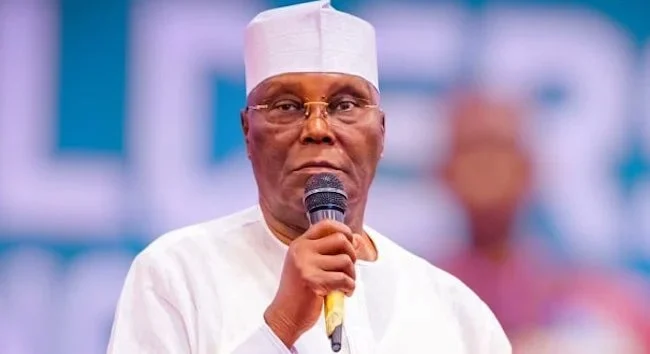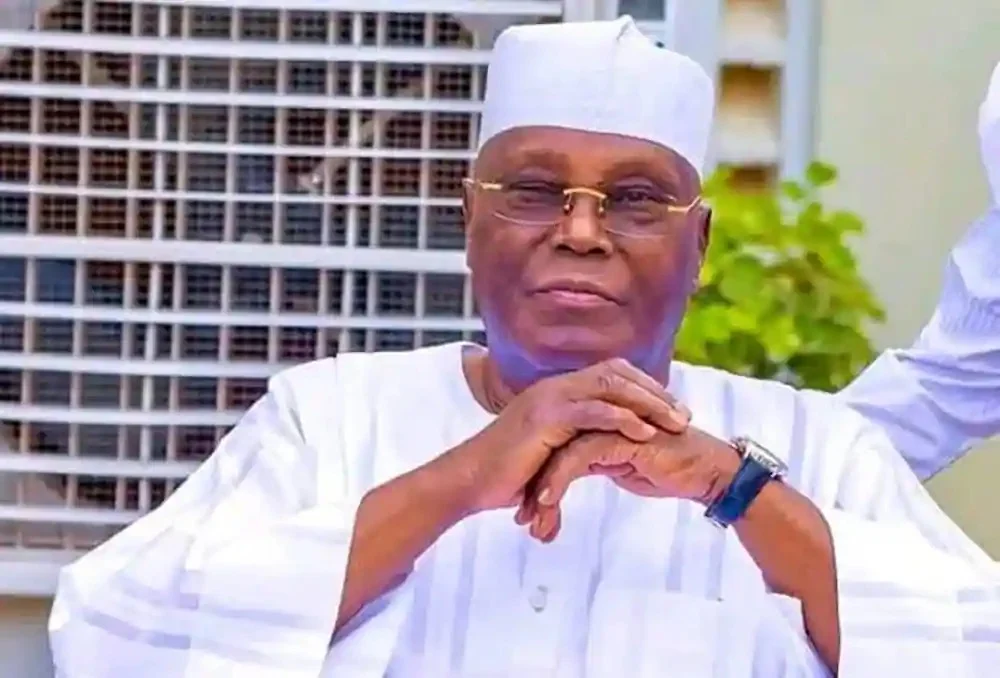

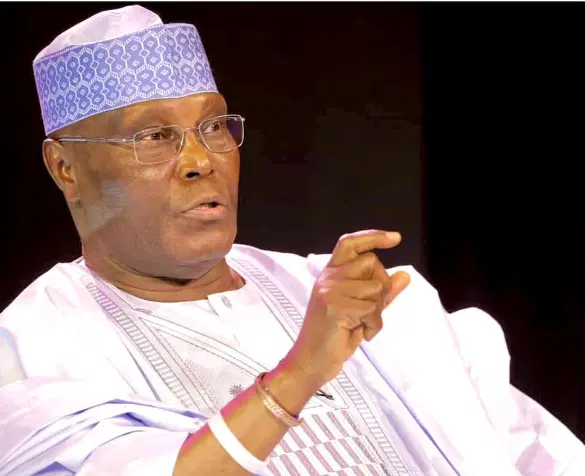
Former Vice President Atiku Abubakar has rejected the presidency’s defence of President Bola Tinubu’s economic performance, insisting that government claims of recovery are inconsistent with the realities of rising poverty, food insecurity and worsening living conditions across the country.
Responding to a State House statement defending the administration’s reforms, Atiku said no amount of official statistics could convince Nigerians that the economy was improving while millions struggled daily to survive.
In a statement on Monday by his media aide, Phrank Shaibu, the African Democratic Congress presidential candidate argued that the Tinubu-led government was celebrating macroeconomic gains without addressing the impact of its policies on ordinary citizens.
“The State House celebrates macroeconomic indicators while ordinary Nigerians struggle with microeconomic realities. It speaks glowingly about GDP growth while families skip meals. It boasts of debt ratios while businesses shut their doors,” Atiku said.
The Wazirin Adamawa cited findings from the International Monetary Fund, noting that the institution estimated 63 per cent of Nigerians now live below the national poverty line, while about 27 million people experienced food insecurity in late 2025.
According to him, the same IMF report acknowledged improvements in some reform areas but also warned that poverty remained widespread and that social protection measures needed strengthening.
“Governments are not elected to improve spreadsheets. They are elected to improve lives. Nigerians cannot eat GDP. They cannot cook with exchange-rate adjustments,” he stressed.
The ADC chieftain also faulted the presidency’s argument that critics were relying on outdated economic data, saying Nigerians continued to experience the consequences of policies introduced in 2024.
“The Tinubu administration is asking Nigerians to forget the very policies whose consequences they continue to endure every day. Economic policy is not a light switch,” he argued.
He also criticised the Federal Government’s defence of its borrowing programme, saying the real issue was not the size of public debt but whether borrowed funds had translated into improved infrastructure, jobs and living standards.
“If revenue has improved so dramatically; if subsidy has been removed; if tax collection has increased; and if debt servicing has supposedly become more manageable, why does this administration continue to borrow at record levels?” he asked.
Atiku further questioned the benefits of fuel subsidy removal, arguing that while Nigerians accepted the need for reforms, they had yet to see the promised improvements in public services.
“Government cannot ask citizens to celebrate sacrifice while the promised rewards remain invisible,” he said.
He further criticised the administration’s healthcare and education claims, arguing that projects and student loan programmes alone could not be regarded as comprehensive reforms while millions still lacked access to quality healthcare and education.
On infrastructure, Atiku said Nigerians would judge the government by completed projects that reduced the cost of doing business rather than by announcements.
He concluded that the presidency should focus less on defending its record and more on addressing the economic hardships confronting citizens.
“Governments are not judged by the elegance of their press statements or the sophistication of their economic theories. They are judged by whether families can afford food, whether businesses can survive, whether young people can find jobs, whether communities are secure, and whether citizens have hope for tomorrow,” he maintained.
The latest exchange is part of an escalating war of words between the presidency and Atiku over the Tinubu-led economic reforms.
While the Federal Government maintains that measures such as fuel subsidy removal, exchange-rate reforms and tax changes have stabilised the economy and positioned Nigeria for sustained growth, opposition figures argue that the reforms have imposed severe hardship on households and businesses without delivering corresponding improvements in living standards.