

Nigerian equities posted their strongest daily gains in recent sessions on Wednesday, buoyed by renewed investor confidence as both the leadership of the Nigerian Police and the Capital Market joined forces in a renewed crackdown against market infractions.
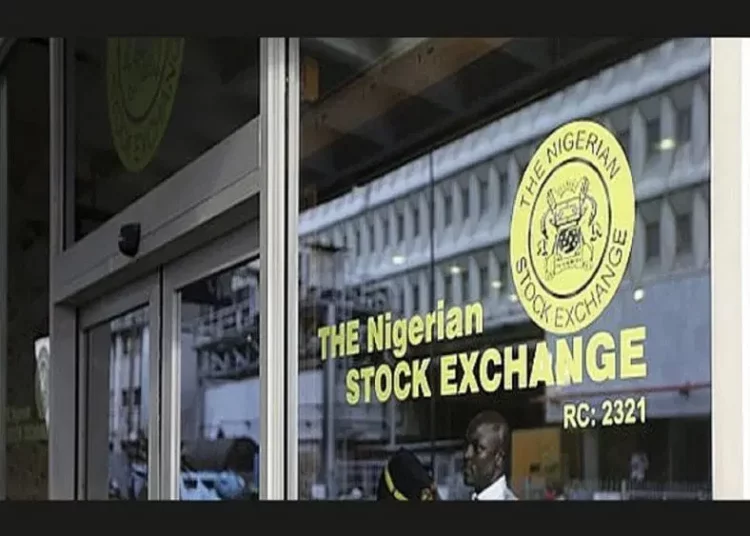
The rally followed the Inspector-General of Police, Kayode Egbetokun, leading the closing gong ceremony at the Nigerian Exchange in Lagos, an event market participants viewed as a strong institutional signal in support of market integrity and investor protection.
The upbeat sentiment translated into broad-based buying across key sectors, pushing market capitalisation sharply higher and lifting benchmark indices.
Market capitalisation rose by N1.37 trillion to N107.86 trillion, while the All-Share Index gained 2,128.61 points, or 1.28%, to close at 168,030.18, underscoring the scale of the rebound.
Speaking after the closing gong ceremony, Egbetokun said the growing partnership between the Nigeria Police Force and capital market institutions was a deliberate effort to strengthen transparency, discipline and trust within the financial system.
He noted that the engagement went beyond symbolism, highlighting the role of credible policing in safeguarding capital flows and sustaining long-term investment.
“The bell is a symbol of prosperity for investors. I want its sound to travel far beyond this trading floor to boardrooms across the world and into the homes of Nigerians investing in their future,” Egbetokun said.
“Aligning law enforcement with financial market development is critical to curbing financial misconduct, deterring market abuse and preserving the credibility of Nigeria’s capital market,” he added.
“Investor confidence is driven not only by returns, but by the assurance that markets are supported by strong institutions capable of enforcing the rule of law.”
He stressed that financial crimes, market manipulation and fraud pose systemic risks to capital markets, making close collaboration between the Police Force, regulators and market operators essential.
Regulators and market operators said the visible presence of law enforcement leadership on the trading floor sent a powerful signal to both local and foreign investors about safety and orderliness in Nigeria’s capital market.
The show of unity also coincided with strong bargain hunting that lifted stocks across banking, insurance and construction sectors.
The Director-General of the Securities and Exchange Commission (SEC), Dr. Emomotimi Agama, said the alignment between regulators and law enforcement reassures investors about market security and effective regulation.
The Group Chairman of Nigerian Exchange Group, Umaru Kwairanga, described the capital market as a key engine of economic growth and wealth creation, noting that institutional support is critical to sustaining expansion.
Heavy buying interest was recorded in banking stocks, with UBA, Zenith Bank, Fidelity Bank, Wema Bank, GTCO and Access Holdings all closing higher, boosting the NGX Banking Index.
Berger Paints Nigeria Plc topped the gainers’ chart with a 10% rise to N66.00, alongside DAAR Communications, RT Briscoe and FTN Cocoa Processors, which also advanced by 10%.
Other notable advancers included First HoldCo, ZICL Insurance, Austin Laz, Abbey Mortgage Bank and Universal Insurance, highlighting broad-based sectoral participation in the rally.
Analysts said the sharp rebound reflected a combination of bargain hunting and improved sentiment around market governance, even as monetary conditions remain tight.
They noted that the Central Bank of Nigeria’s Monetary Policy Rate currently stands at 27%, which continues to influence investor positioning.
The N1.37 trillion increase in market capitalisation marks one of the strongest single-day gains in recent sessions.
Broad-based sectoral buying suggests short-term confidence rather than a rally driven by a single stock or sector.
Despite the positive close, analysts expect near-term trading to remain mixed as investors weigh profit-taking against selective positioning in fundamentally strong equities.
They added that sustained confidence will depend on consistent enforcement of market rules, policy clarity and continued collaboration between regulators and law enforcement agencies.