Nigeria has officially assumed the highly influential chairmanship of the Intergovernmental Group of Twenty-Four, committing itself to amplifying the voices of developing nations and championing comprehensive global economic reforms focused on inclusion.
This elevation is set to formally take effect on November 1, 2025, according to a statement released on Wednesday by the Central Bank of Nigeria via its official X (formerly Twitter) handle.
The G-24, established in 1971, serves as a crucial platform that brings together developing nations to coordinate their policy positions on international monetary and development issues, thereby ensuring their collective interests are strongly represented in global economic decision-making forums.
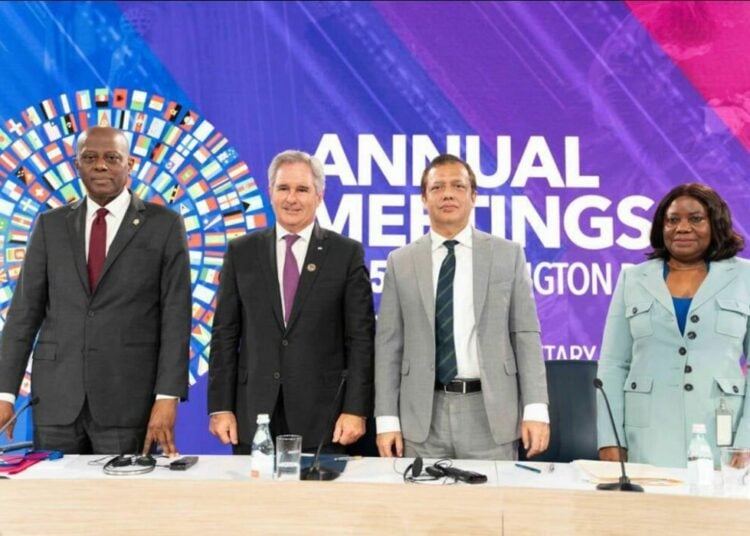
Representing Nigeria at the G-24, CBN Governor Olayemi Cardoso spoke on behalf of the Minister of Finance and Coordinating Minister of the Economy, Wale Edun, and reaffirmed Nigeria’s unwavering commitment to deepening collaboration among all member states.
Cardoso articulated the nation’s focus and priorities, stating: “Our focus will be on sustaining momentum in areas that matter most to our members.”
He further expressed optimism about the nation’s leadership role, asserting: “We look forward to working with members to advance our shared mission of inclusive growth, equity, and global stability.” He emphasized that a key priority of Nigeria’s leadership would be to strengthen the G-24’s voice as a “formidable platform for representing the common interests of emerging and developing economies.”
This new leadership role comes as Nigeria actively positions itself as a leading advocate for economic inclusion and fundamental reform within global financial governance structures.
This strategy is consistent with previous high-level engagements; for instance, in 2024, the federal government had actively called for increased investment and stronger trade partnerships among G-24 member nations.
At that time, Minister Wale Edun highlighted Nigeria’s immense potential to attract foreign investment across vital sectors, including manufacturing, agriculture, and oil and gas, underscoring its significant economic influence within the bloc.
Minister Edun had also specifically highlighted the country’s significant agricultural advantage, noting that Nigeria possesses one of the largest expanses of arable land in the world, a resource surpassed only by Brazil.
This vast agricultural potential, Edun pointed out, is a critical resource that could effectively transform the nation from a food importer into a major global food exporter, further reinforcing Nigeria’s capacity to lead discussions on development and sustainable economic growth within the G-24.