


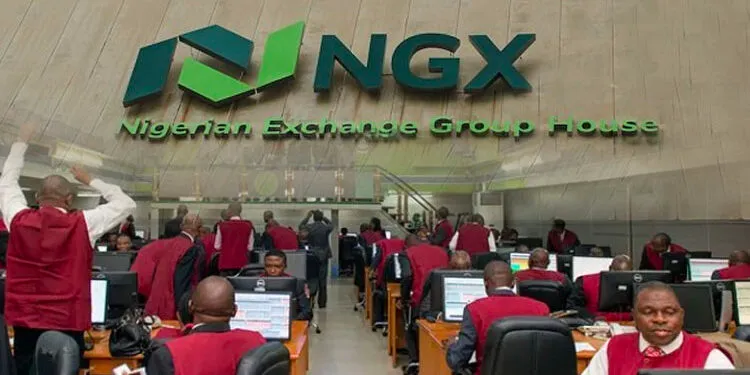
The Nigerian Exchange closed mid-January 2026 with a total capital market valuation exceeding N66.851 trillion in gains, representing a 44.3 per cent increase, and settling at N217.749 trillion.
This information comes from the latest data released by the Nigerian Exchange (NGX) Limited at the close of business on Friday, January 16.
The NGX market capitalization, which includes equities, bonds, and ETFs, rose from N150.898 trillion as of December 31, 2025, to close at N217.749 trillion on Friday, January 16, 2026, reflecting a 44.3% increase.
The increase is largely driven by equities and the Exchange Traded Funds segments, which have seen remarkable appreciation in price valuations across the various sector securities since January.
A comparative analysis of the data obtained by Nairametrics showed that the equity market segment recorded a sharp expansion, with market capitalisation rising from N99.376 trillion to N166.13 trillion.
This represents an increase of N66.75 trillion, translating to a 67.2% growth, indicating the equities segment as the main driver of overall market expansion.
The Fixed Income (Bonds) market posted a modest uptick, as capitalisation edged up from N51.476 trillion to N51.55 trillion.
The N80 billion increase reflects a 0.15% rise, indicating relative stability and subdued activity in the debt market.
Conversely, the ETFs market delivered strong momentum, with capitalisation jumping from N45.55 billion to N69.65 billion.
The N24.10 billion increase represents a robust 52.9% surge, highlighting growing investor appetite for Exchange-Traded Products.
Equity Market Cap: Up +67.2% to N166.13 trillion from N99.376 trillion (+N66.75 trillion).
Fixed Income Market Cap: Up +0.14% to N51.55 trillion from N51.476 trillion (+N80 billion).
ETFs Market Cap: Up +52.9% to N69.65 billion from N45.55 billion (+N24.10 billion).
The Nigerian Exchange operates a multi-layered market structure designed to serve different investment needs and financial instruments across Nigeria’s capital market.
At the core is the Equities Market, where shares of listed companies are traded, supporting capital raising and wealth creation.
Alongside Equities are three other main segments: Debt (Bonds), Exchange-Traded Funds, and Derivatives—each governed by distinct rules and listing requirements.
However, this analysis is centered on Equities, Debt, and ETFs.
The Debt (Fixed Income) Market provides a platform for trading Federal Government bonds, treasury bills, state government bonds and corporate debt instruments issued by major companies, making it central to government financing and corporate funding.
The NGX also runs an Exchange-Traded Funds Market, allowing investors to buy diversified investment products such as gold-backed ETFs, Shariah-compliant funds like the Lotus Halal ETF, and index-tracking ETFs linked to benchmarks such as the NGX 30 Index.
These products offer lower entry points and built-in diversification.
The Derivatives Market, where futures and options are traded help investors hedge risk and manage market volatility more efficiently.
While still developing, products such as index futures and planned commodity derivatives are designed to help investors hedge risk and manage market volatility.
Together, these segments reflect NGX’s gradual shift toward a more sophisticated, diversified, and resilient capital market ecosystem.
On December 29, 2025, Nairametrics had reported that Nigeria’s total market capitalisation surged to N149.88 trillion as of December 24—effectively pushing the market to the brink of the N150 trillion milestone for the first time in its history.
The expansion, according to our report, reflected broad-based growth across equities, bonds, and Exchange Traded Products, with a breakdown of the data showing that equities contributed N97.89 trillion, accounting for 65.31% of total market value.
The bond market added N51.55 trillion, while ETPs, though still a relatively small segment, recorded N43.20 billion in value.
About two weeks into the new year, the capital market cumulative valuation has accelerated by N66.851 trillion, closing at N217.749 trillion, paving the way to a new milestone of N300 trillion capital market, largely driven by local investors.