



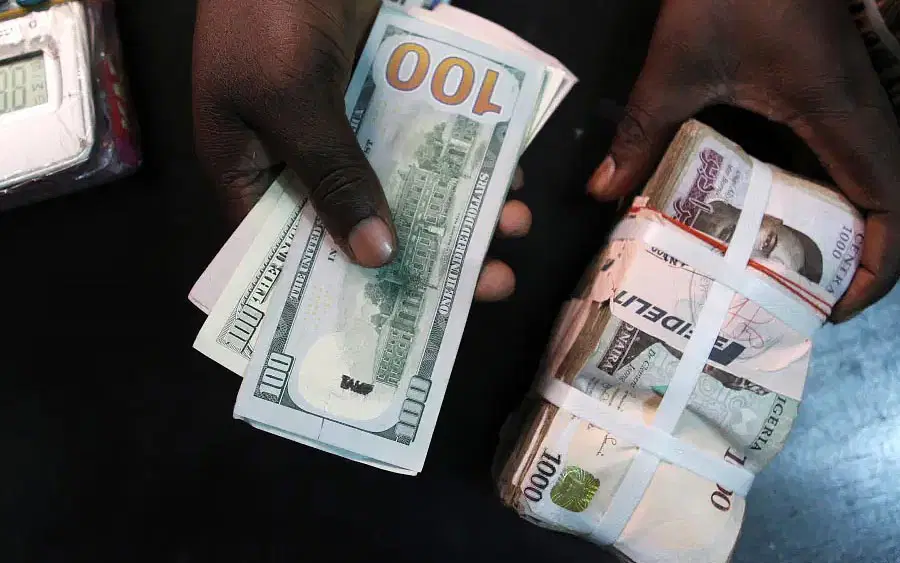
The Naira depreciated to N1,425 per dollar in the official market yesterday, marking its lowest level in two months.
This decline followed rising United States dollar demand triggered by the ongoing war in the Middle East.
Data from the Central Bank of Nigeria showed that the indicative exchange rate for the naira rose to N1,425 per dollar from N1,398 per dollar last weekend. This reflected a depreciation of N27 for the naira in a single day.
The nation’s currency had been on an appreciation trend in the official market since February 17. It reached N1,337 per dollar early last week before beginning a gradual depreciation that took it to N1,395 last weekend.
Cumulatively, the local currency lost N88 to depreciation in the last three weeks.
In the parallel market, the Naira also depreciated to N1,410 per dollar from N1,405 per dollar last Friday. As a result, the margin between the parallel and official markets widened to N15 per dollar from N7 per dollar last weekend.
Vanguard investigation revealed that the depreciation of the Naira, which aggravated in the last week, has been driven by rising demand for dollars by Foreign Portfolio Investors exiting the country. This exit responded to increased risk perception triggered by the war between the U.S./Israel and Iran.
According to a banking industry source, the Central Bank of Nigeria last week had to inject $500 million to intervene in the forex market. The intervention aimed to moderate the impact of rising dollar demands from exiting FPIs on the Naira.
Analysts at Financial Derivatives Company said, “The decline in the Naira comes amid intensified demand for the U.S. dollar driven by escalating Middle East tensions.”
Analysts at Cowry Asset Management also confirmed this development. They said: “The naira weakened across both exchange channels on Monday, reflecting heightened currency pressures across both the regulated official segment and the informal foreign exchange market.”