

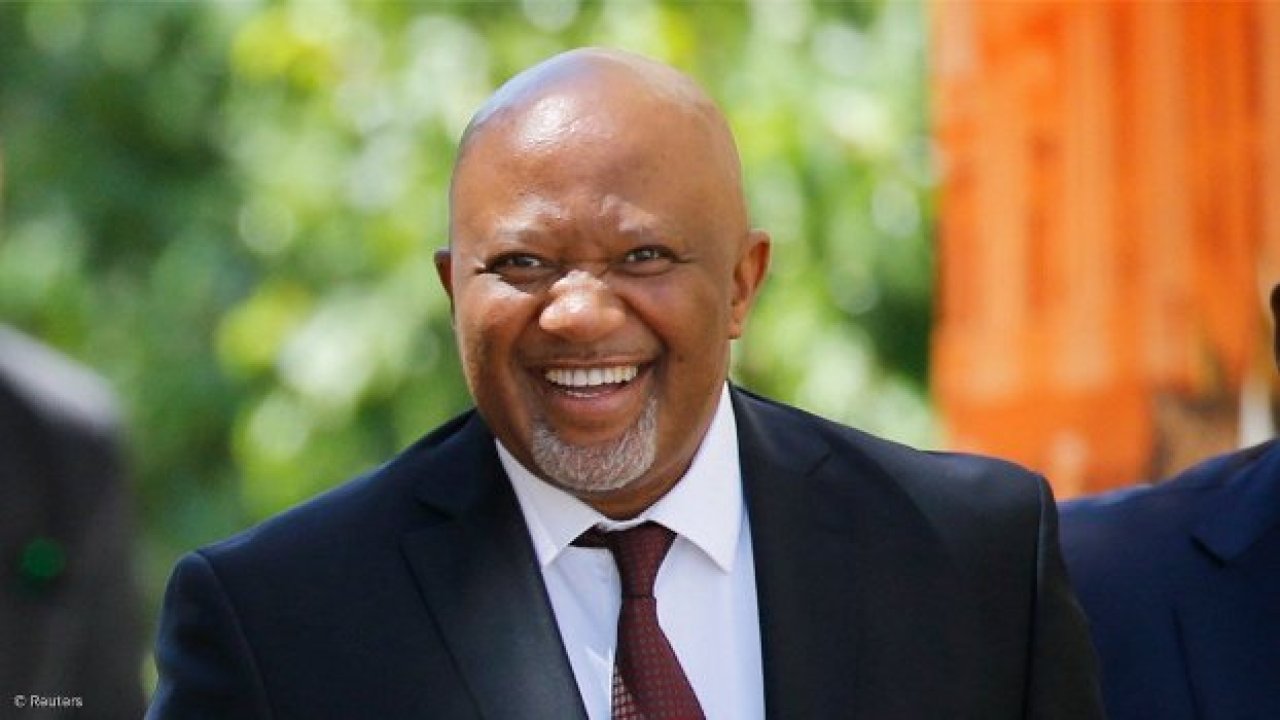
MTN Group Chairman Mcebisi Jonas has denounced the growing wave of anti-foreigner sentiment in South Africa, saying xenophobia is being driven by government failures and exploited by politicians seeking electoral advantage instead of lasting solutions.
In a statement issued by the company, MTN said Jonas made the remarks while delivering a eulogy at the funeral of Zimbabwean-born activist and public servant Thokozani Damasane in Johannesburg, where he addressed the country’s immigration challenges and the need for greater social cohesion.
The remarks come amid renewed concerns over xenophobic attacks targeting foreign nationals in South Africa, including citizens of Nigeria, Zimbabwe, Mozambique and several other African countries.
Anti-immigration groups have also intensified their campaign, issuing a June 30 ultimatum demanding that undocumented immigrants leave the country.
According to Jonas, blaming foreign nationals for South Africa’s socioeconomic challenges diverts attention from the deeper governance failures at the root of the country’s problems.
“Foreigners can leave tomorrow, inequality will be with us. Foreigners will leave tomorrow, unemployment will be with us. Foreigners will leave tomorrow, our police will remain corrupt,” he said.
He argued that many of South Africa’s difficulties are driven by weak governance, poor border management, ineffective law enforcement, and persistent failures in public service delivery, rather than the presence of immigrants.
“The problem is the failure of the state. The state doesn’t manage immigration. It doesn’t manage its borders. It doesn’t enforce law enforcement. It doesn’t manage education,” Jonas stated.
Jonas further warned that worsening economic hardship is leaving many South Africans vulnerable to politicians who exploit public frustration by blaming foreign nationals instead of tackling the country’s underlying structural challenges.
He also condemned tribalism and ethnic nationalism, describing both as divisive forces that weaken social cohesion and undermine the broader goal of African unity.
He argued that colonial rule entrenched tribal divisions through institutionalized systems, and warned that similar identity-based politics are now driving xenophobic attitudes across South African communities.
“The tribe is a product of colonial powers,” he said.
He stressed that South Africa’s long-term prosperity is inseparable from the success of the wider African continent, arguing that the country’s future depends on stronger regional cooperation and shared economic progress.
Jonas urged South Africans to reject ethnic nationalism in favour of a broader national identity and a shared commitment to African unity.
“We are a nation embedded in Africa. South Africa is nothing without Africa. And Africa is nothing without South Africa,” he said.
The remarks are particularly significant given MTN’s extensive footprint across the continent.
The telecommunications company operates in 19 markets spanning West, East and Southern Africa, making regional stability, social cohesion and cross-border cooperation critical to its long-term growth and business interests.
Jonas also emphasized that people should never be judged or discriminated against because of their nationality or place of origin.