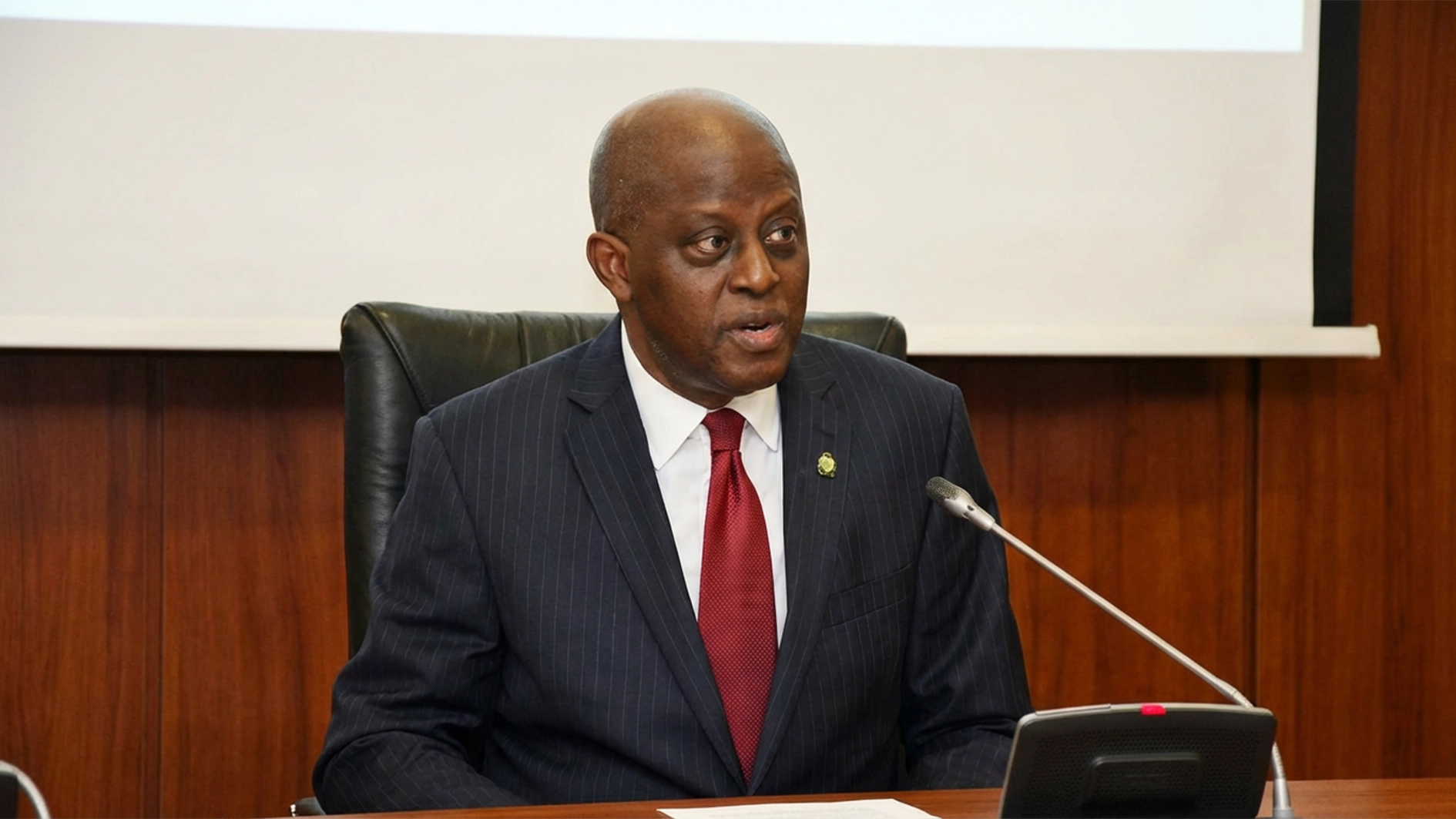


The newly appointed Minister of Housing and Urban Development, Muttaqha Darma, has pledged to embrace a collaborative leadership style to tackle Nigeria’s housing deficit and enhance affordability nationwide.
Speaking during the handover ceremony in Abuja on Monday evening, Darma said his administration would work closely with key stakeholders in the sector to deliver on its mandate.
He said, “We are going to do what I would call leadership and cooperation. So, we don’t just lead; we’ve got to seek the cooperation of others who are in this industry. And even others who are not in this industry but are important in this industry. We are going to set key indicators of performance.”
The minister further stated that his team would be guided by clearly defined, measurable targets, urging stakeholders to hold him accountable if those goals are not achieved.
“So it is we who will assess ourselves. I know there is no way we will have key performance indicators. If ever we fail, come to me and say you failed. And you will see what I will do,” stated.
Darma also underscored the magnitude of Nigeria’s housing deficit, pointing out that experts have offered differing estimates of the shortfall.
“The 14-plus million housing deficit we are talking about, I tell you, some other analysts put it at 20 million,” he noted.
He stressed closing the housing gap would demand deliberate planning, a well-defined strategy, and sustained collaboration with industry stakeholders.
“But that means that what we need is to be strategic; we need to plan very well; we need to make sure that we are focused; and we need to know where we are going. That’s why it is important for us to have that strategic meeting that I say we bring out to the industry players. You will see what we will be doing. And I’m sure you will see success as well,” the minister pointed out.
On housing affordability, Darma voiced concern over rising costs, particularly in major cities like Abuja: “The second aspect we are touching is the affordability. Some of these houses are not affordable. For example, a one-bedroom house sells in Abuja for 25 million or 30 million.”
Also speaking at the ceremony, the Minister of State for Housing and Urban Development, Yusuf Ata, said the ministry had recorded significant progress, especially through Public-Private Partnerships.
He noted that large-scale housing projects under the Renewed Hope Housing Programme had also generated substantial employment opportunities nationwide.
He said, “Large-scale housing developments across the FCT, Lagos, Kano, and other states have generated over 300,000 direct and indirect jobs, engaging professionals, artisans, suppliers, and service providers across the value chain.”
However, he stressed that funding remains a major constraint for the sector, saying that inadequate and delayed budget releases have continued to slow down project delivery and hinder the timely provision of essential infrastructure.