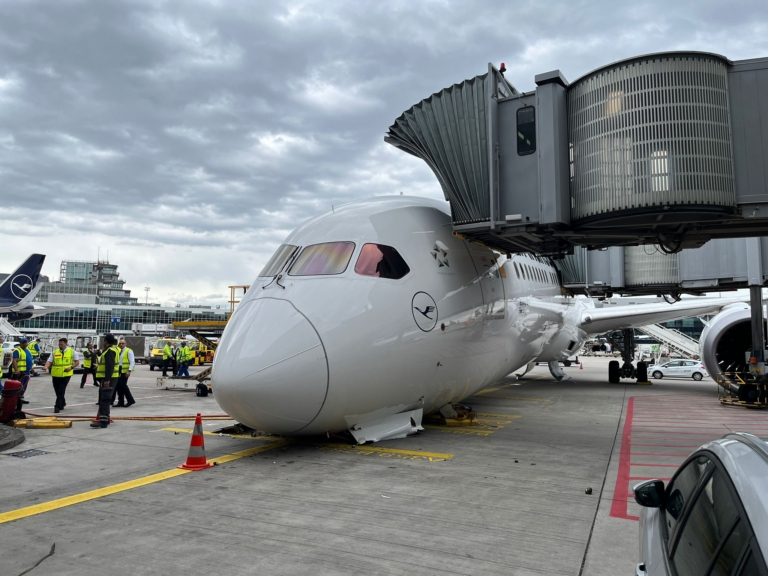


Germany’s largest airline, Lufthansa, has reported that it is facing about €1.7 billion (nearly $2 billion) in additional fuel costs, as the ongoing Middle East conflict creates what it described as “enormous challenges.”
In its first-quarter earnings released on Wednesday, the airline said it has hedged 80 per cent of its jet fuel requirements but still expects the extra costs in 2026.
Lufthansa added that it plans to cushion the impact through cost-cutting measures and higher ticket revenues.
The airline also reported a rise in profitability, with first-quarter adjusted EBIT climbing to €612 million, while revenue increased 8 per cent year-on-year to €8.7 billion ($10.2 billion), up from €8.1 billion in the same period last year.
“In the first quarter, we significantly improved on the previous year’s financial results,” Lufthansa’s CEO Carsten Spohr said. “But the ongoing crisis in the Middle East, combined with rising fuel costs and operational constraints, poses enormous challenges for the world as a whole, for global air travel, and for our company as well.”
Europe is grappling with a tightening jet fuel supply amid disruption linked to the blockade of the Strait of Hormuz.
The head of the International Energy Agency, International Energy Agency chief Fatih Birol, warned last month that the continent could be only weeks away from a potential fuel shortage.
Meanwhile, jet fuel prices have surged sharply, rising 103 per cent by the end of March compared with the previous month, according to data from the International Air Transport Association, underscoring growing pressure on airlines and the wider aviation sector.