




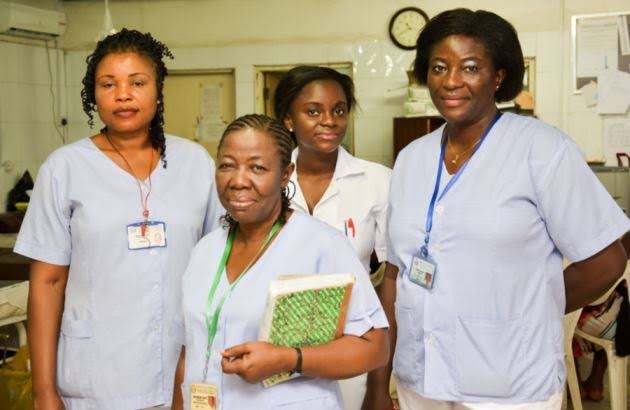
Health workers in Lagos State on Tuesday urged the government to resume talks to end a strike entering its third month, citing ongoing disputes over pay, professional recognition, and authority within Nigeria’s public health system.
The Joint Health Sector Unions, on strike since 2 December 2025, have disrupted services in public hospitals across the nation’s commercial center.
Union leaders describe the strike as the result of long-standing grievances and stalled negotiations with state authorities, highlighting deeper issues of fairness and morale in a workforce already stretched by staff shortages and growing patient demand.
“The ongoing strike is anchored on legitimate and critical demands aimed at strengthening the healthcare system and ensuring fairness for all professionals within it,” the Chairman of the Lagos State chapter of JOHESU, Adelaja Tajudeen, stated at a press conference in Lagos.
JOHESU is a coalition of three major unions in Lagos State: the Medical and Health Workers Union of Nigeria, the Nigerian Union of Allied Health Professionals, and the Senior Staff Association of Universities, Teaching Hospitals, Research Institutes, and Associated Institutions.
The union is calling for full recognition and fair pay for consultant pharmacists, autonomy for medical laboratory departments, provision of staff buses to ease commuting, immediate implementation of new call and shift duty allowances, and the extension of retention allowances to all critical cadres.
Tajudeen warned that selectively paying retention allowances is discriminatory and is undermining morale, especially as many healthcare workers are leaving the public system.
“While the Federal Government has demonstrated responsiveness by agreeing to pay the January 2026 salaries earlier withheld from workers, including nurses, and has publicly assured that no victimisation will be meted out to striking workers, the Lagos State government has yet to demonstrate a similar commitment to implementing the local demands,” he said.
The union also expressed concerns about professional equity, noting that although Lagos State had previously signaled readiness to implement certain reforms, progress has reportedly been blocked by entrenched interests within parts of the medical establishment.
JOHESU emphasized that the healthcare system cannot operate effectively when some professionals are treated as second-class citizens, stressing that equity, mutual respect, and proper professional recognition are vital for an efficient health sector.
Also, the Chairman of the Lagos State branch of the Association of Medical Laboratory Scientists of Nigeria,
Kabiawu Gbolahan, appealed to the government and the public, stressing that the strike was not taken lightly and recognising the hardships patients and residents face due to service disruptions.
He called on the state government to demonstrate genuine commitment through concrete, time-bound measures, avoid intimidating or penalising workers on strike, ensure fair treatment for all healthcare professionals, and promptly implement previously agreed-upon resolutions.

