



Nigeria is facing a deepening health workforce crisis due to the ongoing mass migration of medical professionals, which is severely straining the nation’s fragile healthcare system, Minister of State for Health and Social Welfare, Iziaq Salako, has warned.
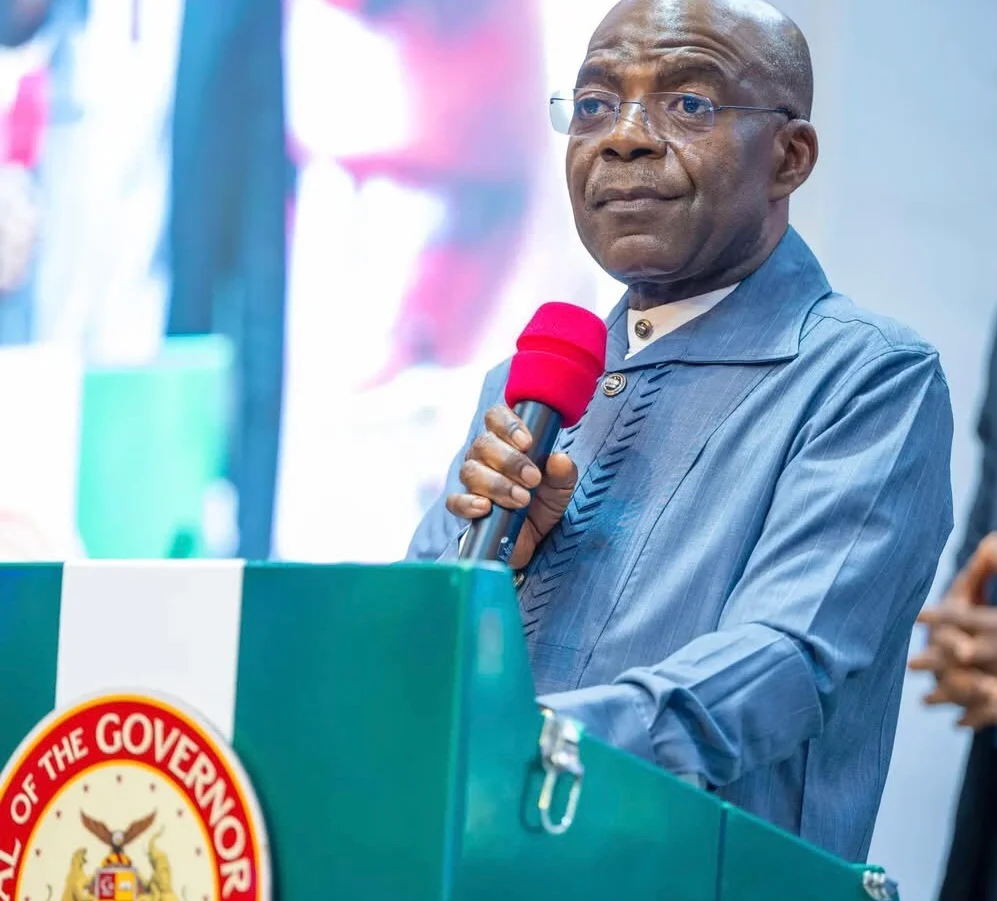
Salako sounded the alarm on Monday during his keynote address at the 2026 United Kingdom Global Health Summit, held at the Royal College of Physicians in London.
The minister highlighted that the exodus of Nigerian health workers, commonly known as “japa”, has worsened manpower shortages and intensified pressure on the country’s already overstretched health infrastructure.
In a copy of his speech obtained by our correspondent in Abuja, Salako revealed that Nigeria currently has approximately four doctors per 10,000 people, well below the World Health Organisation’s recommended minimum of 10 physicians per 10,000 population.
He stated, “The global health workforce crisis is not a future threat but a present emergency. Africa carries more than a quarter of the global disease burden but commands less than three per cent of the global health workforce.”
Salako emphasized that the crisis is especially severe in Nigeria, Africa’s most populous nation, where shortages of doctors, nurses, midwives, and other health professionals have reached critical levels.
The minister pointed out that the migration of healthcare professionals has dramatically aggravated the country’s manpower deficit.
He cited UK data showing that 13,609 Nigerian health workers migrated to the United Kingdom between 2021 and 2022, positioning Nigeria as one of the largest sources of foreign-trained medical personnel there.
Salako also referenced a 2023 survey by NOI Polls and Nigeria Health Watch, which indicated that 57 per cent of Nigerian doctors had taken concrete steps toward emigrating in pursuit of better opportunities abroad.
He noted that training each medical doctor in Nigeria involves significant public investment.
Salako said, “Every doctor who leaves Nigeria represents a substantial flight of invested public resources, often exceeding $200,000 in training costs.”
He added, “This effectively transfers resources from one of the world’s most resource-constrained health systems to wealthier nations.”
The minister framed the issue as a question of global equity requiring international collaboration.
Nigeria’s health sector has long been plagued by inadequate funding, poor infrastructure, and heavy dependence on out-of-pocket payments by patients.
As Africa’s most populous country with over 220 million people, Nigeria’s healthcare system grapples with persistent challenges such as substandard facilities, workforce shortages, and restricted access to quality care, especially in rural areas.
Experts have cautioned that continued migration of healthcare professionals risks further undermining service delivery in public hospitals.
Salako disclosed that the Federal Government under President Bola Tinubu has initiated reforms through the Nigeria Health Sector Renewal Investment Initiative to bolster the sector by coordinating health policies and funding under a single framework.
He explained that the initiative operates on the principles of “One Plan, One Budget, and One Conversation” to enhance coordination and accountability in health financing.
The minister also addressed broader global issues impacting healthcare, including economic instability, climate change, and geopolitical tensions.
He mentioned that the International Monetary Fund projects global economic growth of between 2.7 and 3.1 per cent in 2026, below pre-pandemic levels, potentially constraining government healthcare spending.
Additionally, climate change is affecting health outcomes worldwide, with the 2025 Lancet Countdown on Health and Climate Change reporting a 23 per cent rise in heat-related mortality since 1999 and extreme weather driving millions into food insecurity.
In Nigeria, environmental issues like northern desertification, southern flooding, and pollution in oil-producing areas are increasingly fueling disease outbreaks and displacement.
To tackle the manpower shortage, Salako said the government has expanded training capacity in medical schools and health institutions.
He reported a 160 per cent increase in medical school admissions between 2023 and 2025, alongside similar growth in training for nurses, pharmacists, and laboratory scientists.
Authorities are also enhancing community health worker training and implementing task-shifting policies to boost service delivery in underserved areas.
Salako stated, “We recognise that a resilient health system must rest on a broad and diverse workforce.”
The government is engaging Nigerian health professionals abroad to support the domestic sector.
He revealed that seven Nigerian healthcare diaspora associations in the UK, United States, Canada, Germany, Australia, and South Africa will conduct a coordinated medical mission in Nigeria from April to July this year.
The mission will emphasize knowledge transfer, skills development, and institutional strengthening.
Nigeria’s diaspora health professionals exceed 150,000 globally, with many holding senior roles in overseas hospitals and research institutions.
Salako described them as a “strategic asset” for bridging domestic capacity gaps.
The minister advocated for enhanced international cooperation to resolve the global health workforce crisis, including ethical recruitment and support for source countries.
He called for full implementation of the WHO Global Code of Practice on the International Recruitment of Health Personnel to promote fair and transparent practices.
Salako pushed for bilateral agreements enabling health workers to gain foreign experience while transferring skills back home.
He concluded, “No nation can solve the global health workforce crisis alone.”
Salako added, “The next pandemic or health emergency will not respect borders. Strengthening health systems in developing countries is not charity—it is global security.”