

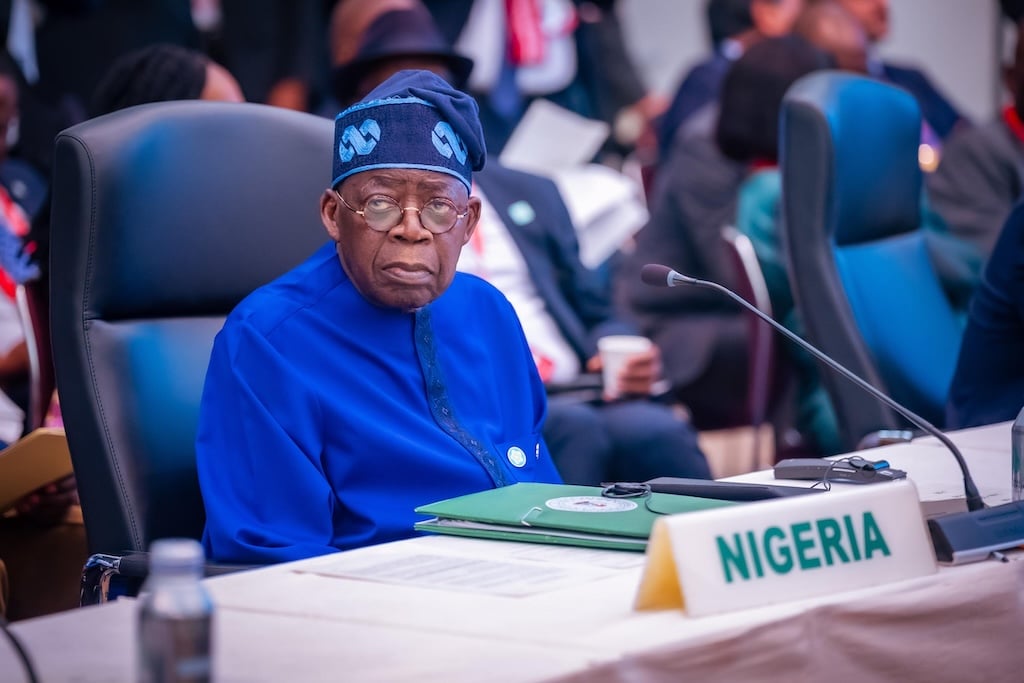
President Bola Tinubu’s Special Adviser on Economic Affairs, Dr Tope Fasua, has stated that Nigeria’s inclusion on the International Monetary Fund’s list of countries expected to contribute to global growth, along with the recent decline in food prices, clearly indicates that the administration’s economic reforms are producing positive results.
Fasua made these remarks during an interview on Arise News on Tuesday. He defended the government’s removal of fuel subsidies and the liberalisation of the foreign exchange market. He insisted that Nigeria has already passed through the most painful phase of the reforms.
“We don’t have to struggle so hard to understand that this needed to be a government of reforms,” he said.
“The reforms are paying off already, whether you look at local assessments or international validation.”
He highlighted Nigeria’s placement on the IMF’s growth outlook as one of the strongest indicators.
“Nigeria wouldn’t have made it to the IMF list of countries that will contribute to global growth in 2026 if the reforms were not working. We came in sixth, contributing about 0.15 per cent to global growth, at a time when most economies are plateaued,” Fasua said.
According to him, the figures demonstrate that Nigeria remains a key economy on the continent.
“That tells you this is an economy that is still growing. It remains one of the largest economies in Africa, whether we like it or not,” he added.
Fasua rejected suggestions that the reforms should have been implemented gradually. He argued that any delay would have worsened the country’s economic crisis.
“In matters like this, the worst thing you can do is to prevaricate or say, ‘let’s go gradually’,” he said.
“Mr President did what needed to be done with fuel subsidies and foreign exchange. The coast is clear now. The worst is over.”
He noted that recent trade and inflation data indicate the economy is recovering.
“We are coming from a negative situation. We’ve had 10 consecutive quarters of trade surpluses. Imports are down about 20 per cent. Exports are up about 40 per cent. We’re doing 25 per cent more trade within Africa than we used to do,” he stated.
Addressing public concerns about the rising cost of living, Fasua maintained that food prices have dropped significantly.
“Food prices are down. Gari prices are about 70 per cent lower. Rice prices are down 30 to 40 per cent. Beans prices have dropped,” he said.
He criticised what he called public resistance to recognising positive developments.
“We seem stuck in this mindset that things can never get better, so we keep repeating by rote that food prices are up. Let the whole world hear it: food prices are down in Nigeria,” he maintained.
He explained that the decline in food prices is also evident in inflation figures.
“Food inflation is down to about 11 per cent, and overall inflation is trending down around 15.15 per cent,” Fasua said.
“We’re heading to single-digit inflation.”
He pointed to wage increases and tax reforms as signs that disposable income is improving.
“Minimum wage rose by 130 per cent, while the naira devalued by about 50 per cent,” he said.
“Everybody that works is earning more in nominal terms.”
On taxation, he stated that the new tax laws benefit low- and middle-income earners.
“Anyone earning ₦25 million per annum and below is taking home more money,” Fasua said, adding that “about 90 to 95 per cent of Nigerians working in compliant organisations actually got more money in their January salaries.”
Fasua also cited improvements in Nigeria’s external reserves and currency stability as evidence of economic recovery.
“We’ve moved our foreign reserves from about $3.5 billion net to $46–47 billion. The naira is stable. We have international recognition for how this economy is being managed,” the presidential aide said.
He concluded by urging Nigerians to adopt a more optimistic view of the country’s economic future.