




Nigeria has just posted its strongest quarterly trade surplus on record, of ₦7.55 trillion in the first quarter of 2026.
According to the National Bureau of Statistics, Nigeria recorded this trade surplus in the first quarter of 2026 — a staggering 340.88 per cent jump from the ₦1.7 trillion surplus recorded in Q4 2025, and well above the ₦5.17 trillion posted in Q1 2025.
Total merchandise trade hit ₦34.78 trillion, with exports outpacing imports by a wide margin. Exports stood at ₦21.17 trillion (up 2.77 per cent year-on-year), while imports fell sharply to ₦13.62 trillion — an 18.2 per cent decline from Q1 2025 and a 21.1 per cent drop from Q4 2025.
Crude oil remained Nigeria’s top export, accounting for ₦11.2 trillion or 52.92 per cent of total exports. But here is where it gets interesting: non-crude oil exports contributed ₦9.97 trillion, or 47.08 per cent of the total. That means nearly half of Nigeria’s export earnings are now coming from outside oil — a significant shift for an economy long dependent on petroleum.
Other petroleum products (including refined fuels) added ₦6.8 trillion, while agricultural goods, raw materials, and solid minerals all showed growth. Raw material exports alone surged 46.83 per cent year-on-year to ₦1.53 trillion.
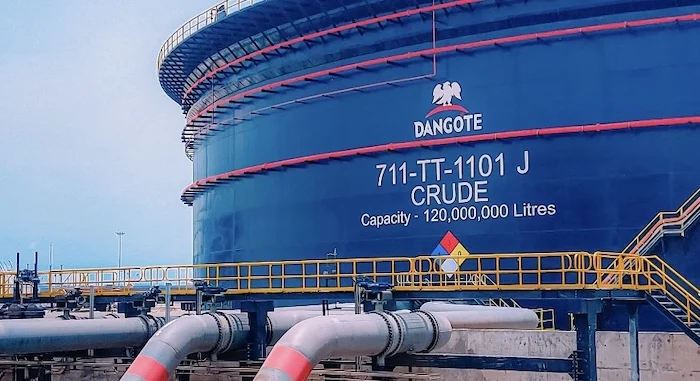
On the import side, the most dramatic change was the collapse in petroleum product imports — a direct result of the Dangote Petroleum Refinery coming online. The refinery, Africa’s largest, has slashed Nigeria’s need for imported fuel, saving billions in foreign exchange and flipping the country’s trade balance. Agricultural imports also fell 20.09 per cent compared to Q1 2025.
These details matter to the Singaporean investors because firstly, according to The Observatory of Economic Complexity, the Nigeria-Singapore Bilateral Investment Treaty is now live. Signed in 2016 but stuck in ratification limbo for nearly a decade, the treaty finally entered into force on 22 August 2025. It gives Singaporean investors legal protections — including fair treatment, protection from expropriation, free capital transfers, and access to international arbitration — that were previously unavailable.
Secondly, trade flows are recovering. In April 2026 alone, Nigeria exported SGD 232 million worth of goods to Singapore and imported just SGD 52.5 million, creating a positive trade balance of SGD 179 million in Nigeria’s favour. While full-year 2024 bilateral trade stood at 679.1 million — down from a 2021 peak of 1.28 billion — the trend is now upward, supported by the new BIT and Nigeria’s improving export capacity.
Thirdly, Singaporean companies are already on the ground and expanding. Tolaram Group, a Singapore-based conglomerate, operates the Lagos Free Zone — an 850-hectare industrial park that looks, by some accounts, like a “mini-Singapore” with its manicured lawns and palm-lined factory roads. The zone hosts global brands like Kellogg’s, Colgate-Palmolive, and BASF. In February 2025, the International Finance Corporation invested 50 million to help Tolaram expand the zone, with plans to host over 150 industries by 2035.
Valency International, another Singaporean agri-commodities firm, has also established processing facilities in the zone. These are not extractive investments — they are value-adding operations that create local jobs, transfer skills, and keep more of the production chain inside Nigeria.
Nigeria’s capital importation data for Q1 2026 adds another layer of context. Total foreign capital inflows surged 83.83 per cent to 10.37 billion, up from 5.64 billion in Q1 2025.
However, there is a caveat: the vast majority of this — 95.09 per cent or 9.86 billion — came from portfolio investment (hot money into stocks and bonds), not foreign direct investment. The Guardian reported that FDI, the kind that builds factories and creates long-term jobs, was just 135.08 million or 1.3 per cent of the total.
Worse, FDI into the manufacturing sector collapsed 50.7 per cent quarter-on-quarter to just 152.27 million.
This is where Singapore can play a unique role. While portfolio investors chase quick returns, Singaporean firms like Tolaram and Olam have demonstrated a long-term, partnership-based model that Nigeria desperately needs. The BIT now gives such investors stronger legal footing, and Nigeria’s improving trade balance suggests the macroeconomic environment is stabilising.
What Singapore Investors Should Watch
1. The Dangote Refinery IPO. Africa’s largest refinery is expected to list publicly in 2026, and its output is already reaching global markets — including Singapore. In May 2026 alone, the refinery shipped 476,099 metric tonnes of jet fuel in 10 international cargoes. Singapore’s position as Asia’s oil hub makes it a natural destination for Dangote’s refined products.
2. The Lagos Free Zone expansion. With IFC backing, according to details from the International Finance Corporation website, and Tolaram’s track record, this is becoming a gateway for Singaporean manufacturers seeking access to West Africa’s 400 million consumers.
3. Agribusiness and consumer goods. With 60 per cent of Nigeria’s arable land still uncultivated and a population of over 230 million, the opportunities in food processing, FMCG distribution, and agricultural technology are vast.
There is a fourth reason Singaporean investors should look closely at Nigeria now — the African Continental Free Trade Area. Nigeria, as Africa’s largest economy and most populous nation, sits at the heart of this historic trade agreement, which created a single market of 1.3 billion people with a combined GDP exceeding 3.4 trillion.
In June 2026, the AfCFTA Secretariat announced a major push to accelerate investment flows into Nigeria’s manufacturing and logistics sectors, recognising the country as the natural gateway to West Africa’s 400 million consumers. The Lagos Free Zone, already home to Singapore’s Tolaram, is being positioned as a pilot hub for AfCFTA-compliant manufacturing — meaning goods produced there can access 54 African markets with zero tariffs under the agreement’s rules of origin.
For Singaporean firms, this changes the investment calculus entirely. A factory in Nigeria is no longer just serving Nigeria; it is serving a continent. Singapore’s own experience as a trade hub gives its companies a natural advantage in navigating complex customs regimes and supply chain logistics — exactly the skills AfCFTA implementation demands.
Nigeria’s ₦7.55 trillion trade surplus is not just a number — it is a signal. It signals that the Dangote Refinery is working. It signals that import substitution is gaining traction. And it signals that Nigeria’s economy is becoming less dependent on foreign petroleum products and more capable of generating its own export revenues.
For Singaporean investors, the timing is fortuitous. The BIT is in force. The trade data is improving. And Singaporean companies are already proving that long-term, value-adding investment in Nigeria can work.
According to Forbes, as Haresh Aswani, CEO of Tolaram, put it when the BIT was ratified: “These agreements reinforce our long-term commitment to the region… They not only offer greater investment protection but also signal a stable and enabling environment for businesses to grow.”