


Geopolitical analysts have issued a warning that the G20 may fracture into rival blocs as diplomatic tensions between the United States and South Africa reach their highest point in years.
These concerns arose following Washington’s decision to exclude South Africa, an existing full member, from the 2026 G20 Summit, choosing instead to extend an invitation to Poland, one of its key European allies.
Relations between the two countries deteriorated significantly after U.S. President Donald Trump repeatedly accused South Africa of “genocide against White Afrikaners,” a claim which South African President Cyril Ramaphosa dismissed during a visit to the White House in May. The U.S. further escalated tensions by boycotting the 2025 G20 Summit in Pretoria, which was the first G20 meeting ever hosted on African soil.
Following its exclusion from the 2026 meeting, Pretoria stated that it is fully prepared to sit out the G20 gatherings for that year and does not anticipate diplomatic intervention from other nations.
Speaking on Nairametrics’ Drinks & Mic podcast, Cheta Nwanze, CEO and Lead Partner at SBM Intelligence, commented that the G20’s cohesion has effectively collapsed. He stated: “The cohesiveness that the G20 used to have, I think is now gone. And the G20 is going to split into various blocs over time, aligning along geopolitics,”
According to Nwanze, the world is currently drifting toward an “emerging West versus the rest situation,” where smaller historically non-aligned countries are now being pressured to pick sides. He expressed disappointment that the first G20 summit held in Africa produced no meaningful outcomes, saying: “I had hopes that, being the first G20 in Africa, we would see more concrete things for the continent. That didn’t happen. The communiqué was mal-fed… so people are going to begin to question the relevance of the G20.”
Nwanze also noted that the prolonged Russia–Ukraine war and the ongoing Israel–Palestine conflict have exposed deep inconsistencies in the actions of global powers, fueling global distrust. He summarized the situation: “We’re returning to a world where the strong do what they will and the weak support what they must. And it’s not good for business,”
Also appearing on the podcast, Arnold Dublin-Green, Chief Investment Officer at Cordros Securities, said the silence of Western nations over the U.S. boycott of the first African-hosted G20 meeting was revealing. He stated: “It is definitely the West versus BRICS,” adding that the U.S. snub represents a broader geopolitical shift. For him, the move may become a historical turning point: “This is probably something we’ll look back on and say, okay, this is when we knew things were exacerbated.”
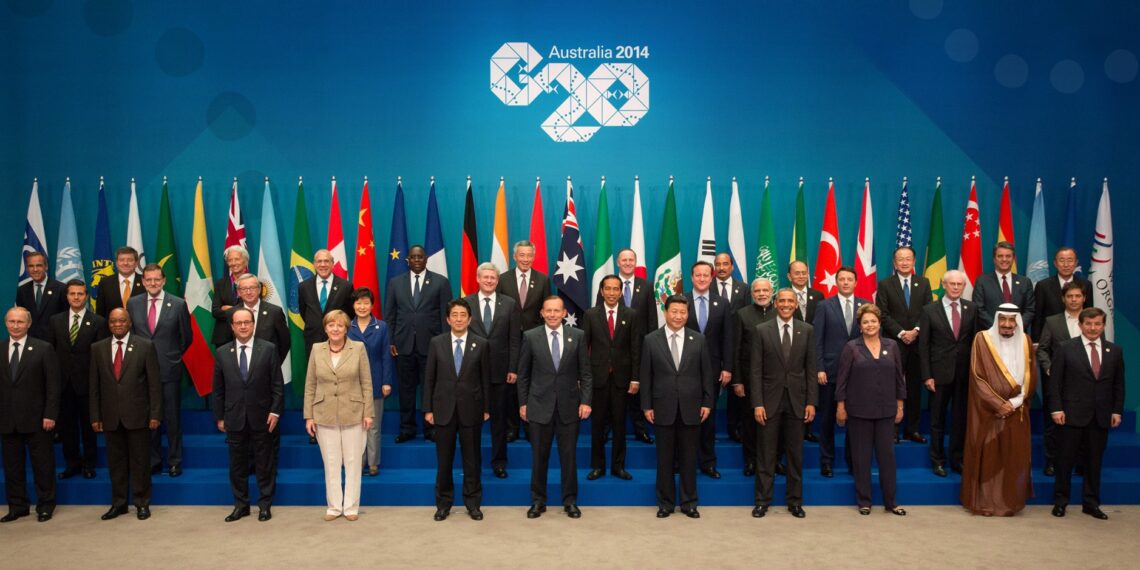
The G20 comprises the world’s largest economies, along with the European Union and African Union, collectively representing 85% of global GDP and two-thirds of the world’s population. The Trump administration has maintained a hardline stance on South Africa, having previously expelled Pretoria’s ambassador and imposed 30% trade tariffs, which South Africa is still challenging.