



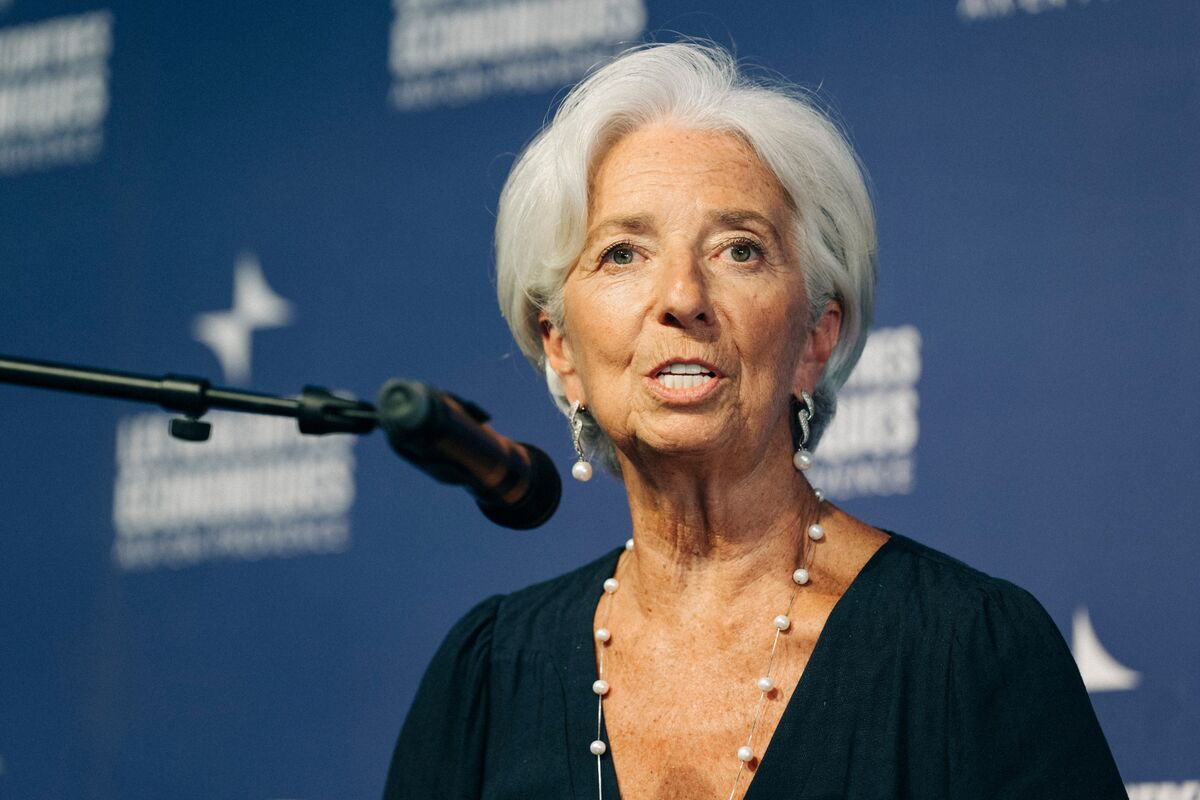
European Central Bank President Christine Lagarde said the post-pandemic influx of foreign-born workers played a crucial role in helping Europe curb inflation without derailing economic growth.
Speaking at the Federal Reserve’s Jackson Hole symposium in Wyoming on Saturday, Lagarde highlighted that higher participation and employment among foreign workers supported output across the bloc.
“In Germany, for example, GDP would be around 6% lower than in 2019 without the contribution of foreign workers,” she noted.
She added that Spain’s robust recovery after the pandemic was also largely driven by foreign labor, echoing economists’ views that immigration helped companies ramp up production to meet surging demand.
This boost in supply curbed inflationary pressures in Europe and, to a lesser extent, the U.S.
Still, Lagarde acknowledged that the economic gains from immigration have fueled political tensions in both regions, where the rise in foreign labor remains a polarizing issue.
“Migration could, in principle, play a crucial role in easing” labor shortages as native populations age, Lagarde said. But “political economy pressures may increasingly limit inflows.”
Lagarde said several labour market dynamics helped cushion the eurozone economy from the impact of higher interest rates, including falling inflation-adjusted wages, companies holding on to more staff, and a greater number of older people entering the workforce.
She emphasized that, in the past, tighter monetary policy typically slowed growth, triggered recessions, and pushed up unemployment.
“This time, despite rate increases in 2022 and 2023, that outcome was avoided,” she said.
Foreign-born workers, who represented just 9% of the EU labour force in 2022, have accounted for half of the bloc’s labour force expansion over the past three years, Lagarde noted.
She added that higher participation among older workers has also kept joblessness down — with the euro area unemployment rate at 6.3% instead of 6.6% without their contribution.