



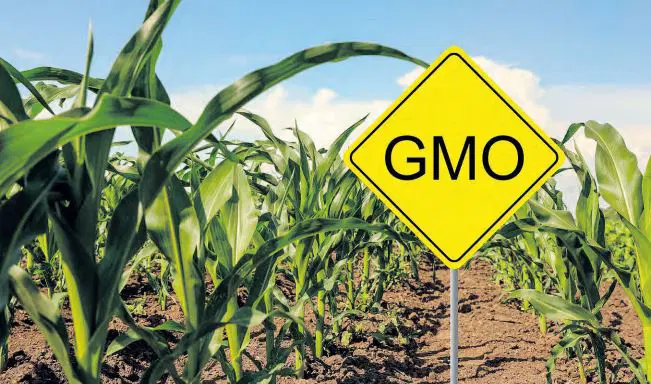
The Federal Government has urged scientists in ministries, departments, and agencies to improve their knowledge of Genetically Modified Organisms to ensure that their feedback on the subject is factual and unambiguous.
This call comes as Nigerians remain divided on the safety of GMOs.
The federal government made this statement on Thursday in Abuja at a two-day workshop where it received a fact-based briefing on the science behind GMOs.
The event was organized by the Open Forum on Agricultural Biotechnology Nigeria under the auspices of the National Biotechnology Research and Development Agency.
The workshop, which had the theme “Biotechnology and Biosafety: Building Trust through Science and Facts”, presented a platform to explore the science and regulatory framework behind GMO cultivation in Nigeria.
Mrs. Esuabana Nko-Asanye, Permanent Secretary, Federal Ministry of Innovation, Science and Technology, noted that the public often relied on government institutions for guidance on GMOs.
She emphasized the need for clarity and accuracy from public officials, saying: “We must, therefore, ensure that our knowledge base is not only accurate but also updated, enabling us to communicate facts in a clear and balanced manner.”
She further said it was crucial to embrace innovations that could help guarantee sustainable food production. However, according to her, the introduction and use of GMOs should be approached with caution, knowledge, and adherence to regulatory standards.
Prof. Abdullahi Mustapha, Director-General of NBRDA, said that trust was not granted by statements alone but earned through transparent processes, open communication, and demonstrable outcomes.
He detailed the necessity of public disclosure and transparency to build confidence, stating: “To build that trust, we must be candid about both the potential of biotechnology and the legitimate concerns that citizens and civil society raise.”
He addressed the specific concerns that require scientific responses: “Questions about gene flow, non-target effects, socio-economic impacts and seed access deserve robust, evidence-based answers. We must publish data from trials, explain the methods used in food safety assessments, and ensure that monitoring results are available to regulators, researchers, and the public.”
Mustapha concluded that it was necessary to ensure that technological progress was matched by rigorous safety assessment, clear policy, transparent oversight, and open dialogue with citizens.
He said scientific innovation in agricultural biotechnology was not an end but a tool designed to deliver measurable benefits which include, among others, greater resilience to pests and drought and reduced reliance on chemical pesticides.
Mr. Bello Bwari, Director-General, National Biosafety Management Agency, said it was normal for people to express fear and concerns about new technologies and their products. He advised Nigerians to accept the good side of GMOs, which, he said, could help improve the food situation in the country.
He assured that GMOs were properly regulated in the country through rigorous processes to ensure safety for humans and the environment.