





The Federal Government has announced new agricultural incentives aimed at generating 21 million jobs and boosting food security.
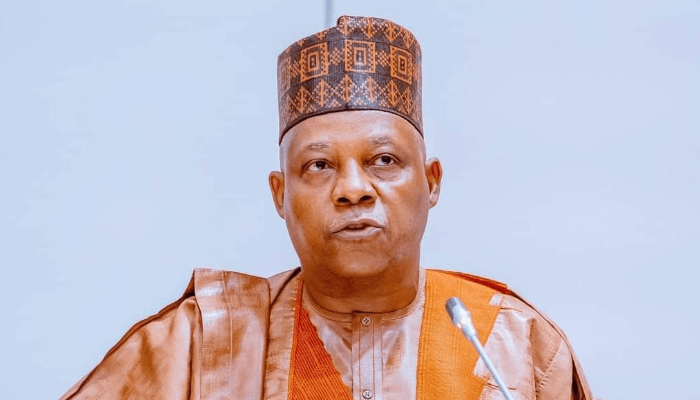
Vice President Kashim Shettima unveiled the reforms at the Food and Agriculture Organisation’s National and Subregional Hand-in-Hand Investment Forum in Abuja. According to Shettima, Nigeria can secure food sufficiency by fully tapping its irrigation capacity.
“Strategic investment in irrigation alone could triple yields, free us from seasonal dependency, and fortify our resilience against climate shocks,” Shettima stated. He described hunger as “the great equaliser that reveals our vulnerabilities and the shared fragility of our existence,” adding that “Food is not merely a matter of survival, it is a matter of global security.”
The new incentives include a single-window system for land registration, stronger agricultural credit systems, mechanization, and major irrigation projects. The 2021-2025 National Development Plan targets lifting 35 million people out of poverty and creating 21 million rural jobs.
“Nigeria is open for business, and we are ready to partner with you. Let us work hand-in-hand to build Nigeria and a sub-region where no one goes to bed hungry, where rural communities are hubs of wealth creation, and where agriculture is the true foundation of our prosperity,” Shettima said.
Agriculture Minister Abubakar Kyari highlighted Nigeria’s large arable land, weather, and digital economy as unique opportunities for investors. Minister of Budget and Economic Planning, Senator Atiku Bagudu, emphasized that agribusiness remains central to President Tinubu’s Renewed Hope Agenda.
The FAO representative in Nigeria and ECOWAS, Dr. Hussein Gadain, praised Nigeria’s clear agricultural development priorities and described Shettima as a driving force in attracting investment. The EU envoy, Gautier Mignot, pledged support, citing an 80 million euro investment in value chains across seven states.
However, farmer groups expressed doubts about the promises, warning that without action, they may not go beyond paper. Kabir Kebram, National President of the All Farmers Association of Nigeria, urged the government to act beyond speeches.
“Definitely, it will boost if they are implemented. Of course, you can have a policy but unless you implement it very well, you cannot see the results,” he said.
Peter Dama, Chairman of the Competitive African Rice Forum, echoed the concern, saying “Pronouncements are different from implementation. While we welcome all these pronouncements, we are still hoping that the pronunciations will be met with practicality… Somebody can come and read a speech, but then the actual implementation is something that might take some time.”
The Small-Scale Women Farmers Organisation in Nigeria was more critical, with National Secretary Chinasa Asonye stating that interventions have not benefited smallholder women farmers who supply much of the country’s food.
“Government interventions on single-digit loans, women-friendly machines, access to land and inclusion in policies have not yielded results. One-third of what we have been advocating for has not been implemented,” Asonye said, adding that Nigeria spends less than 1.9% of its budget on agriculture, far below the 10% commitment under the Malabo Declaration.

