





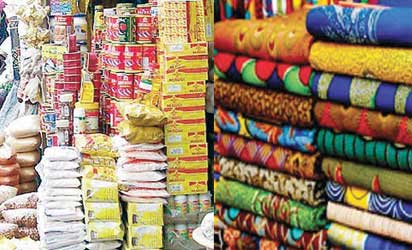
The Federal Government is set to launch a nationwide campaign to promote Made-in-Nigeria goods and services under the Nigeria First policy as a crucial step in revitalizing the manufacturing sector.
President Bola Tinubu made this announcement in Lagos at the fifth Adeola Odutola lecture organized by the Manufacturers Association of Nigeria.
The President was represented at the event by the Minister of State for Industry, Trade and Investment, Sen. John Enoh.
The President explained that the campaign is specifically designed to shift national demand towards Nigerian products that meet global quality standards, while simultaneously addressing the country’s chronic reliance on imports.
Tinubu noted that preliminary studies indicate that such a concerted campaign could boost the manufacturing sector by up to six per cent and generate over 500,000 jobs within the next three years.
He assured the audience that his administration would continue to prioritize the growth of Nigeria’s manufacturing sector through policies promoting the production, consumption, and export of Made-in-Nigeria goods.
Tinubu emphasized the foundational role of domestic production in national prosperity, stating: “No country achieves prosperity or dignity without producing what it can and exporting at scale what it does best.”
He framed the policy as a key component of national economic strategy: “Economics of resilience begins in the factory and thrives in the marketplace and we are committed to reducing structural costs and enabling our manufacturers to compete effectively both at home and abroad.”
The President also outlined six key policy commitments under the “Nigeria First” strategy: federal procurement reforms, quality and standards enforcement, export expansion, access to finance, energy and logistics, and skills development and input security.
He urged MAN members to uphold quality and transparency in production while collaborating with government agencies to share accurate data on capacity and pricing for effective policy planning.
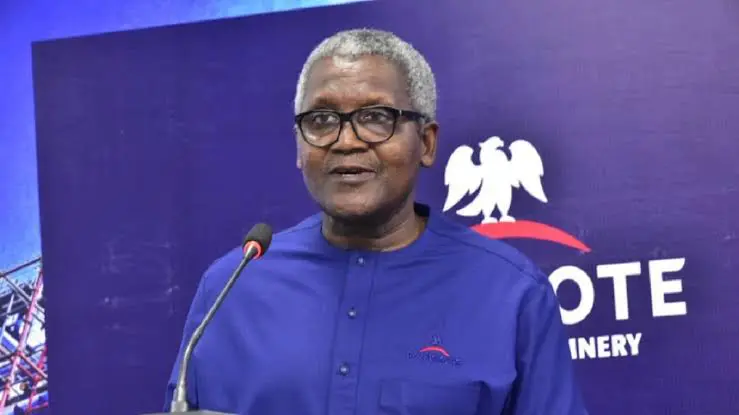
The President of the Dangote Group, Alhaji Aliko Dangote, represented by Mr. Mansur Ahmed, former President of MAN, said manufacturers have eight key expectations from the Nigeria First policy.
Dangote argued that for the policy to succeed, it must be designed as a “durable, binding national strategy for industrial development, capable of withstanding political transitions and market pressures alike.”
He stressed that the policy must be “anchored on both global best practices and Nigeria’s own industrial realities.”
Dangote’s listed expectations included legislating the policy as a binding law with punitive measures for non-compliance, ensuring policy stability, consistency, and long-term commitment.
Other expectations included developing a national supplier registry, driving consumer engagement and a national cultural shift, incentivizing backward integration, and addressing critical infrastructure and energy deficits.
Dangote also called for enhanced access to finance to build local supplier capacity and leveraging the African Continental Free Trade Area and regional export potential to strengthen local competitiveness.
He summarized the opportunity presented by the policy: “The Nigeria First Policy represents a bold opportunity to industrialise sustainably.”
He noted that its success hinges on several factors: “Its success depends on clear legislation, institutional enforcement, stable policy implementation, and strong alignment across government agencies and industry.”
Dangote emphasized the need for measurable results: “To transform the economy, the Nigeria First Policy must move beyond declarations into actionable, measurable outcomes that prioritise local value creation and national prosperity.”
He concluded with a sense of urgency about global competition: “Every nation is in a race to improve the living conditions of its citizens, and we must realise that we are in this race, and it is a very competitive race.”
He expressed optimism about the current administration’s efforts: “The government has done a few thing that have given us a fighting chance, the Nigeria first policy if embraced will place us in a very competitive position.”
The President of MAN, Otunba Francis Meshioye, lauded the government’s efforts to transform the economy through various policy reforms, including the Nigeria First policy.
Meshioye stated that the policy’s full legislation and implementation holds the potential to “significantly boost the fortune of the manufacturing sector and improve the well-being of the Nigerian citizenry.”
He acknowledged, however, that the tough realities facing the sector are shaped by global headwinds and domestic macroeconomic and policy constraints. Meshioye asserted that the Nigeria First policy was not merely an industrial ambition, but a matter of national economic survival.
He concluded with a forceful statement on the importance of local support: “If we do not intentionally support our own manufacturers, we will not be able to compete globally.”
He further confirmed MAN’s belief that “the ‘Nigeria First’ policy is about building national resilience, creating jobs at home, saving foreign exchange, driving technological innovation, and giving Nigeria the productive foundation it needs to be competitive globally.”
He reiterated MAN’s primary demand: “To this end, effective legislation and implementation is key and must be carried out without any prevarication.”

