

The Federal Government said it would soon introduce a Guaranteed Minimum Price for agricultural produce for farmers and undertake large-scale off-take of farm harvests.
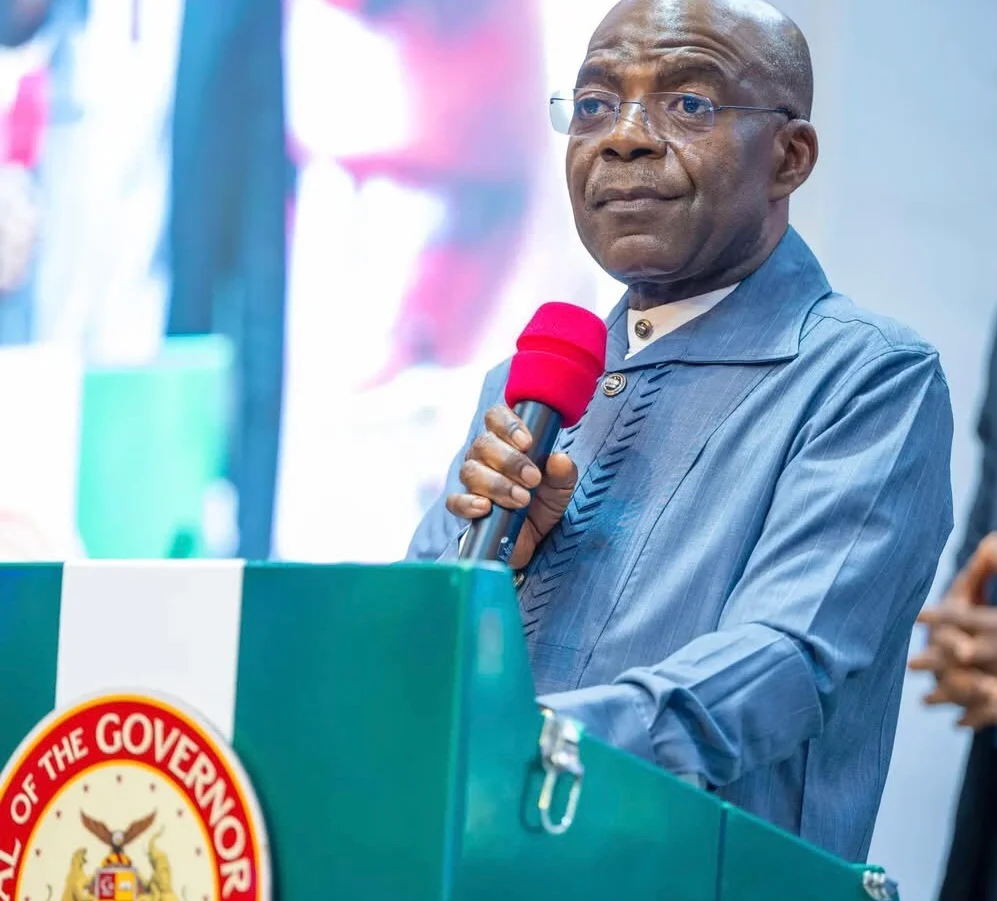
Minister of Agriculture and Food Security, Abubakar Kyari, announced this on Tuesday at a breakout session on “Catalysing Agricultural Transformation: Capital, Innovation and Growth” at the ongoing Nigeria Economic Summit.
The minister explained that the measure aims to protect farmers and consumers amid price volatility. Kyari acknowledged the balance required in policy, stating: “We’re looking at how to balance the citizens’ welfare, and also the farmers welfare.”
The minister explained that the move followed lessons learned from last year’s food price volatility and hoarding by commodity dealers, which worsened inflation and triggered widespread hunger protests in August.
Kyari cited a specific example of price speculation: “There was a massive hoarding aspect. There was a farmer who said he will not sell his maize until price gets to N150,000, but today, he’s begging to sell at N30,000.”
He also cited last year’s paddy rice market as an example, when farmers sold at N350,000 per tonne while market prices climbed to N800,000, highlighting inefficiencies between production costs and retail prices, saying: “There was clearly a dislocation somewhere.”
The minister said government interventions, including a 150-day window to release stored commodities, were among the measures introduced to ease supply shortages.
Kyari also said the government was revamping financing mechanisms for smallholder farmers, who form the bulk of Nigeria’s producers but lack access to capital and modern equipment.
He disclosed that President Bola Tinubu had approved the recapitalization of the Bank of Agriculture, with ₦250 million already released to improve access to credit for smallholders. He said government intends to support smallholder farmers to become largeholder farmers and is currently developing a national register of smallholder farmers.
The minister added that soil mapping was underway in partnership with private firms to improve fertilizer formulation and crop yields, while decrying the rising cost of fertilizer from about ₦35,000 to as high as ₦60,000, blaming it on supply bottlenecks and limited port capacity.
He also disclosed that the government was collaborating with the Renewable Infrastructure Fund to address logistics constraints and exploring the use of local potash deposits to reduce import dependence.
The minister acknowledged that insecurity, inadequate infrastructure, and limited financing remain key barriers to productivity but expressed optimism that the ongoing reforms and investments would strengthen Nigeria’s food system.
He informed that Preliminary findings from the 2025 National Agricultural Development (NAD) indicate that the country recorded a higher harvest this year than in 2024, suggesting that Nigeria is on the right trajectory despite ongoing challenges.
At the session, Segun Adaju, an entrepreneur, decried that worsening insecurity has forced many farmers like himself to abandon their farmlands, saying: “Bandits are the problem we are tired of paying ransom.” Okeke Chukwujekwu, co-founder of Ocattu Nigeria, noted that infrastructure remains a major problem.
He said the lack of access roads to farms is also discouraging young people from engaging in agriculture and urged greater collaboration among all tiers of government to address the problem.
Aisha Bashir, MD/CEO of Cam Dairy Foods Ltd, lamented the lack of access to finance, including loans from banks, which she said has severely affected the survival of her business.
Olapeju Ibekwe, Chief Executive Officer of Sterling One Foundation, acknowledged that while insecurity continues to hamper productivity, Nigeria still has enormous potential to expand output.
He pointed out that the country has between 35 and 37 million hectares of arable land, compared to the Netherlands’ two million hectares, yet the latter maintains a thriving agricultural industry.
He offered a pragmatic approach to the insecurity challenge, saying: “As we deal with insecurity, the places we can secure can help quadruple production.”
Ibekwe further called for the regulation of intermediaries in the commodity market to curb distortions and improve transparency. He warned that without oversight of large-scale buyers, the government would remain reactive, intervening only after market disruptions occur.
Ibekwe emphasized the need for regulation, stating: “That area is completely unregulated, and it’s a huge area of the ecosystem, otherwise the government will continue to scamper, looking for warehouses to break in.”