



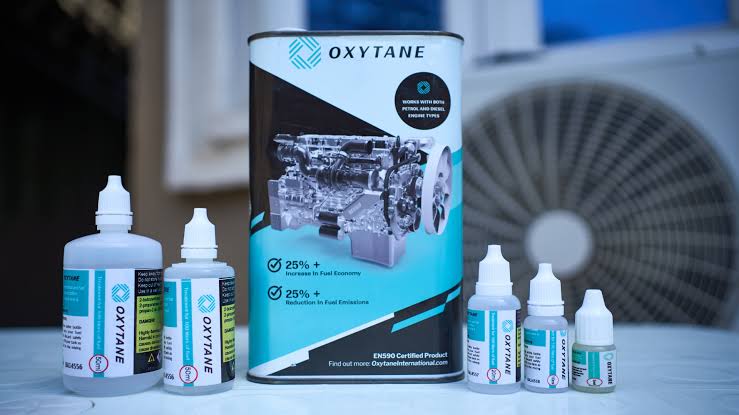
The Federal Government has launched a new Greenhouse Gas Emission Reduction Initiative featuring an oxygen-based fuel additive technology that can reduce carbon emissions from generators by up to 70 per cent.
Speaking at the official launch in Abuja on Tuesday, the Registrar/Chief Executive Officer of the Environmental Health Council of Nigeria, Dr Yakubu Baba, described the initiative as a bold step under the National Air Quality Programme of the Federal Ministry of Environment aimed at tackling air pollution and protecting public health.
According to him, the innovation, known as Oxytane, has been tested on high-capacity generators, including one at the Office of the Head of Service of the Federation, with results showing a 70 per cent reduction in carbon emissions after application.
“This is not just an environmental programme; it is a public health intervention,” Baba said. “Air pollution and greenhouse gas emissions are directly linked to respiratory diseases, cardiovascular complications, cancer and adverse pregnancy outcomes. Clean air is a fundamental right of every Nigerian.”
Baba explained that the oxygen fuel additive is designed to improve combustion efficiency in petrol and diesel-powered engines by enhancing engine performance, stating that it not only reduces smoke and particulate emissions but also improves fuel efficiency by up to 30 per cent.
He noted that a generator consuming 20 litres of fuel over 10 days could, with the additive, use 10 litres over 13 to 14 days due to improved efficiency.
“It is an environmental solution that also makes economic sense,” he said, noting that businesses and transport operators stand to benefit from lower fuel costs while contributing to emission reduction.
Baba stressed that under the new compliance framework, facilities operating generators above 25KVA will be required to adopt the emission-reduction solution.
“Environmental Health Officers have been deployed across Abuja in 30 teams covering 16 thematic sectors, including industries, construction firms, hospitals, hotels, training institutions and mining sites.
“Facilities will undergo carbon emission assessments based on generator capacity and usage. While the government intends to prioritise advocacy, Baba warned that non-compliance could attract sanctions under existing environmental health regulations.
“We have the power to issue contravention notices and obtain sealing orders from designated magistrates’ courts where necessary.
“However, smaller generator users will not face mandatory enforcement. Instead, the product will be made available in open markets to encourage voluntary adoption”, he said.
He noted that the initiative aligns with Nigeria’s commitments under the Paris Agreement and the country’s Nationally Determined Contributions (NDCs) aimed at cutting greenhouse gas emissions.
Baba said the programme also supports the Nigerian Climate Change Act, the National Climate Change Policy, and relevant Sustainable Development Goals, particularly Goals 3 (Good Health and Well-being), 7 (Affordable and Clean Energy), 11 (Sustainable Cities), and 13 (Climate Action).
He added that the initiative is in line with President Bola Ahmed Tinubu’s Renewed Hope Agenda, which prioritises environmental sustainability, economic efficiency and improved quality of life.
Beyond emission reduction, he said the programme is expected to position Nigeria within the emerging global carbon credit market. By documenting verified reductions in emissions, participating facilities may potentially tap into carbon compliance mechanisms.
Baba assured Nigerians that the supply of the additive would be sustained through public-private partnerships, noting that the current stock can serve the country for at least three months, with replenishment tied to demand.
He urged transport unions, oil marketers, manufacturers, and state and local governments to embrace the initiative.
“The air we breathe has no boundaries. If we must protect public health and meet our global obligations, everyone must buy into this,” he said.