




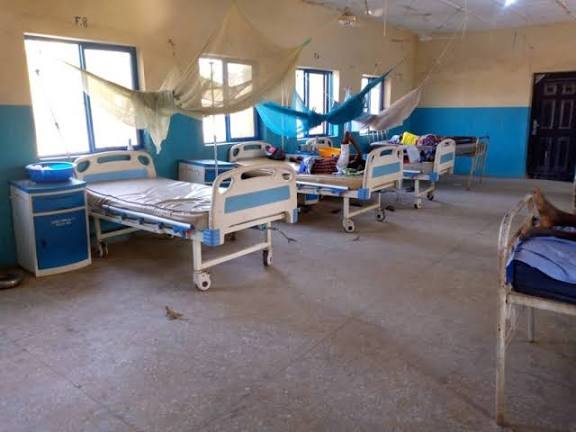
The Federal Government has commenced a comprehensive inventory of high-end hospital equipment across federal teaching hospitals and medical centres.
The exercise focuses on maintenance status and capacity gaps amid concerns over poor maintenance of medical equipment in public hospitals.
The National Biomedical Equipment Audit forms part of the broader Health Sector Renewal Investment Initiative. This initiative aims at strengthening infrastructure, digitalisation and workforce capacity for sustainable healthcare delivery.
Minister of State for Health and Social Welfare, Dr Adekunle Salako, disclosed this in Abuja at a capacity building workshop for Biomedical Engineers in Healthcare Institutions in Nigeria. He said the government is determined to build a resilient, technology-driven and well-maintained health system that guarantees safe, effective and sustainable services for Nigerians.
Salako noted that the absence of structured capacity-building programmes and sustained partnerships has weakened maintenance culture in hospitals. This has led to rapid deterioration and prolonged downtime of valuable equipment nationwide.
He emphasised that biomedical engineers and technicians play a critical role in ensuring the optimal functioning of equipment used for diagnosis, treatment and patient monitoring.
According to him, the importance of their role became more evident during and after the COVID-19 pandemic. Even advanced machines remained underutilised or dysfunctional without skilled technical support.
The minister said the workshop was designed to reawaken the professional consciousness of biomedical engineers, refresh their technical skills and reposition them to safeguard Nigeria’s expanding health assets.
He disclosed that the ministry, through its Department of Hospital Services, is developing a National Biomedical Equipment Maintenance Framework. This framework will ensure tertiary health institutions adopt planned preventive maintenance schedules implemented by trained engineers.
Salako, who was represented by his Special Assistant, Dr Babatunde Akinyemi, said the workshop was enabled by the Federal Ministry of Health and Social Welfare. It was coordinated by Healthy Living Communications Limited in partnership with the College of Biomedical Engineering and Technology (CBET).
The event brought together biomedical engineers and technical personnel from federal, state and private health institutions across the country.
He added that the ministry has upgraded training facilities in relevant institutions with modern equipment, simulation laboratories and digital learning tools. It has also facilitated staff retraining and exchange programmes to promote global exposure and skills transfer.
The minister urged Chief Medical Directors, Medical Directors and Heads of Biomedical Engineering Units to ensure that knowledge gained at the workshop is cascaded to other technical staff within their institutions.
He linked the training to the ministry’s four-point agenda, particularly the objective of unlocking the health value chain through medical industrialisation. Improved local technical capacity would reduce frequent importation of medical devices and extend the lifespan of existing equipment.
In his remarks, National Project Director and Chief Executive Officer of Healthy Living Communications Limited, Emmanuel Oriakhi, said the programme had been conceptualised over a decade ago. He noted that while the Federal Government has invested heavily in upgrading healthcare infrastructure under the Renewed Hope Agenda, sustaining those investments requires deliberate attention to maintenance and professional development.
Oriakhi commended the ministry for its support and acknowledged the contributions of past and current Directors of Hospital Services in facilitating the initiative.
Chief Trainer, Dr Awafung Adie, urged participants to move beyond being perceived merely as equipment repairers and embrace their broader roles as healthcare technology managers, innovators and leaders.
“The future of Nigeria’s healthcare system depends, in part, on the quality of biomedical engineers we produce today. We must uphold professionalism, integrity, teamwork and accountability in everything we do,” he said.
He encouraged participants to leave the programme not only with certificates but with stronger technical competence, improved professional attitudes and renewed commitment to service.
Also speaking, Chairman of the Committee of Chief Medical Directors and Medical Directors of Federal Tertiary Hospitals, Prof. Saad Ahmed, represented by the Chief Medical Director of the Federal Medical Centre, Keffi, Dr Yahaya Adamu, expressed confidence that the training would enhance engineers’ capacity. It would help minimise equipment downtime and ensure safe handling of medical devices in line with regulatory and manufacturers’ guidelines.