

The Federal Government has finalized the implementation frameworks for a massive ₦4 trillion government-backed bonds to settle verified outstanding arrears owed to power Generation Companies and gas suppliers.
This significant development was disclosed in a statement made available to newsmen in Abuja by the Special Adviser to the President on Energy, Mrs. Olu Verheijen.
The agreement was reached at a crucial meeting between high-ranking federal government officials and senior executives of the GenCos, convened to review the settlement modalities for the crippling debt.
The meeting saw the attendance of key economic and energy officials, including the Minister of Finance and Coordinating Minister of the Economy, Mr. Wale Edun, the Minister of Power, Chief Bayo Adelabu, and Mrs. Verheijen. Senan Murray, Head of the Media and Communications Unit in the SA’s Office, noted that the meeting concluded with a consensus, stating: “The meeting concluded with a consensus on the way forward, which includes conducting bilateral negotiations to finalise full and final settlement agreements that balance fiscal realities with the financial constraints of the GenCos. Murray characterized this intervention as monumental, adding: “This intervention — the largest in over a decade — addresses a legacy debt overhang that has constrained investment, weakened utility balance sheets, and hindered reliable power delivery across the country.”
He concluded that this decisive step represents: “This is a major step by the federal government toward restoring financial stability and investor confidence in the electricity market.”
Murray explained that this agreement is the culmination of a landmark initiative approved by President Bola Tinubu and the Federal Executive Council to tackle structural bottlenecks and create a foundation for large-scale, private-sector-led investment and sustained economic growth.
During the meeting, Mrs. Verheijen underscored the Federal Government’s primary focus on creating conducive investment conditions by modernizing the grid, improving distribution, and scaling embedded generation.
She added that this step would also help in closing metering gaps, aligning tariffs with efficient costs, improving subsidy targeting to support the poor and vulnerable, and restoring regulatory trust.
Verheijen stressed the ongoing shift in the sector, saying: “The sector is shifting from crisis response to sustained delivery and building the confidence needed to attract large-scale private capital.”
Also speaking at the meeting, Mr. Wale Edun emphasized that the reforms extend beyond mere liquidity, asserting that they would help in “rebuilding the fundamentals, so that Nigeria’s power sector works for investors, for citizens, and for the next generation.”
He highlighted the transformative potential of the move, noting: “This is how we create the enabling conditions for sustained private investment and transform reliable power into a catalyst for economic growth.”
The Minister of Finance further added that complementary efforts to scale renewable energy, leverage domestic gas as a transition fuel, and build local capacity “will position Nigeria not just for energy security, but for energy sovereignty, creating one of Africa’s most attractive power markets.”
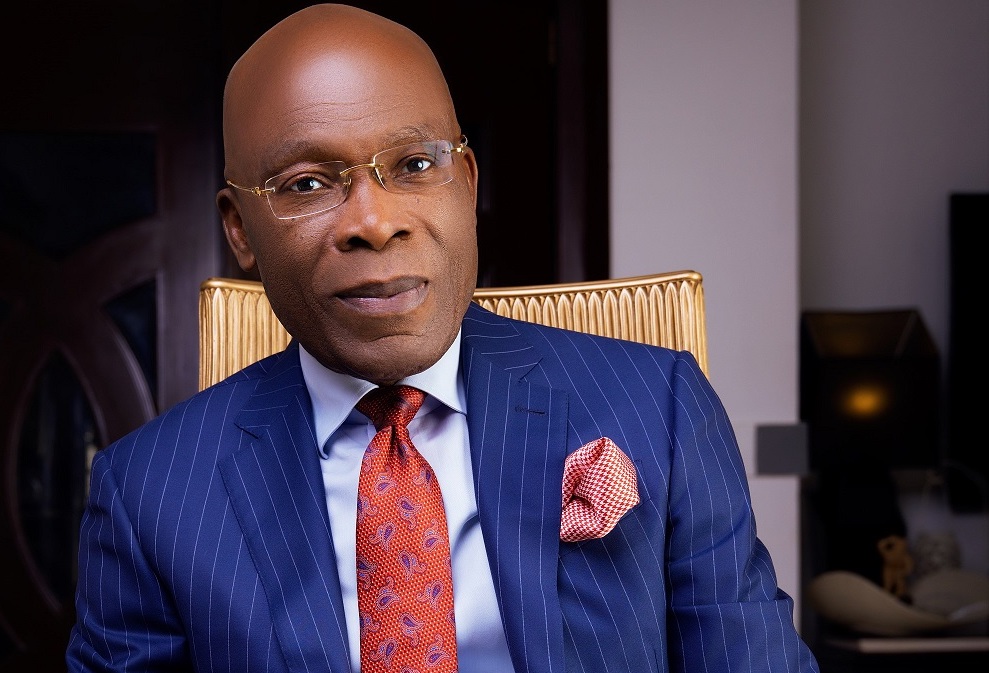
From the industry side, Mr. Tony Elumelu, Chairman of Heirs Holdings and Transcorp Power, commended the government, observing that for the first time in years, “the sector is seeing a credible and systematic effort by government to tackle the root liquidity challenges in the power sector.”
Similarly, Mr. Kola Adesina, Group Managing Director of Sahara Power Group, hailed the initiative as significant, saying: “It renews confidence in the reform process and a clear signal that the government is serious about building a sustainable power sector.” Adesina noted that the debt reduction plan signals a strategic reset of Nigeria’s electricity market beyond simply clearing arrears.
The News Agency of Nigeria reported that the Presidential Power Sector Debt Reduction Plan is a collaborative effort involving the Federal Ministry of Finance, the Federal Ministry of Power, and the Office of the Special Adviser to the President on Energy, along with the Nigerian Bulk Electricity Trading Plc and other key stakeholders.
President Tinubu had recently assured the GenCos of the Federal Government’s commitment to settling outstanding debts, pending a thorough audit process, reiterating his commitment to resolving liquidity challenges affecting Nigeria’s electricity sector during a meeting with the Association of Power Generation Companies at the State House.