



The Federal Government has announced plans to enroll 44 million Nigerians into the National Health Insurance Scheme by 2030 as part of efforts to reduce high out-of-pocket healthcare costs.
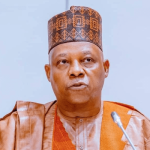
Minister of State for Health and Social Welfare, Dr. Iziaq Salako, made this known on Monday at the opening of the National Health Financing Policy Dialogue in Abuja.
He noted that the government remains committed to safeguarding citizens’ health through innovative and sustainable financing mechanisms, while stakeholders deliberate on strategies to reshape the nation’s health financing system.
Salako stressed that the dialogue went beyond mere conversations, describing it as a pivotal opportunity to translate commitments into practical strategies and impactful outcomes that would shape future policies and their implementation.
He explained that the theme, “Reimagining a New Era of Health Financing,” reflects Nigeria’s aspiration for enhanced domestic and sustainable financing in the quest for universal health coverage.
Salako highlighted that President Bola Ahmed Tinubu has underscored the need for Nigeria to strengthen health financing by increasing domestic resource mobilization and cutting reliance on external aid.
“The President has continued to emphasize that a strong health system is vital for national growth and has therefore directed the implementation of several interconnected policies to achieve universal health coverage and protect Nigerians,” he said.
The minister pointed out a consistent growth in health sector funding, rising from N434 billion in 2018 to N1.2 trillion in 2021.
He added that the proposed N2.48 trillion allocation for 2025—representing 5.18 per cent of the federal budget—marks more than double the 2021 figure but still falls short of the 15 per cent target set by the Abuja Declaration.
Salako noted that the National Assembly increased the 2024 health budget by N300 billion following the suspension of U.S. aid, while state governments also boosted their allocations. As a result, total health expenditure as a share of GDP rose from 3.4 per cent in 2013 to 5.03 per cent in 2024.
He reaffirmed the government’s commitment to fully implementing the National Health Insurance Act of 2012, which makes health insurance compulsory for all Nigerians and establishes the Vulnerable Group Fund to support citizens unable to pay premiums.
The minister further explained that the Basic Health Care Provision Fund, established under the 2014 National Health Act and financed with 1% of consolidated revenue, remains vital for assisting the poor and vulnerable. He revealed that plans are in motion to seek National Assembly approval to raise the allocation to at least 2%.
“Under the Presidential Performance Agreement we signed, a key deliverable for the Ministry is to enroll at least 44 million Nigerians into the national health insurance scheme by 2030.
“This will help reduce out-of-pocket expenditure on health, which currently stands at an unacceptably high rate of about 70%.
“We remain focused on strengthening the framework, expanding coverage, ensuring sustainability, and addressing persistent challenges such as inadequate budgetary allocations, systemic inefficiencies, fragmented programming, and limited reliable data,” Salako noted.