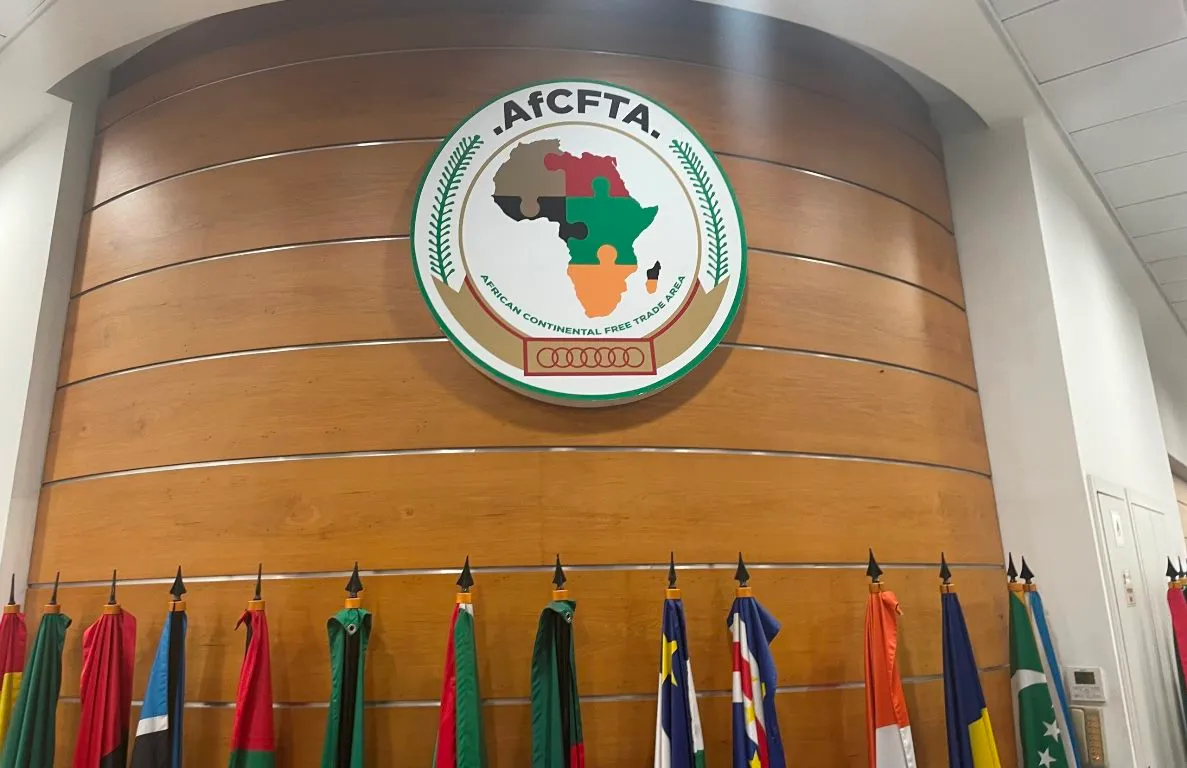
The Federal Government has declared 2026 as a decisive year for achieving measurable outcomes under the African Continental Free Trade Area.
This comes as Nigeria seeks to strengthen its continental leadership ahead of the 14th Ministerial Conference of the World Trade Organisation in Yaoundé, Cameroon.
The declaration was made at the First Quarter 2026 meeting of the AfCFTA Central Coordination Committee held in Abuja.
Minister of Industry, Trade and Investment Jumoke Oduwole, represented by her Special Adviser Patience Okala, described the meeting as pivotal. She stressed that Nigeria’s AfCFTA performance would influence its bargaining power at the upcoming WTO conference.
She stated, “This meeting comes at a pivotal moment when we consolidate Nigeria’s leadership under the AfCFTA and strategically position our country ahead of the 14th Ministerial Conference of the World Trade Organisation. AfCFTA implementation must be coordinated, measurable, simplified, and driven by institutional accountability.
“2026 is not a year for concept notes or reports. It is a year for measurable outcomes. The Institutional Performance Barometer must function. The National Action Plan must deliver economic transformation. Subnational integration must deepen and unlock opportunities for Nigerian producers. With this framework in place, 2026 must now be the year of disciplined execution.”
Oduwole recalled the momentum from the AfCFTA Public–Private–Press Summit in November 2025, where the CCC National Action Plan was unveiled.
“That engagement reinforced a critical principle: AfCFTA implementation must be coordinated, measurable, simplified and driven by institutional accountability,” she said.
The National Action Plan is built on five pillars: governance and coordination; situational analysis and assessment; policy and legal alignment; private, regional and continental engagement; and monitoring, evaluation and reporting.
“With this framework in place, 2026 must now be the year of disciplined execution,” Oduwole added.
Volume One of the AfCFTA “ABC Simplified Tools” was presented at the meeting to assist businesses in understanding and utilising AfCFTA provisions.
“This tool features easy-to-read processes and clear guidance on how Nigerian businesses can engage with the constituent members of the AfCFTA CCC and leverage the agreement for business growth, investment and regional market access,” she said.
The minister emphasised shifting focus to subnational levels for AfCFTA implementation.
“The AfCFTA must move beyond federal-level coordination into our states, industrial clusters, special economic zones and export corridors.
“Over the past months, we have intensified engagements with state governments, state investment promotion agencies, MSME networks and productive clusters to ensure that export readiness, standards compliance and logistics capacity are aligned with continental market opportunities. Our productive base must reflect continental ambition,” she said.
On global trade, Oduwole highlighted Nigeria’s role in shaping Africa’s common position for the WTO Ministerial Conference. African trade ministers met in Maputo to align priorities, including WTO reform, agriculture, digital trade, the Investment Facilitation for Development Agreement, and permanent observer status for the African Union at the WTO.
“Africa must negotiate multilaterally from a position of continental consolidation,” she said. “Regional coherence strengthens Africa’s negotiating leverage. We must ensure that industrial policy space, digital transformation priorities and value-chain development remain protected.”
Nigeria plans to intensify technical consultations to make its MC14 positions evidence-based and aligned with its diversification agenda.
“We are determined to ensure that our success in the AfCFTA is preserved and respected at the global level,” she said.
Permanent Secretary Abba Rimi, represented by Director Naziru Abbas Mohammed, described the CCC as Nigeria’s central platform for trade policy alignment and inter-agency coordination.
“Your agencies are at the forefront of trade facilitation, standards enforcement, export promotion, industrial development, customs modernisation and investment mobilisation.
“AfCFTA is not just a trade agreement; it is a transformative economic framework that must deliver tangible results for Nigerian businesses and citizens,” he said.
He urged a solution-oriented approach, stressing that “implementation, discipline and accountability will determine our success.”
Okala detailed efforts to simplify AfCFTA protocols for businesses and the public, referencing the 2025 P3 Summit where stakeholders reviewed key protocols including trade in goods, trade in services, investment, digital trade, and women and youth in trade.
“One of the most important outcomes was the decision to simplify the AfCFTA framework,” she said.
“Many people still do not understand what AfCFTA is. We tasked ourselves with breaking down AfCFTA-related services and regulations in simplified language so we can guide the private sector to access our services and scale under the agreement.”
She unveiled “AfCFTA Simplified: The ABCs of Doing Business under AfCFTA in Nigeria, Volume One,” available in Hausa, Yoruba, Igbo, Pidgin and Arabic.
“When we were still speaking English, the Honourable Minister said, ‘Break it down into languages that everybody can understand.’ We have done the Hausa version, the Yoruba version, the Igbo version, the Pidgin version and the Arabic version. Everybody must understand this,” she said.
Okala announced a draft governance framework for the CCC to enhance inter-agency collaboration and accountability.
The AfCFTA, which began trading in 2021, seeks to create a single market across 54 African countries with a combined GDP exceeding $3 trillion.
Nigeria ratified the agreement in 2019 and has progressed with domesticating protocols, including gazetting tariff concessions, submitting its schedule of specific commitments, and ratifying the digital trade protocol.
Businesses have raised concerns about logistics bottlenecks, high certification costs, limited trade finance, and payment inefficiencies.
Oduwole acknowledged these issues, stating that private sector feedback must drive reforms.
“Their priorities remain clear: reduced logistics costs, transparent and rapid certification systems, expanded access to trade finance, effective deployment of payment systems and better market intelligence. Our responsibility is to translate feedback into reform,” she said.
Nigeria will host AfCFTA Week in May 2026, including the Her AfCFTA Summit, AfCFTA Council of Ministers Meeting, and Digital Trade Forum, with emphasis on converting continental goals into local economic benefits.
“The work of this committee is not procedural; it is transformational. Let us approach our deliberations with clarity, urgency and strategic discipline,” Oduwole added.