






The Federal Government has announced a ban on all forms of mining activities within a 10-kilometre radius of bridges across the country, as part of measures to protect critical infrastructure and enhance public safety.
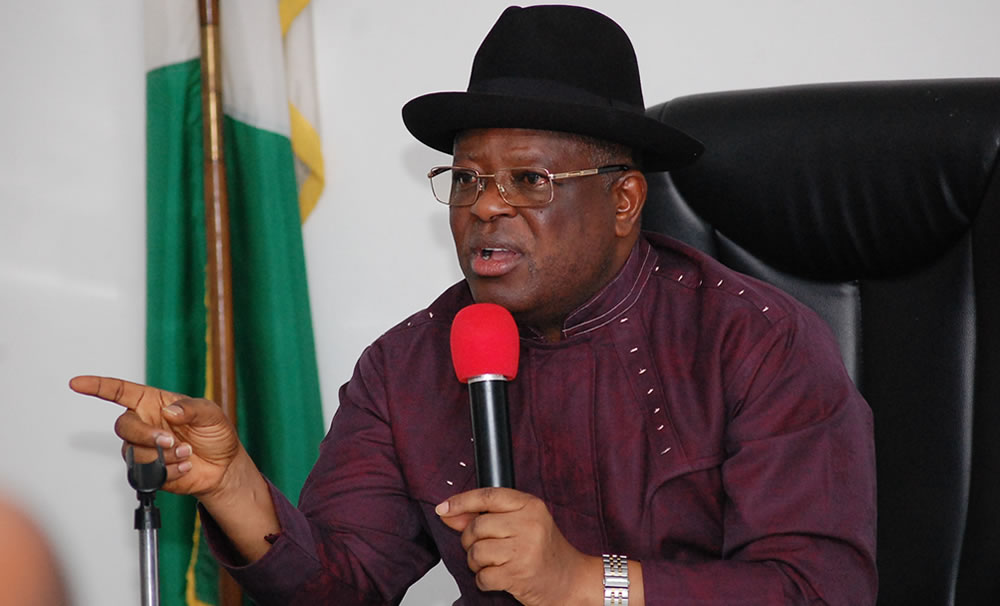
The Minister of Works, Senator David Umahi, disclosed this during a press briefing in Enugu at the weekend, following an inspection of ongoing federal road and bridge projects in the South-East zone. He said the directive was aimed at curbing the destruction of roads and bridges nationwide.
Umahi explained that the ban aligns with decisions taken by the Federal Executive Council and is intended to strengthen the structural integrity of bridges across the country. He added that enforcement would be intensified through enhanced security and monitoring mechanisms.
According to the minister, the Federal Government will deploy monitoring boats around bridge corridors and provide two patrol vehicles to the police for highway surveillance, with a monthly maintenance support of N3 million to be provided by the Ministry of Works.
Reaffirming the government’s commitment to highway safety, Umahi stated that the installation of CCTV cameras and solar-powered lighting would not be limited to bridges but would be extended to federal highways nationwide.
“We have already commissioned CCTV installations at the Third Mainland Bridge in Lagos and the Second Niger Bridge in Onitsha. Our commitment to deploying solar lights and CCTV to monitor bridges and their surroundings will also apply to all federal highways,” he said.
The minister revealed that the CCTV project at the Third Mainland Bridge cost N480 million, describing it as part of broader efforts to enhance surveillance and road security across the country.
Umahi also gave updates on major road construction and rehabilitation projects in the South-East, noting significant progress on several critical routes. He said the 48-kilometre Asaba Heartland Road rehabilitation project, valued at N48 billion, has recorded substantial advancement, featuring reinforced concrete pavement and extensive drainage infrastructure.
“Mr President gave us an intervention fund of about N50 billion, which we paid to the contractor. While we raised concerns about the slow pace of work, we are satisfied with the quality,” he said, while directing the contractor to increase the pace of work by operating night shifts.
The minister confirmed that the 17.5-kilometre bypass project is being handled by China Civil Engineering Construction Corporation at a cost of N179 billion, with 30 per cent of the contract sum already paid. He added that the ministry is targeting the commissioning of 50 per cent of the project by President Bola Tinubu on April 20.
Describing the Enugu–Onitsha route as “very troubling,” Umahi commended President Tinubu for reviving the long-neglected road corridor. He explained that the 107-kilometre dual carriageway project was initially awarded to MTM under a tax credit arrangement valued at N202 billion but was later de-scoped to reflect prevailing economic conditions. MTM has so far executed works worth N50 billion.
He said the project is currently being handled by MTM, Nigercat and RCC, with the first phase expected to be completed by April 28. According to him, solar lighting installation is ongoing, with the first five kilometres scheduled for completion within two weeks.
Umahi expressed concern over delays and what he described as poor supervision by CCCC on the Second Niger Bridge Bypass section. He said the ministry would issue a formal notice to the contractor, copying the financing bank, demanding accelerated progress within 60 days or face contractual sanctions.
He added that CCCC has completed 61 kilometres of the Enugu–Port Harcourt highway and is currently finalising additional sections of the project.
The minister also issued a firm warning against repeated road reconstruction, declaring: “No place in the country should asphalt be removed from our roads again.”
He ordered that future road designs must include concrete shoulders and stone base with cement stabilisation to prevent premature road failures.