




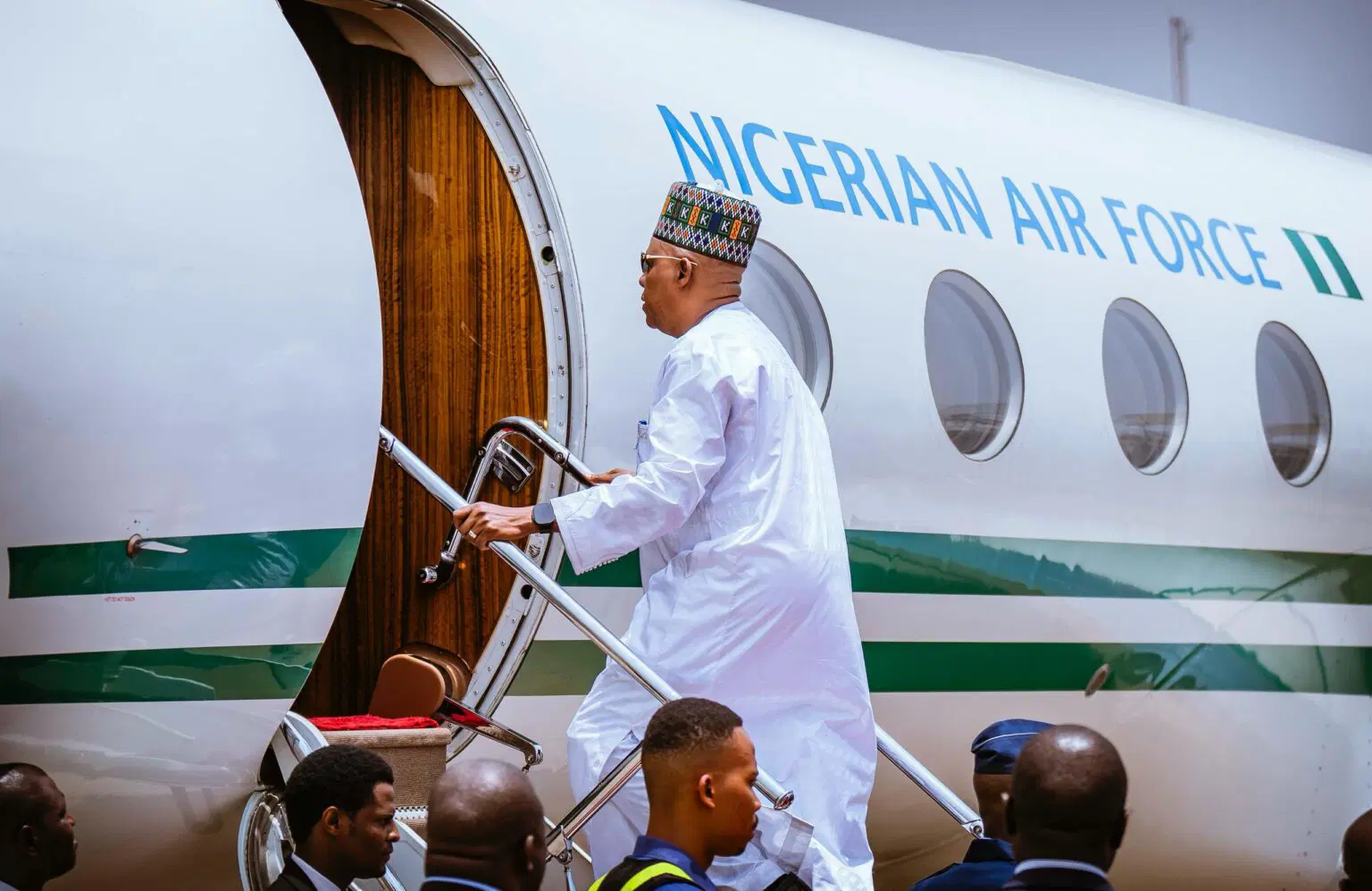
The Federal Government has earmarked a cumulative sum of N10.61bn for the overhaul of engines on the Gulfstream G550 aircraft assigned to Vice President Kashim Shettima over a three-year period, according to an analysis of appropriation bills spanning 2024 to 2026.
The aircraft, registered as 5N-FGW, accounted for the largest single allocation among all engine overhaul projects within the Presidential Air Fleet, representing 55 per cent of the total N19.27bn spent on engine maintenance under the administration of President Bola Tinubu.
Budget documents obtained and analysed by The PUNCH revealed that allocations for overhauling the vice president’s aircraft engines rose sharply from N1.24bn in 2024 to N5.51bn in 2025, marking a 345 per cent increase, before declining to N3.86bn in 2026.
In the 2024 Appropriation Bill, the project appeared under code ERGP31206170 as “Overhaul of 5N-FGW Engines” with a status listed as “NEW” and an allocation of N1.24bn.
By 2025, the project status changed to “ONGOING” as the allocation rose to N5.51bn, before remaining “ONGOING” in 2026 with a reduced provision of N3.86bn.
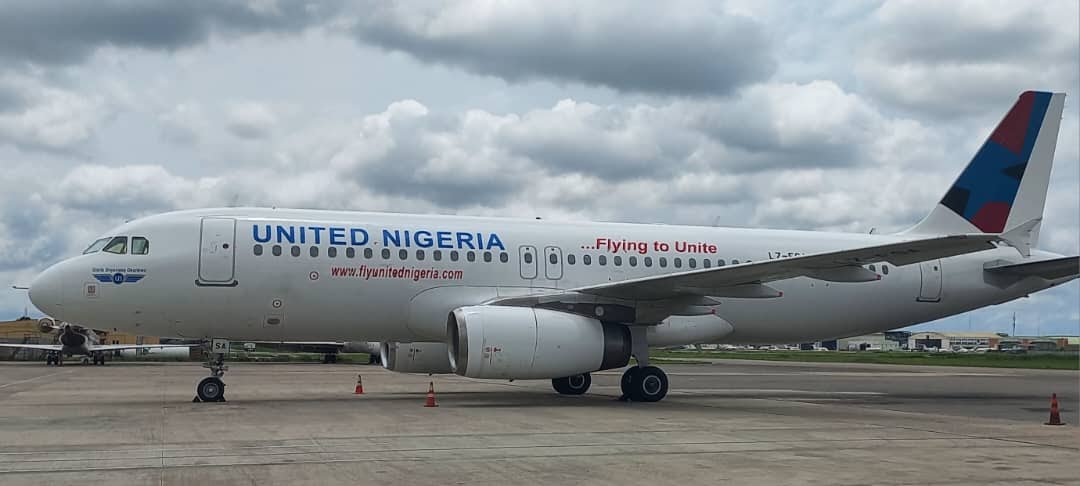
The 13-year-old Gulfstream G550, which operates under the call sign “Nigerian Air Force 2” when conveying the vice president, has experienced repeated technical issues that have previously disrupted Vice President Shettima’s international engagements.
In May 2024, Shettima aborted his trip to the United States for the 2024 US-Africa Business Summit in Dallas, Texas, after the aircraft developed a technical fault mid-flight.
The incident occurred less than a month after President Tinubu had to charter a private jet to Saudi Arabia when the same Gulfstream aircraft, initially assigned to the vice president, developed an oxygen leak while in the Netherlands.
Four months later, in October 2024, the vice president cancelled his planned trip to the Commonwealth Heads of Government Summit in Samoa after a foreign object struck the aircraft during a stopover at John F Kennedy Airport in New York.
Presidency officials, who spoke on condition of anonymity, told The PUNCH that the recurring technical problems may have necessitated urgent maintenance interventions, which subsequently drove the sharp increases in budgetary allocations.
Beyond the vice president’s aircraft, the Federal Government also approved funds for engine overhauls on two Falcon 7X jets registered as 5N-FGV and 5N-FGU.
These two aircraft received N1.66bn in 2024, N3.13bn in 2025 and N2.19bn in 2026, bringing their combined three-year engine overhaul allocation to N6.98bn.
In addition, another Gulfstream jet registered as 5N-FGS received N1.68bn for engine overhaul in 2024, although no further allocations were made for the aircraft in subsequent years.
Overall, engine overhaul projects across the Presidential Air Fleet amounted to N4.58bn in 2024, N8.65bn in 2025 and N6.05bn in 2026, resulting in a cumulative expenditure of N19.27bn over the three-year period.
An examination of the spending pattern showed that engine maintenance costs peaked in 2025, one year after the Presidency took delivery of the N150bn Airbus A330.
At the time, the Spokesman to the President, Bayo Onanuga, had argued that the aircraft would “save Nigeria huge maintenance and fuel costs, running into millions of dollars yearly.”
While spending on engine overhauls for older aircraft dropped by 30 per cent in 2026 compared to 2025, allocations for routine aircraft maintenance under line item 22020407 increased by 10 per cent, rising from N4.12bn in 2025 to N4.54bn in 2026.
Aviation experts attributed the rising costs to the age of the aircraft in the fleet.
“These aircraft are not new. The older the aircraft, the higher the cost of maintenance and operation. So, the cost will increase over the years,” said the General Secretary of the Aviation Round Table, Olumide Ohunayo.
He noted that the 13-year-old Gulfstream G550 now requires more frequent and costly overhauls as critical components, including its engines, approach the end of their operational lifespan.
“The figure likely includes far more than the direct cost of repairing the aircraft,” said the Chief Executive Officer of Centurion Security Limited, John Ojikutu.
An aircraft maintenance engineer, who requested anonymity, explained that “Engine overhauls are mandatory at specified intervals, regardless of whether the aircraft has been flown extensively or not.”
“For a jet like the G550, a complete engine overhaul can cost anywhere from $1.5m to $3m per engine, depending on the condition and the extent of work required. If you see the cost increase, it could mean they’re replacing major components, not just doing standard checks. It could also show that they deferred previous maintenance and have to do catch-up work,” the engineer added.
The Presidential Air Fleet, which is managed by the Nigerian Air Force and based at the Presidential Wing of the Nnamdi Azikiwe International Airport in Abuja, currently operates 10 aircraft, comprising six fixed-wing jets and four helicopters.
Critics have long maintained that Nigeria’s presidential fleet is among the largest on the African continent and disproportionately expensive for a country facing acute fiscal challenges.
The Executive Chairman of the Centre for Anti-Corruption and Open Leadership, Debo Adeniran, criticised the administration’s spending priorities.
“What we are getting from this administration is the opposite of our expectations. We thought we would have an administration that would be frugal in spending and very meticulous in implementing its budget. But what we are getting is an administration that has fallen in love with profligacy, that doesn’t see anything wrong in living big in the midst of a poverty-stricken nation,” said Adeniran.
In 2024, the House of Representatives Committee on National Security and Intelligence recommended the acquisition of new aircraft for both the president and vice president, citing safety concerns and the high maintenance costs associated with the ageing fleet.
While President Tinubu subsequently received the Airbus A330, no replacement was announced for the vice president’s aircraft, which has continued to attract substantial maintenance allocations under the current administration.
As of the time this report was filed, the Presidency had not responded to enquiries regarding the specific nature of the engine overhaul work carried out on the aircraft.
The budget documents also highlighted ongoing capital projects for Presidential Air Fleet infrastructure, including N714.8m allocated for the construction of a hangar in 2025, which declined to N500.36m in 2026.
Overall, the total budgetary allocation to the Presidential Air Fleet fell from N17.32bn in 2025 to N14.70bn in 2026, largely due to a reduction in capital expenditure.

