


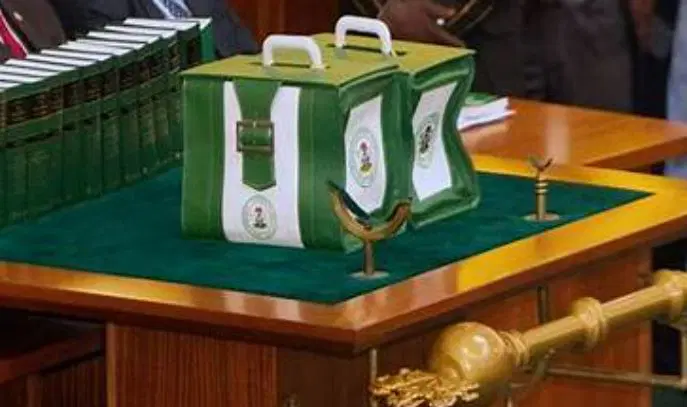
The Federal Government has made provisions to settle outstanding debts owed to contractors for capital projects executed in 2024, earmarking N1.7tn for the purpose in the proposed 2026 Appropriation Bill.
A detailed breakdown of the 2026 national budget shows that the allocation is listed under a specific line item titled Provision for 2024 Outstanding Contractor’s Liabilities, signalling formal acknowledgement of delayed payments that have triggered protests from contractors in recent months.
The inclusion of the provision comes amid sustained pressure from indigenous contractors and civil society organisations, which in 2025 raised concerns that unpaid contractual obligations owed by the Federal Government had risen beyond N2tn.
Under the umbrella of the All Indigenous Contractors Association of Nigeria, several contractor groups staged protests in Abuja, complaining that prolonged delays in payment had crippled their operations and left many unable to repay bank loans obtained to execute government-funded projects.
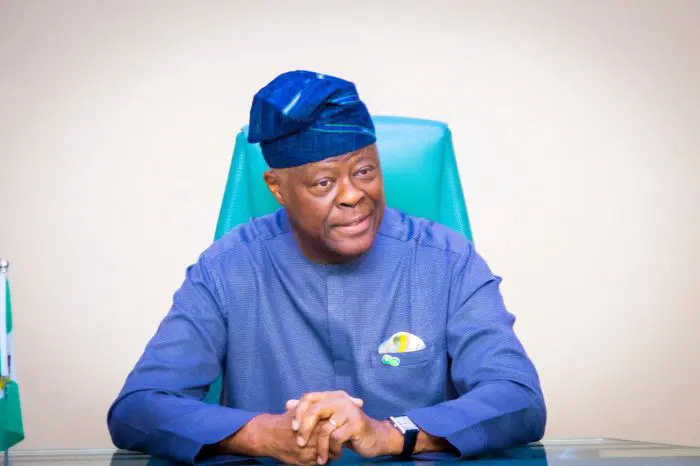
Earlier in the year, the Minister of Works, David Umahi, had pledged that verified arrears owed to federal contractors would be cleared before the end of 2025, but only partial payments were made due to revenue constraints, a development that necessitated the inclusion of the N1.7tn provision in the 2026 budget as a catch-up measure.
Beyond the N1.7tn earmarked for 2024 liabilities, the government has also proposed an additional N100bn under a separate line item labelled Payment of Local Contractors’ Debts/Other Liabilities, which may be used to settle legacy debts, smaller contract claims, or financial obligations that were not fully verified during the most recent audit exercise.
In total, the N1.8tn allocation for contractor debt settlement forms part of the broader N23.2tn capital expenditure outlined in the 2026 fiscal framework, which aims to accelerate infrastructure delivery while addressing accumulated payment obligations.
Nigeria’s contractor debt burden has remained a recurring fiscal challenge, exacerbated by delayed capital releases, partial cash-backing of approved projects, and persistent shortfalls in government revenue performance.
Speaking with journalists at the entrance of the Federal Ministry of Finance in December 2025, the National Secretary of the All Indigenous Contractors Association of Nigeria, Babatunde Seun-Oyeniyi, said the government’s failure to release funds despite repeated assurances forced contractors to resume protests.
He stated that members of the association were owed more than N500bn for projects that had already been completed and commissioned across the country.
According to him, assurances given by the Minister of Finance, Wale Edun, had not translated into actual payments. “After the National Assembly intervened, they told us that they will sit the minister down over this matter. And we immediately stopped the protest,” he said.
Oyeniyi explained that repeated follow-up engagements with the minister yielded no results. “They have not responded to our request,” he said. “In fact, more than six times we have come here. Last week, we were here throughout the night before the Minister of Finance came.”
He further noted that while payment warrants had been sighted, no funds had been released to contractors. “Specifically, when we collate, they are owing more than N500bn for all indigenous contractors. We only see warrants; there is no cash back.”
The association’s secretary accused government officials of attempting to defer the payments into another fiscal year. “The problem is that they want to put us into a backlog. They want to shift us to 2026; that 2026, they are going to pay,” he alleged. “They will turn us into debt, and we don’t want that. We won’t leave here until we are paid.”
However, findings by The PUNCH show that in August 2025, the Federal Government announced that it had cleared more than N2tn in outstanding capital budget obligations from the 2024 fiscal year and pledged to prioritise timely releases for 2025 capital projects.
The Minister of Finance and Coordinating Minister of the Economy, Wale Edun, made the disclosure during a ministerial press briefing in Abuja, where he also declared that Nigeria was open to global investors following improvements in economic stability.
“In the last quarter, we did pay contractors over N2tn to settle outstanding capital budget obligations. That is from last year,” Edun said. “At the moment, we have no pending obligations that are not being processed and financed. And the focus will now shift to 2025 capital releases.”
By December 2025, The PUNCH reported that President Bola Tinubu expressed grave displeasure over the backlog of unpaid federal contractors and approved the establishment of a high-level committee to resolve payment bottlenecks.
Briefing State House correspondents after a Federal Executive Council meeting in Abuja, the Special Adviser on Information and Strategy, Bayo Onanuga, said the President was unhappy after being informed that about 2,000 contractors were still owed by the Federal Government.
“He made it very, very clear he is not happy and wants a one-stop solution,” Onanuga told journalists.
President Tinubu subsequently directed the formation of a committee to verify all claims submitted by federal contractors, with the provisions in the 2026 budget expected to be disbursed based on the outcome of that verification exercise and released in tranches upon certification.
Overall, the proposed 2026 national budget is valued at N58.47tn, comprising N23.2tn for capital expenditure, N15.9tn for debt servicing, N15.25tn for recurrent expenditure, and N4.09tn allocated for statutory transfers.