



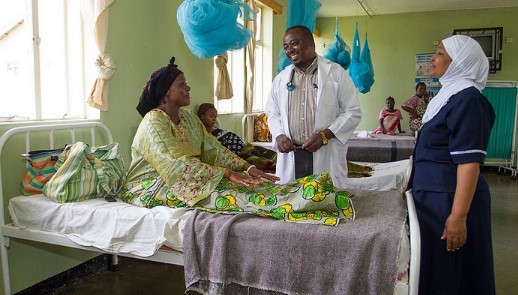
The Federal Government has proposed a sum of ₦42.18 billion to provide basic healthcare services for 10 million vulnerable Nigerians, drawn from the ₦2.48 trillion allocated to the health sector in the proposed 2026 budget.
The proposed allocation is intended for the procurement of drugs, medical consumables, equipment, laboratory reagents and test kits, with a targeted focus on expanding access to healthcare services for vulnerable populations across the country.
President Bola Tinubu submitted the 2026 Appropriation Bill to the National Assembly last month, setting out his administration’s fiscal priorities against the backdrop of ongoing economic and social challenges facing the nation.
In the budget framework, the health sector was identified as one of the government’s major priority areas, ranking fourth among overall spending priorities outlined in the proposal.
A breakdown of the proposed expenditure shows that Defence and Security received the highest allocation of ₦5.4 trillion, followed by Infrastructure with ₦3.56 trillion, Education with ₦3.52 trillion, and Health with ₦2.48 trillion.
From the total proposed federal budget of ₦58.47 trillion, the health sector’s allocation of ₦2.48 trillion accounts for approximately 4.2 per cent of total government spending.
The health allocation is designed to support a wide range of interventions, including disease prevention programmes, healthcare delivery, provision of medical supplies, and targeted assistance for vulnerable groups nationwide.
During his budget presentation, President Tinubu underscored the importance of health and education to national development, describing both sectors as fundamental to the country’s human capital growth.
“Health and education are key for human capital development. No nation can grow beyond the quality of the people,” the president said.
Tinubu also highlighted the contribution of international partners to Nigeria’s healthcare system, revealing that recent high-level engagements with the Government of the United States had secured access to more than US$500 million in grant funding for targeted health interventions.
“We welcome this partnership and assure Nigerians that these resources will be deployed transparently and effectively,” he added.
Despite the proposed allocations, health experts and stakeholders have expressed concerns over longstanding challenges associated with budget implementation in the sector.
They cautioned that delays in the release of funds, partial disbursement, and in some cases the non-release of approved allocations could weaken the impact of the proposed spending, including the planned healthcare support for vulnerable Nigerians.
The stakeholders further argued that beyond making budgetary provisions, effective and timely execution would be critical to ensuring that the proposed interventions translate into improved access to medicines, diagnostics and quality healthcare services for millions of Nigerians in 2026.