







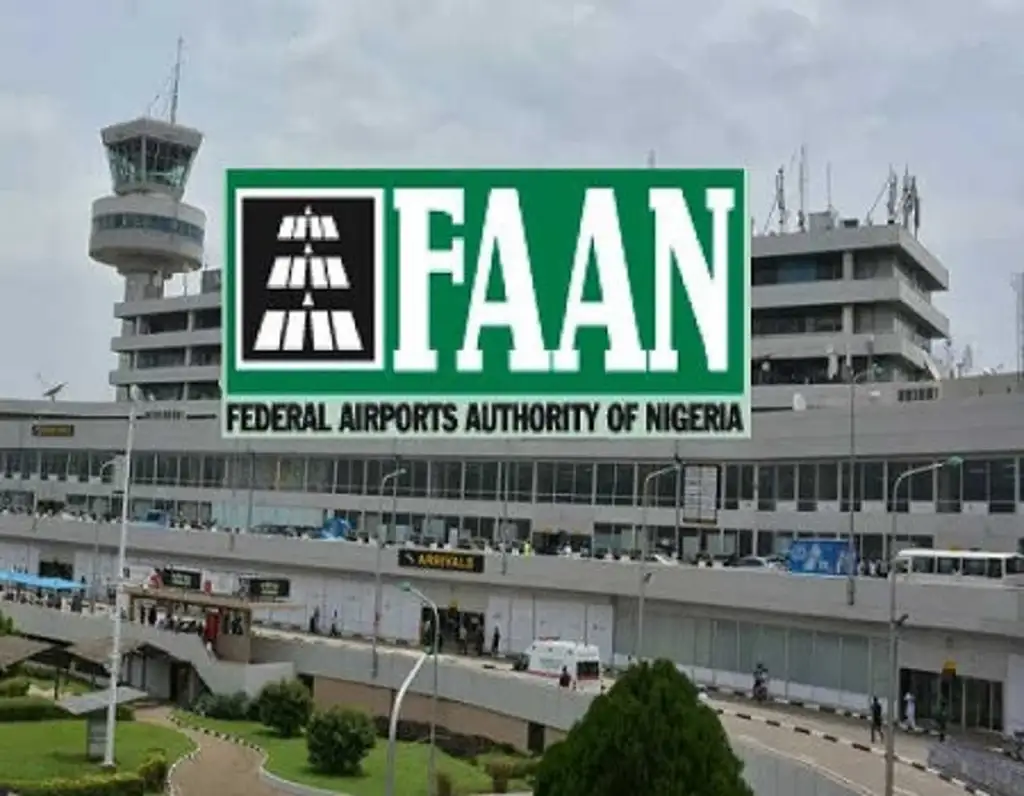
Passengers travelling through airports in Lagos and Abuja on Sunday were stranded after the Federal Government enforced a cashless payment policy at airport entry gates, causing heavy gridlock, missed flights and widespread frustration.
Several travellers recounted difficult experiences as motorists grappled with the newly introduced electronic payment system implemented by the Federal Airports Authority of Nigeria.
Some travellers abandoned their vehicles at airport entrances after encountering payment difficulties, while others reported missing scheduled flights after spending hours trying to gain access to the terminals.
A frequent flyer in Lagos, Adedeji Rilewan, said government agencies must strike a balance between reform and operational readiness. He added that he was forced to park his car at the airport entrance and proceed with his relatives in order to catch his flight, according to The Punch.
“Nobody is against cashless payment, but you don’t introduce a system that prevents people from catching flights. Airports are time-sensitive environments. I had to park my car with my cousins at the gate to be able to catch my flight. As I speak with you now, I am sweating profusely,” he said.
Another passenger at Murtala Muhammed Airport in Lagos, who gave his name as Wale, described the situation as chaotic and completely unexpected.
“I left home very early, thinking I had enough time for my flight, only to get stuck at the airport gate for over an hour. The payment system was not working smoothly. People were confused, and nobody seemed to know what to do,” he said.
Barely six months ago, FAAN announced that all payments at its revenue points—including airport access gates, car parks, VIP lounges, and protocol services—would become fully electronic starting September 2025.
The agency stated that the move aims to modernise airport operations, enhance transparency, and bring Nigeria’s aviation sector in line with global digital standards.
However, enforcement had been largely dormant until February, when FAAN announced that the Federal Government would fully implement the cashless policy from March 1, 2026, as part of efforts to curb revenue leakages.
Sunday’s enforcement marked the first full-scale rollout of the directive.
Reacting to the situation, FAAN spokesperson Henry Agbebire attributed the disruption to motorists’ last-minute attempts to comply, despite months of public awareness campaigns.
“I think what happened was that we tried to publicise this as much as possible, but a lot of people waited till the last minute before getting their cards. The implementation of the cashless programme started today,” he said.
He explained that the agency had fully eliminated cash payments at airport toll gates and had provided facilities for card registration near the airport entrances.
Agbebire said, “Nobody passed through the toll gate and paid cash today, and that led to traffic congestion because many people were registering on the spot to obtain cards.
“There is a canopy close to the toll gate where people can register. Those coming from Oshodi can cross over, while those approaching from the local airport end can drive into the aviation school area to get their cards.”
Agbebire insisted that card availability was not an issue, noting that although POS payments were accepted, they slowed traffic flow.
He maintained that the cashless initiative was essential to curb corruption and promote transparency in revenue collection.
He said, “We don’t have a problem with cards. We have enough cards for people. The card is free. You only need to load it, maybe N1,000 or N2,000, and you can use it several times before reloading.
“We accept POS, but POS transactions slow down movement, so we encourage people to get the dedicated FAAN card. From tomorrow, more personnel in branded shirts will assist travellers with registration. The idea is to block leakages and align with the Federal Government directive that revenues must be collected electronically,” he said.

