



Energy, fintech, and telecommunications companies account for the highest number of consumer complaints in Nigeria, according to the Federal Competition and Consumer Protection Commission.
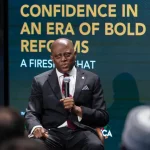
The commission’s Executive Vice Chairman, Tunji Bello, disclosed this on Thursday while briefing State House correspondents at the Aso Rock Presidential Villa.
Bello said the commission has received thousands of complaints from Nigerians across the sectors and had recovered more than N20bn for consumers as of March 2026.
He added that between March and August 2025 alone, the commission resolved more than 9,000 complaints and secured over N10bn in refunds for consumers.
“Let me tell you where most complaints come from. Mostly on energy, fintech. For energy, people complain about the electricity supply, and so on. That’s where we get most complaints. And that led to recent action in Lagos against a disco. Also fintech. You know, people do a lot of transactions online, and most of them are either given unfair terms.
“Somebody has borrowed money, and then you discover that when they ask to pay back, the interest rate is outrageous. Most of them we have interrogated, and we’ve been able to resolve as many as possible,” Bello stated.
He added that the telecommunications sector and banks also generate a significant volume of complaints, noting that the commission receives about 25,000 petitions annually through various platforms. Tunji Bello said total recoveries for consumers had surpassed N20bn as of March 2026, up from N10bn recorded in October 2025.
The FCCPC boss also disclosed that the agency had begun monitoring petrol prices and other commodities nationwide following the escalating tensions involving the United States, Israel, and Iran in the Middle East.
He said monitors had been deployed across the country to track price movements and prevent fuel suppliers and petrol stations from exploiting Nigerians.
“We are presently monitoring the situation as it affects prices in Nigeria and various prices. Because it’s not just petrol. Petrol has supply effects on some of the things we eat or we take on a daily basis.
“So we are monitoring. I will still want to see it as a temporary measure. But you know, the federal government under the leadership of our president has recorded massive gains in the last two years, and we don’t want to see this as something that will now begin to offset that progress,” Bello added.
He said the commission is working closely with regulators in the petroleum sector to ensure adherence to established pricing regulations.
“Whatever the fuel suppliers dictate, if the petrol stations are not complying, those are the things we are trying to monitor. If somebody has reduced N100 or N200 from it and you are still selling your own for N1,500 per litre, we should be able to ask you, ‘ Why are you doing that? So those are the things that our monitors are outside already monitoring developments,” he stated.
Bello also said the Federal Competition and Consumer Protection Commission is working with the Nigerian Upstream Petroleum Regulatory Commission to strengthen compliance monitoring.
On aviation, he noted that airlines that increased ticket fares during the December 2025 festive travel period would be required to refund passengers who were overcharged.
He added that investigations into alleged price-fixing involving about five or six airlines had been concluded, with the commission set to release its final report and applicable sanctions soon.
“We investigated following the complaints that they fixed prices during the Christmas period. Prices of airline tickets were around N45,000 to N50,000, and suddenly became N400,000 to N500,000, from N400,000 to N670,000 during the Christmas period. So we followed up through our investigation, and we were able to conclude that it was a kind of price-fixing mechanism,” Bello said.