



The Nigerian Bulk Electricity Trading Plc revealed that just N60 million of the N858 billion allocated in its 2025 capital budget for electricity tariff shortfalls was actually released.
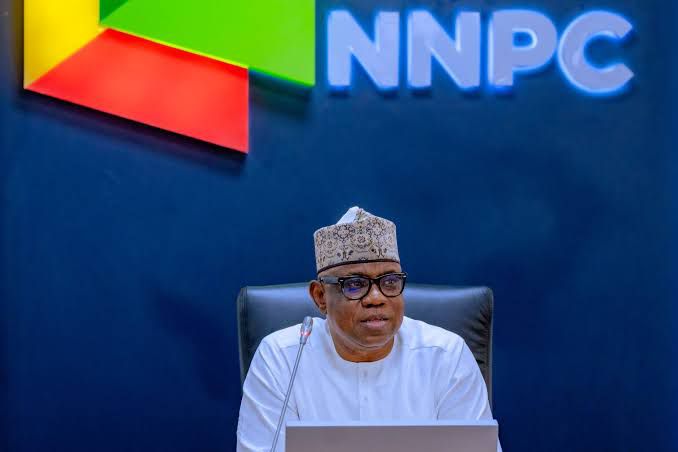
Acting Managing Director Johnson Akinnawo made the disclosure while presenting the agency’s 2025 budget performance and defending its 2026 proposal before the Senate Committee on Finance.
He cautioned that ongoing underfunding and tariffs that do not reflect actual costs are undermining the stability of Nigeria’s electricity market.
Akinnawo said the large shortfall between budgeted funds and actual releases has sharply limited the agency’s capacity to pay power generation companies.
Lawmakers voiced concern over the growing financial pressure on the power sector and the potential impact on electricity supply across the country.
Akinnawo told lawmakers that although N858 billion was appropriated to cover tariff gaps and outstanding obligations to generation companies, actual disbursements fell far short.
He emphasized that the limited funding negatively impacted NBET’s overall budget performance for the year.
“At the close of the year, only N60 million was released toward the end of the year. Unfortunately, because of that, our budget performance was affected.
“There remains a gap between the cost of generation, transmission, and distribution of electricity.
“Every GenCo gets paid an equal percentage from whatever collections come from the DisCos. The Federal Government, through the Ministry of Finance, covers the funding gap arising from partial risk guarantees to make up the difference.
“The gap between generation costs and allowed tariffs is substantial, and without government intervention, the market cannot remain stable,” he said.
He noted that the N60 million released remained unutilized due to procurement process limitations, compounding the agency’s funding difficulties.
NBET has long struggled with structural deficits in Nigeria’s electricity market.
The agency was created as a stabilizing institution in Nigeria’s power sector, tasked with buying electricity from generation companies and selling it to distribution companies while ensuring timely payments to power producers. Its role is critical in maintaining liquidity throughout the electricity value chain.
The tariff framework remains largely non-cost-reflective, leaving a persistent gap between actual generation costs and approved rates.
Distribution companies remit their collections to NBET, which in turn pays generation companies, but these collections are often inadequate.
The Federal Government steps in to cover the shortfall through the Ministry of Finance, including the provision of partial risk guarantees.