





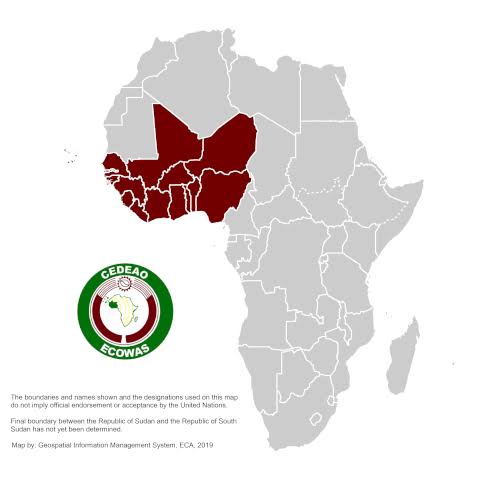
The Economic Community of West African States has approved significant changes designed to decrease the high cost of flying within Nigeria and the wider West Africa region.
This decision is expected to revolutionize the air transport sector.
The ECOWAS Commission issued a statement yesterday announcing that the Heads of State and Government, meeting at their December 2025 summit in Abuja, had adopted a crucial measure. This measure will mandate the removal of taxes currently applied to air transport and a 25 per cent reduction in passenger and security charges, effective from January 1, 2026.
ECOWAS stated that this move was necessitated by years of slow growth within the region’s aviation sector. This stagnation has been primarily caused by excessive taxes, charges, and fees that have historically suppressed travel demand and discouraged investment in vital airport infrastructure.
The Commission noted that various studies conducted by ECOWAS, the African Union, the African Airlines Association, and the International Air Transport Association consistently show that West Africa is one of the most expensive regions globally for air travel. These studies indicated that passengers sometimes face up to 66 separate charges, while airlines contend with more than 100 fees.
The Commission warned that the excessively high cost of air travel acts as a major deterrent, discouraging movement, slowing down tourism, negatively impacting trade, and ultimately undermining the organization’s core agenda of free movement for its citizens.
According to the statement, the formal adoption of the Supplementary Act on Aviation Charges, Taxes and Fees is the mechanism chosen to address these structural issues and bring the region into alignment with international aviation standards and best practices.
The comprehensive reform is projected to yield substantial benefits for the region. These benefits include lower ticket prices for consumers, a resultant increase in passenger traffic, stronger and more competitive airlines, heightened airport activity, and the generation of more economic opportunities for local communities.
ECOWAS emphasized the responsibility of its members in the implementation process. Member states are required to amend their respective national laws and policies to ensure the full and effective realization of the new policy, while airlines are explicitly expected to pass the mandated reductions directly on to travelers.
Furthermore, the Commission stated its commitment to ensuring accountability and compliance. It announced that it will track adherence to the new rules through the establishment of a new Regional Air Transport Economic Oversight Mechanism. It also committed to supporting other complementary initiatives, such as the creation of joint maintenance facilities and the harmonization of regional safety standards.
The formal statement from the organization provided precise details on the measure: “The Heads of State and Government of the Economic Community of West African States, at their Summit held in December 2024 in Abuja, adopted a landmark measure aimed at lowering the cost of air travel across the region.”
The statement specified the timeline and the extent of the financial relief: “From 1 January 2026, all ECOWAS Member States will remove taxes applied to air transport and reduce passenger and security charges by 25 percent. This decision comes against the backdrop of years of stunted growth in the region’s air transport sector, largely due to excessive taxes, charges and, in some instances, fees, which together suppress travel demand.”
It also detailed the negative economic consequences of the status quo: “This situation has limited governments’ ability to mobilise adequate revenue for investment in airport infrastructure and services, thereby reducing the sector’s attractiveness as a driver of economic development.”
The Commission highlighted the policy’s international relevance: “The new policy aligns with the principles of the Inter- national Civil Aviation Organization and the Chicago Convention, which promote fair, transparent and non-discriminatory aviation practices worldwide. It is also designed to enhance the competitiveness of West African airlines, strengthen airports and stimulate investment in aviation infrastructure.”
The expected financial impact was clearly articulated: “The expected benefits of the reform are substantial. Ticket prices could fall by as much as 40 percent, making air travel accessible to a broader segment of the population. Airlines are expected to carry more passengers, while airports and surrounding communities will benefit from increased traffic and economic activity.”
Finally, the long-term economic outlook was noted: “Tourism and business travel are projected to expand, while governments are expected, in the long term, to generate increased revenue from a stronger and more dynamic air transport sector.”

