



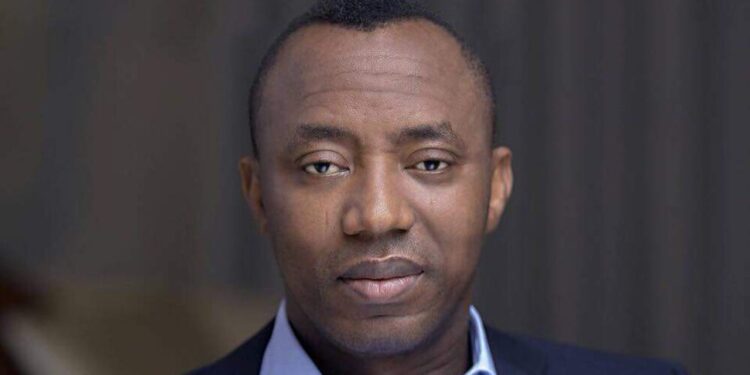
Founder of Women Empowerment and Legal Aid, Mrs Funmi Falana, SAN, and human rights activist, Mr Omoyele Sowore, have identified economic empowerment as the foundation of women’s freedom, dignity, and protection from abuse in Nigeria.
They spoke at the 2025 graduation ceremony of the WELA Vocational Training College, where 17 beneficiaries completed the ninth edition of the organisation’s skills acquisition programme in Lagos.
The event was held to commemorate International Human Rights Day and carried the theme, ‘Building Lives, Restoring Hope.’
In her address, Falana said WELA’s years of advocacy and litigation had shown that access to justice is ineffective when victims lack the economic capacity to assert their rights.
“Many women suffer oppression and domestic violence because they are economically dependent. Fear of losing financial support keeps them silent,” she said.
Falana noted that without financial independence, many victims are unable to leave abusive situations or pursue justice, despite existing legal protections.
Speaking at the event, Sowore criticised what he described as the failure of government to provide basic services, stating that non-governmental organisations had been compelled to intervene where the state had fallen short.
“In a country where government has failed, NGOs are now the ones providing food, water, electricity and sanitation,” he said.
Sowore also described plans to impose taxes on non-governmental organisations as misplaced, arguing that such organisations were already shouldering responsibilities that should ordinarily fall on government.
In her keynote address, child rights advocate and founder of the CEE-HOPE Foundation, Ms Betty Abah, said economic empowerment remains the most practical response to poverty, abuse, and systemic failure.
“Advocacy without empowerment does not change lives,” she said.
Abah described WELA’s vocational training programme as a tangible and measurable intervention that directly improves the lives of vulnerable women and restores hope.