



The Lagos Chamber of Commerce and Industry has said the Dangote Petroleum Refinery’s landmark crude oil purchase from the United Arab Emirates could help deepen trade ties between Nigeria and the UAE, while emphasising that the deal is a purely commercial transaction rather than a diplomatic arrangement.
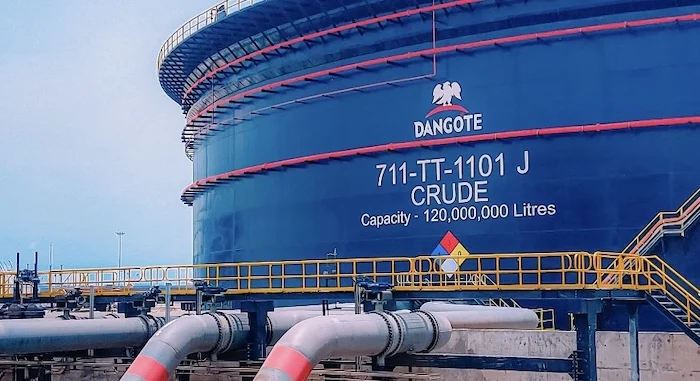
The comment follows the refinery’s first-ever purchase of two cargoes of UAE crude, marking the first time the 700,000-barrels-per-day facility has sourced feedstock from the Middle East.
The move reflects Dangote Refinery’s efforts to diversify its crude supply sources amid persistent shortages of domestic crude.
Nigeria and the United Arab Emirates signed the Comprehensive Economic Partnership Agreement, under which Nigeria eliminated tariffs on 6,243 products from the UAE, while the UAE removed tariffs on 7,315 Nigerian products, a move aimed at deepening bilateral trade and investment between both countries.
The President of the Lagos Chamber of Commerce and Industry, Leye Kupoluyi, said the refinery’s decision reflected sound commercial judgment driven by prevailing market opportunities, according to The PUNCH.
“It’s very straightforward. It’s a business. When you are running your business, you always look at opportunities. Opportunity drives business. We should look at how much the UAE suppliers are selling to Dangote.
“If the refinery has seen a better deal somewhere, we cannot say because of patriotism it must buy from Nigeria,” Kupoluyi said.
He noted that crude procurement is influenced by several commercial factors, including pricing, quality and the range of refined petroleum products that different crude grades can yield.
Kupoluyi explained that Nigeria’s crude oil sector has become increasingly complex due to the involvement of international oil companies and the commercial dynamics of the global energy market.
“The grade of the crude is different. There are derivatives you may get by buying from those areas. Local production is not as local as we think because it involves international companies that have invested heavily and want to recover their investments,” he noted.
Kupoluyi maintained that local refiners should have the flexibility to source crude oil from any market, provided such transactions are commercially viable and aligned with Nigeria’s national interest.
“It is an economic decision,” Kupoluyi stressed. “The refinery owners are business people, and they have shareholders. If the crude is available in Nigeria and suits their requirements, they will buy it. But if sourcing elsewhere benefits the business and does not conflict with Nigeria’s national interest, then it is a business decision.”
He added that as Nigeria’s refining capacity expands, domestic crude production alone may eventually be insufficient to meet demand, making imports necessary to bridge the supply gap.
“If more refineries are built in Nigeria, the crude produced in Nigeria may not even be enough for all of them. That is healthy competition. Before now, we depended on imported petroleum products, but today we have choices. We have our own refinery that can buy crude from the UAE, America or elsewhere. The government should ensure national interest is protected while allowing businesses to make sound commercial decisions,” he added.
Dangote Refinery recently secured two cargoes of crude oil from the United Arab Emirates after improved shipping conditions in the Middle East, following easing geopolitical tensions. The purchases add to the refinery’s existing crude supplies from Nigeria, other African producers and the United States as it broadens its sourcing strategy.
The refinery also continues to receive between 13 and 15 cargoes of Nigerian crude each month under its crude supply arrangement with the Nigerian National Petroleum Company.