






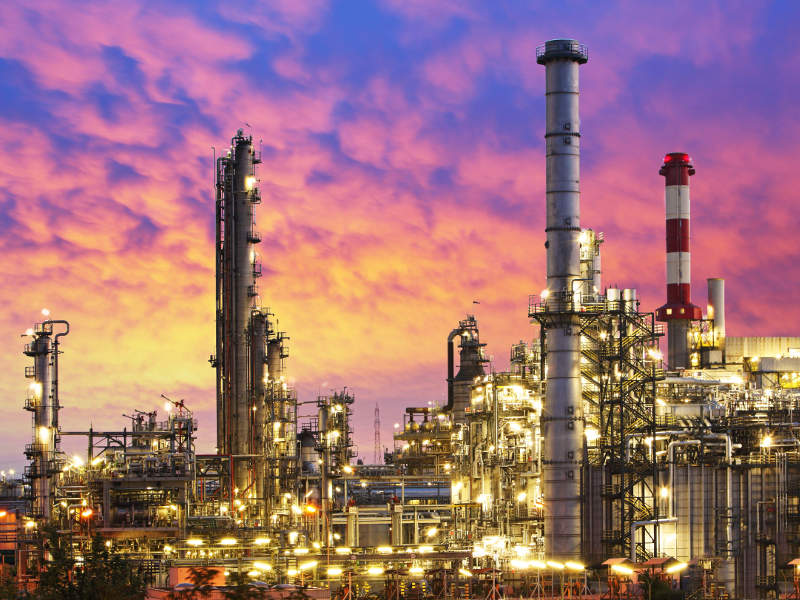
The Dangote Petroleum Refinery is now running at unprecedented levels of reliability and efficiency, with production reaching approximately 610,000 barrels per day this month—approaching its official nameplate capacity of 650,000 bpd, according to global energy and commodity agency Argus.
On a podcast titled “Can the Dangote Refinery Declare Victory Over Doubters?” obtained by our correspondent on Thursday, Benedict George, Editor of the Argus European Products Report, said the refinery has surpassed industry expectations in 2025 by maintaining consistently high operational performance.
“The Dangote refinery has been running this year more reliably and strongly than ever before. We have seen crude receipts at the refinery and therefore implied run rates growing month on month. In recent months, we have been looking at above 400,000 barrels per day. As of June, we were around 440,000, 450,000 barrels per day. So we are well above half of its nameplate capacity. And output is rising starkly as a result, as you can imagine.
“This month alone, we are looking at around 610,000 barrels per day in implied running rates. So we are not only seeing it running quite reliably, but essentially thriving by this point, I would say.
“Yeah, and getting close to its nameplate capacity, as you say, which is something that I think we had last year. It was running well, but we were settling into the expectation that it doesn’t seem to be able to reach its nameplate capacity of 650,000 barrels a day. But it is pushing towards that level now.
“The refinery has also been talking about expanding that nameplate capacity. We have since spoken with an executive at the refinery who has confirmed to us that they are running above capacity in some units to such a degree that they’re seeking to de-bottleneck. So it’s at this stage a plan, which is under consideration. Nevertheless, we have had some market sources suggest that such expansion could well be completed even by the end of the year,” he stated.
George observed that doubts about the refinery’s ability to achieve its full design capacity have been dispelled, noting that Dangote is now even exploring the possibility of expanding beyond 650,000 bpd.
“Last year, the assumption was that it would never reach its nameplate, but it is pushing towards that level now. We have since spoken with an executive who confirmed they are running some units above capacity and are seeking to de-bottleneck. Sources suggest such expansion could even be completed by the end of the year,” he added.
The Argus podcast noted that Dangote has disrupted Nigeria’s downstream oil market with aggressive pricing that frequently undercuts competitors, positioning the refinery as the country’s primary petrol price-setter.
It added that the refinery’s rising output is also reshaping regional fuel flows, as Dangote now exports to neighbouring West African countries, displacing European imports and forcing traders to divert supplies toward East and Southern Africa.
“Dangote has been growing its dominance this year within the Nigerian downstream market, spreading more completely across the country of Nigeria. The Dangote refinery is quickly becoming the most dominant market player within Nigeria. Its market prices for gasoline are mainly aggressively competitive to such a degree that they often undercut competitors and are price setters quite broadly within the country.
“This has forced local trading houses to essentially scramble for business. And where they can’t find it within the country, they’re having to look elsewhere within the broader West African region. Nevertheless, there is even further difficulty because Dangote’s production capacity is such that it is now able to sell cargoes into the surrounding West African neighbours, neighbouring states. So essentially, it is a dominant force both within the country and the broader region,” George said.
The refinery’s emergence has already eroded Europe’s long-standing dominance in the West African gasoline trade.
Nigerian gasoline imports from Europe dropped by half between May and June, sliding to just under 250,000 tonnes—the lowest level in nearly ten years.
“We have seen Nigerian gasoline imports of European molecules half in the month between May and June. It came in at just under a quarter of a million tonnes in June. That’s a kind of shockingly low volume there. Yeah, I think what’s even more interesting about this is that Nigeria is not only losing interest in imports on gasoline, amongst other refined products, of course, but its net position with regards to its import-export balance is quickly becoming poised to flip to a net exporter status for gasoline, which may well come to pass as soon as this month.
“Its net import position in June was the lowest on record, going back to at least 2016. So we are seeing that Europe has lost the West African gasoline market for the time being, lost in regards to its former significance. I think what many traders in Europe are ruminating over is the possibility that the Dangote refinery might well face a major upset. It might well be taken offline for unplanned maintenance, or there may well be a turnaround which is so disruptive in its scope and duration that there may well be a kind of window of opportunity to rework that up and regain some market share,” the Argus stated.

