




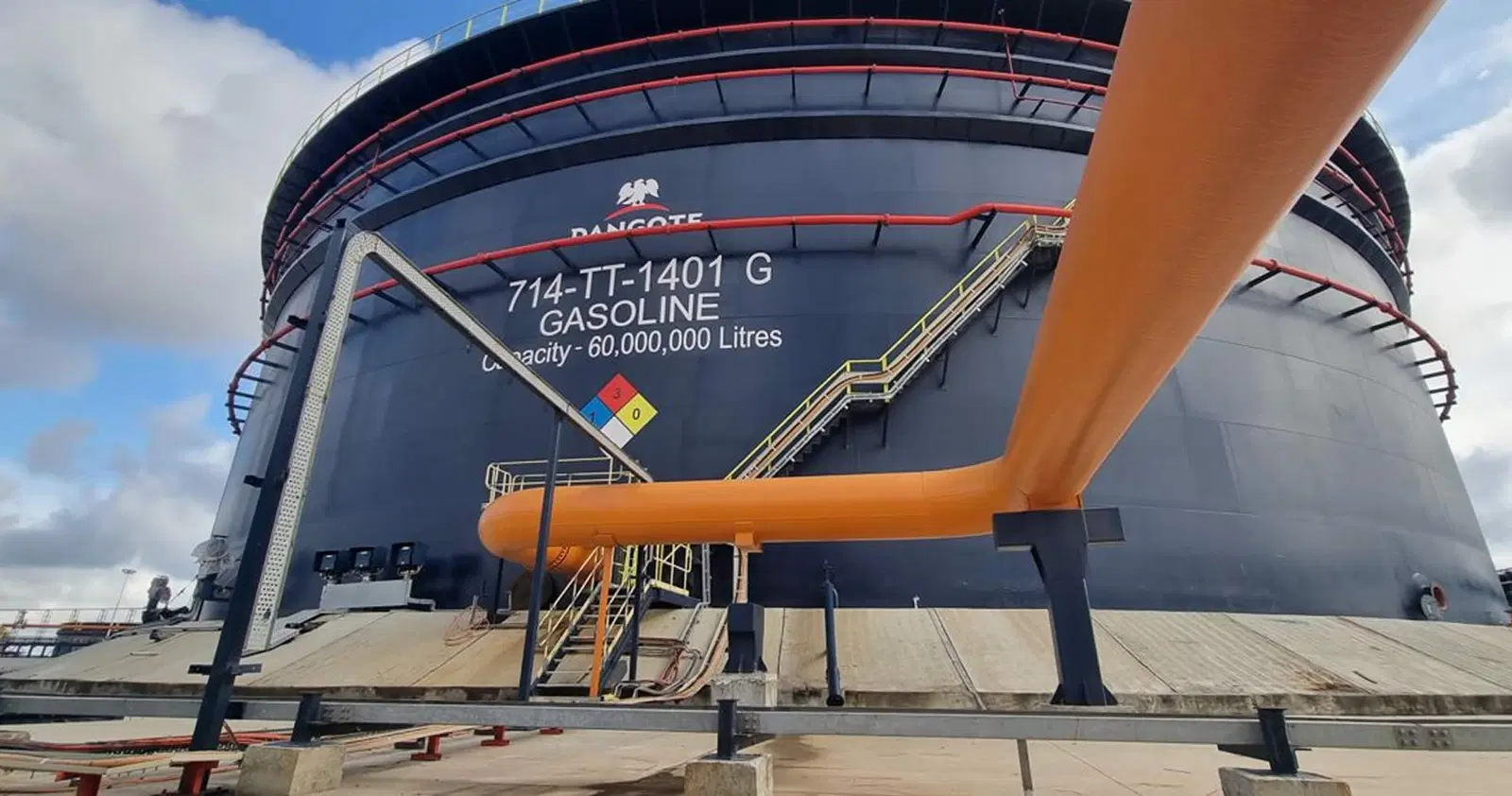
Nigeria’s domestic supply of petrol from the Dangote Petroleum Refinery and Petrochemicals rose sharply by about 64 per cent to an average of 32 million litres per day after operational improvements at the facility, according to the latest data released by the Nigerian Midstream and Downstream Petroleum Regulatory Authority.
Figures contained in the NMDPRA December 2025 fact sheet show that actual average domestic supply of Premium Motor Spirit reached 32.01 million litres per day in December, up from about 19.5 million litres per day recorded in November 2025.
The surge represents one of the strongest month-on-month increases in local petrol supply since the commencement of phased operations at the 20 billion dollar Lekki-based refinery.
The increase followed leadership changes and internal restructuring at the refinery after the exit of Farouk Ahmed as chief executive of the NMDPRA, a period industry stakeholders say coincided with improved coordination among regulators, operators and off-takers across the downstream petroleum value chain.
The fact sheet shows that the Dangote Refinery alone contributed about 5.78 million litres per day to Nigeria’s total domestic PMS supply in December, with overall supply performance strengthened by better refinery utilisation and more efficient evacuation of products into coastal depots as well as truck-outs to the domestic market.
Data from the regulator also indicate that the refinery recorded a peak capacity utilisation of about 71 per cent during the month, underscoring what the NMDPRA described as strong capacity utilisation for December.
Average capacity utilisation across Nigeria’s domestic refining assets stood at over 63 per cent, reflecting gradual stabilisation after several months of intermittent operations earlier in the year.
The improvement in local supply helped push national petrol sufficiency to about 29 days in December, compared with much lower levels recorded in September and October, when domestic supply fell short of national demand benchmarks.
Nigeria’s daily petrol demand benchmark for 2025 is estimated at 50 million litres per day, although actual truck-out consumption averaged 63.7 million litres per day in December, pointing to sustained pressure from cross-border demand and stock build-up ahead of the festive season.
The NMDPRA attributed the rebound in PMS availability to a combination of increased output from the Dangote Refinery, strategic imports by the Nigerian National Petroleum Company Limited as supplier of last resort, and efforts to rebuild national inventories ahead of peak end-of-year demand.
The regulator also noted that twelve vessels originally scheduled to discharge petrol cargoes in October spilled into November, providing additional support to supply levels entering December.
Aliko Dangote, president and chief executive of Dangote Industries Limited, has repeatedly reaffirmed the refinery’s commitment to meeting Nigeria’s domestic petrol needs while also supplying export markets.
“Our priority is to ensure Nigeria receives the products it needs,” Dangote said recently. “This is not driven by profit motives; it is about guaranteeing the availability of essential energy products.”
Industry analysts say the steady rise in domestic petrol supply from the Dangote Refinery is central to Nigeria’s long-term objective of cutting reliance on imports and stabilising pump prices, particularly as the facility ramps up towards full nameplate capacity.
Average indicative pump prices for PMS in November ranged between N910 and N982.50 per litre across major cities, reflecting continued sensitivity to exchange rates and global petrol prices despite gains from increased local refining.
Beyond petrol, the NMDPRA report shows mixed performance across other petroleum products. Supply of Automotive Gas Oil from domestic refineries remained constrained, with some facilities shut down, while modular refineries contributed marginal volumes averaging about 0.39 million litres per day.
Liquefied Petroleum Gas supply remained relatively robust, with domestic production accounting for more than 70 per cent of total supply in December.
Regulators and market participants expect the role of the Dangote Refinery in Nigeria’s domestic fuel market to expand further in 2026 as operational bottlenecks are resolved and additional processing units stabilise.
With planned domestic PMS supply targeted at 50 million litres per day, sustained output from the refinery is viewed as critical to closing Nigeria’s petrol supply gap and strengthening fuel security in the post-subsidy era.

