


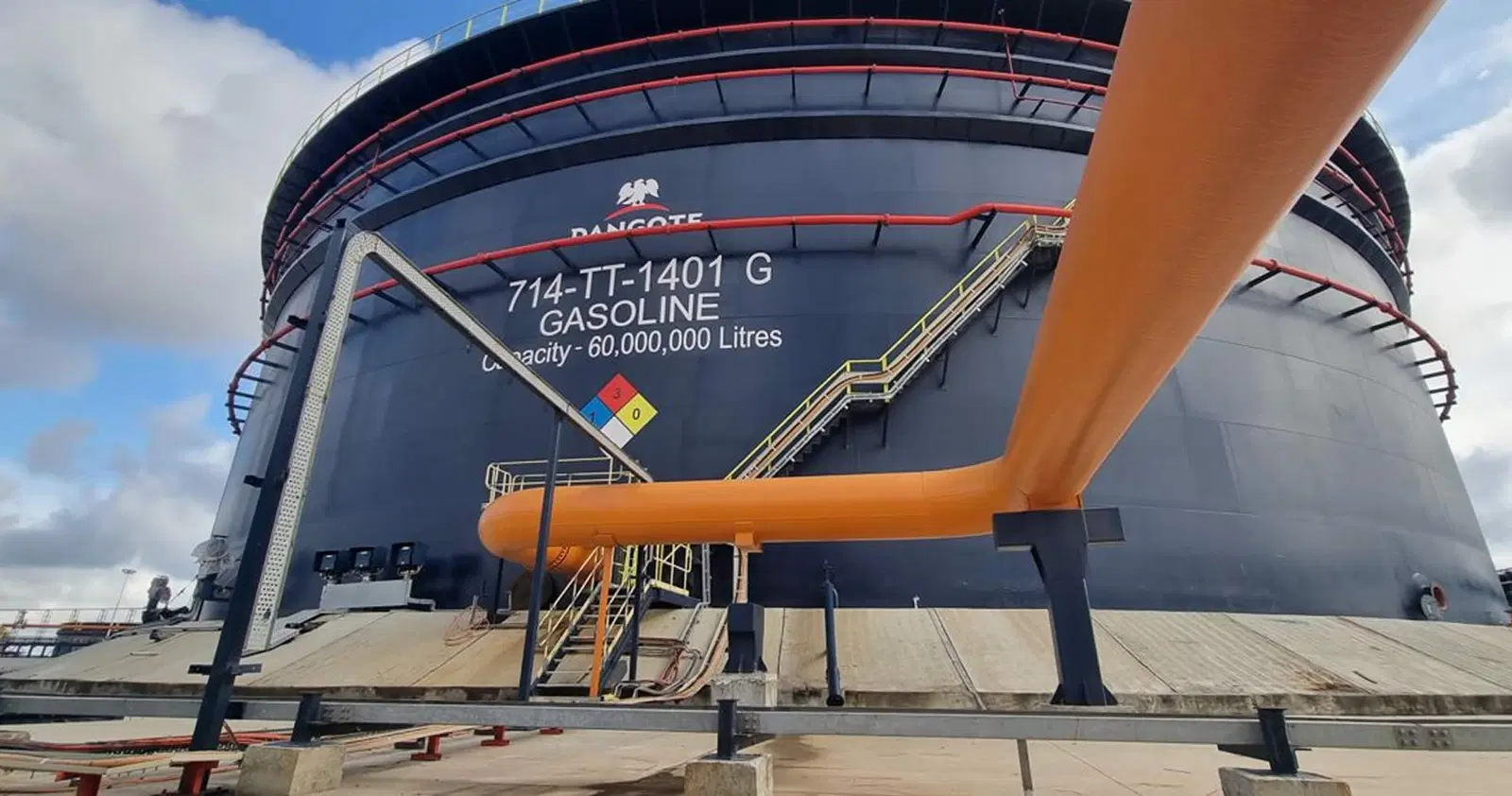
The Dangote Petroleum Refinery has achieved its full nameplate capacity of 650,000 barrels per day after restoring and optimizing its Crude Distillation Unit and Motor Spirit production block, a milestone the company says is a world first for a single-train refinery of this size.
In a statement on Wednesday, Dangote Petroleum said this marks a key stage in the ramp-up of Africa’s largest oil refining facility.
The refinery has begun a 72-hour intensive performance test run with its licensor, UOP, to confirm operational stability, efficiency, and adherence to global standards.
The refinery said the milestone came after a scheduled maintenance exercise on the Crude Distillation Unit and Motor Spirit Block, after which both units were fully stabilized and optimized for steady-state operations.
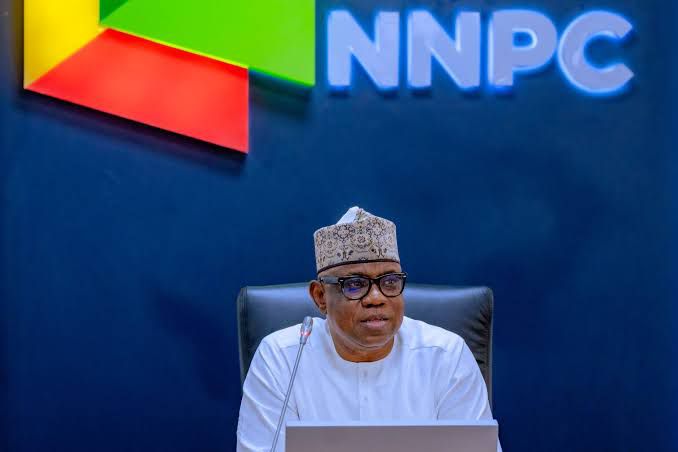
Dangote Petroleum Refinery’s Managing Director and CEO, David Bird, stated that the seamless integration of the units highlights the refinery’s engineering expertise and operational resilience.
“Our teams have demonstrated exceptional precision and expertise in stabilising both the CDU and MS Block, and we are pleased to see them functioning at optimal efficiency.
“This performance testing phase enables us to validate the entire plant under real operating conditions. We are confident that the refinery remains firmly on track to deliver consistent, world-class output.
“This milestone underscores the strength, reliability, and engineering quality that define our operations. We remain committed to producing high-quality refined products that will transform Nigeria’s energy landscape, eliminate import dependence, and position the nation as a net exporter of petroleum products,” he said.
According to him, the Crude Distillation Unit (CDU) is the refinery’s primary processing unit, separating crude oil into different fractions, while the Motor Spirit (MS) Block—which includes the naphtha hydrotreater, isomerisation unit, and reformer, converts intermediate streams into high-octane petrol blend components.
Bird noted that all three components of the MS Block are now running steadily at the full 650,000 bpd capacity, effectively stabilizing petrol production output.
He added that the refinery’s remaining processing units will begin their own performance test runs under Phase 2 next week, marking the final stage of technical validation across the integrated complex.
Beyond this engineering achievement, the refinery also emphasized its expanding contribution to the domestic fuel supply.
“During the recent festive period, it supplied between 45 million and 50 million litres of Premium Motor Spirit daily to the Nigerian market,” it was stated.
With the CDU and MS Block fully restored and optimized, the company is now able to produce up to 75 million litres of PMS per day, a capacity that could reshape domestic fuel supply and ease pressure on imports.
This comes as Nigeria intensifies efforts to strengthen energy security, save foreign exchange, and curb its long-standing dependence on imported refined petroleum products, even as the country remains a major crude oil producer.