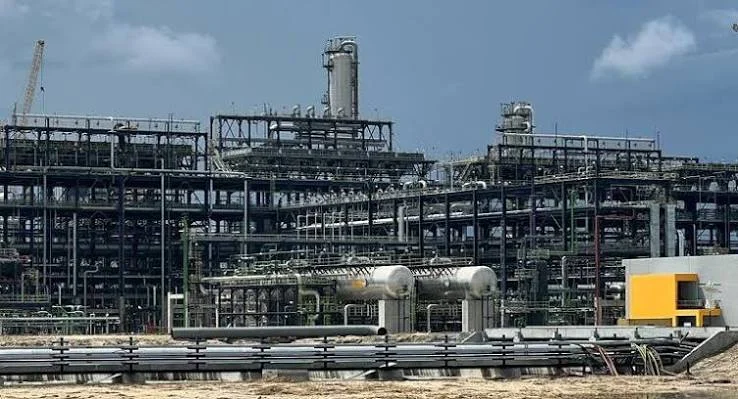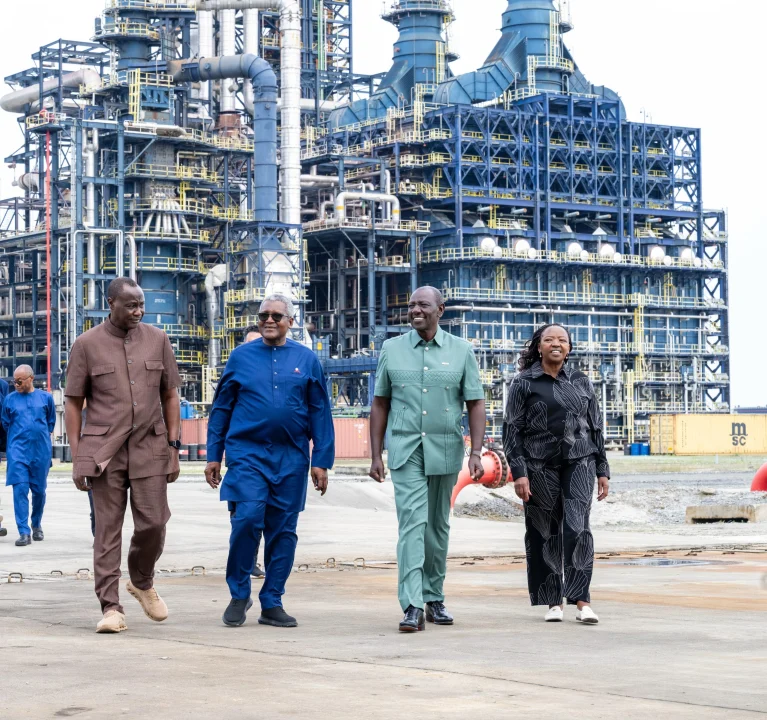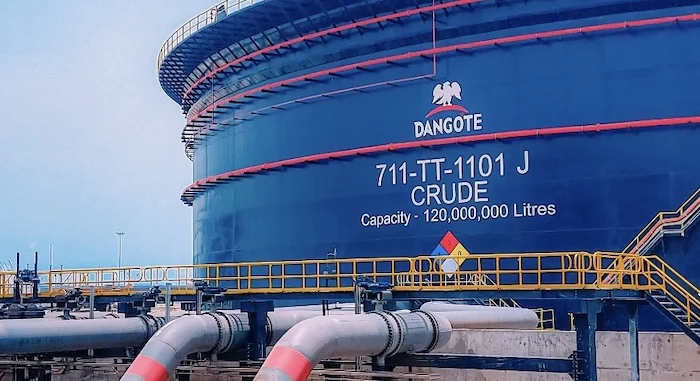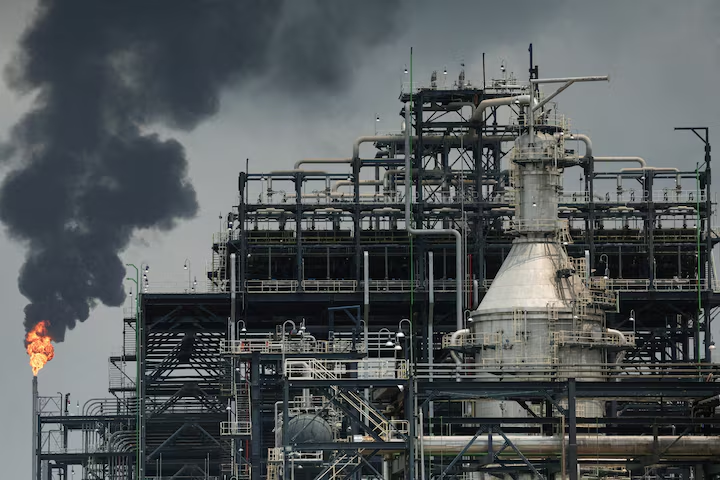
Exports of petrol, diesel and aviation fuel from the Dangote Petroleum Refinery climbed to 54.63 million litres per day in September 2026, overtaking the refinery’s combined domestic receipts of the three products for the month.
Data from the Nigerian Midstream and Downstream Petroleum Regulatory Authority’s September 2026 Fact Sheet show that combined exports rose by 14.85 million litres per day from 39.78 million litres per day in August 2026, a month-on-month increase of 37.33 per cent.
Combined domestic receipts, by contrast, fell by 22.08 per cent to 39.98 million litres per day from 51.31 million litres per day in August.
This means exports exceeded domestic receipts by about 14.65 million litres per day in September, reversing the August position, when domestic receipts were 11.53 million litres per day higher than exports.
The fact sheet splits the refinery’s output into three uses: domestic receipts, which are volumes received into the Nigerian market; exports; and changes in refinery stock. Domestic receipts and exports together make up the refinery’s evacuation.
The shift came even as the refinery raised its output.
Combined production of petrol (PMS), diesel (AGO) and aviation fuel (ATK) rose by 15.68 per cent to 97.67 million litres per day in September from 84.43 million litres per day in August.
Average capacity utilisation edged up to 105.98 per cent of the refinery’s 650,000 barrels-per-day installed capacity, from 105.21 per cent in August.
Exports accounted for about 57.74 per cent of the refinery’s combined evacuation of the three products, compared with about 43.67 per cent in August.
The 105.98 per cent utilisation rate was partly supported by crude inventory.
According to NMDPRA, the September utilisation rate implies a crude run of about 689,000 barrels per day, against 618,000 barrels per day of crude received. The regulator said the 71,000 barrels per day difference was drawn from refinery inventory.
A breakdown of the data shows how the shift played out across each product.
Petrol: Production rose by 12.59 per cent to 47.22 million litres per day from 41.94 million litres per day.
Petrol exports increased by 58.99 per cent to 15.47 million litres per day from 9.73 million litres per day.
Domestic receipts of petrol declined by 20.55 per cent to 28.50 million litres per day from 35.87 million litres per day.
Diesel: Production increased by 35.04 per cent to 24.32 million litres per day from 18.01 million litres per day.
Diesel exports rose by 81.83 per cent to 15.91 million litres per day from 8.75 million litres per day.
Domestic receipts of diesel declined by 34.20 per cent to 8.14 million litres per day from 12.37 million litres per day, making exports 1.95 times domestic receipts.
Aviation fuel: Production rose by 6.74 per cent to 26.13 million litres per day from 24.48 million litres per day.
Aviation fuel exports increased by 9.15 per cent to 23.25 million litres per day from 21.30 million litres per day.
Domestic receipts of aviation fuel rose to about 3.34 million litres per day from 3.07 million litres per day.
Aviation fuel exports drove the crossover, accounting for 87.44 per cent of the refinery’s evacuation of the product in September.
Although combined domestic receipts of petrol and diesel remained higher than their exports, at 36.64 million litres per day against 31.38 million litres per day, the gap narrowed sharply from 29.76 million litres per day in August to 5.26 million litres per day in September.
National petrol and diesel receipts fall
The drop in the refinery’s domestic receipts coincided with a broader decline in national petrol and diesel receipts, which cover volumes received from both domestic refineries and imports.
Nigeria’s average daily petrol receipts fell by 23.37 per cent to 38.7 million litres in September from 50.5 million litres in August.
Petrol imports declined by 30.14 per cent to 10.2 million litres per day, which NMDPRA attributed to approved permit volumes being exhausted.
Notably, Dangote’s petrol production of 47.22 million litres per day exceeded Nigeria’s average daily petrol consumption of 44.4 million litres, measured as volumes trucked out into the domestic market.
However, not all of that output was available to Nigerian consumers. Of the 47.22 million litres per day produced, 28.50 million litres went into the domestic market, 15.47 million litres were exported and 3.25 million litres were added to refinery stock.
Diesel receipts declined by 40 per cent to 8.7 million litres per day, the lowest in the 13 months covered by the fact sheet, against average daily consumption of 14.5 million litres.
NMDPRA attributed the low diesel receipts to low imports and low domestic evacuation amid high prices.
Nigeria’s daily petrol imports had fallen to 14.6 million litres in August 2026, while the Dangote Refinery operated at 105.21 per cent capacity utilisation and exported 9.73 million litres of petrol per day.
September’s figures show a further tilt towards exports, with combined exports of petrol, diesel and aviation fuel exceeding the refinery’s domestic receipts.
NMDPRA reported that domestic refining met about 65 per cent of national petrol consumption in September.
Petrol stock sufficiency stood at 23.9 days, below the regulator’s 30-day threshold.
Diesel stock sufficiency fell to 49.7 days from 51.6 days in August.
This leaves a gap between output and availability, as Dangote alone produced more petrol than the country consumed in September, yet national petrol stocks remained short of the regulator’s 30-day benchmark.