






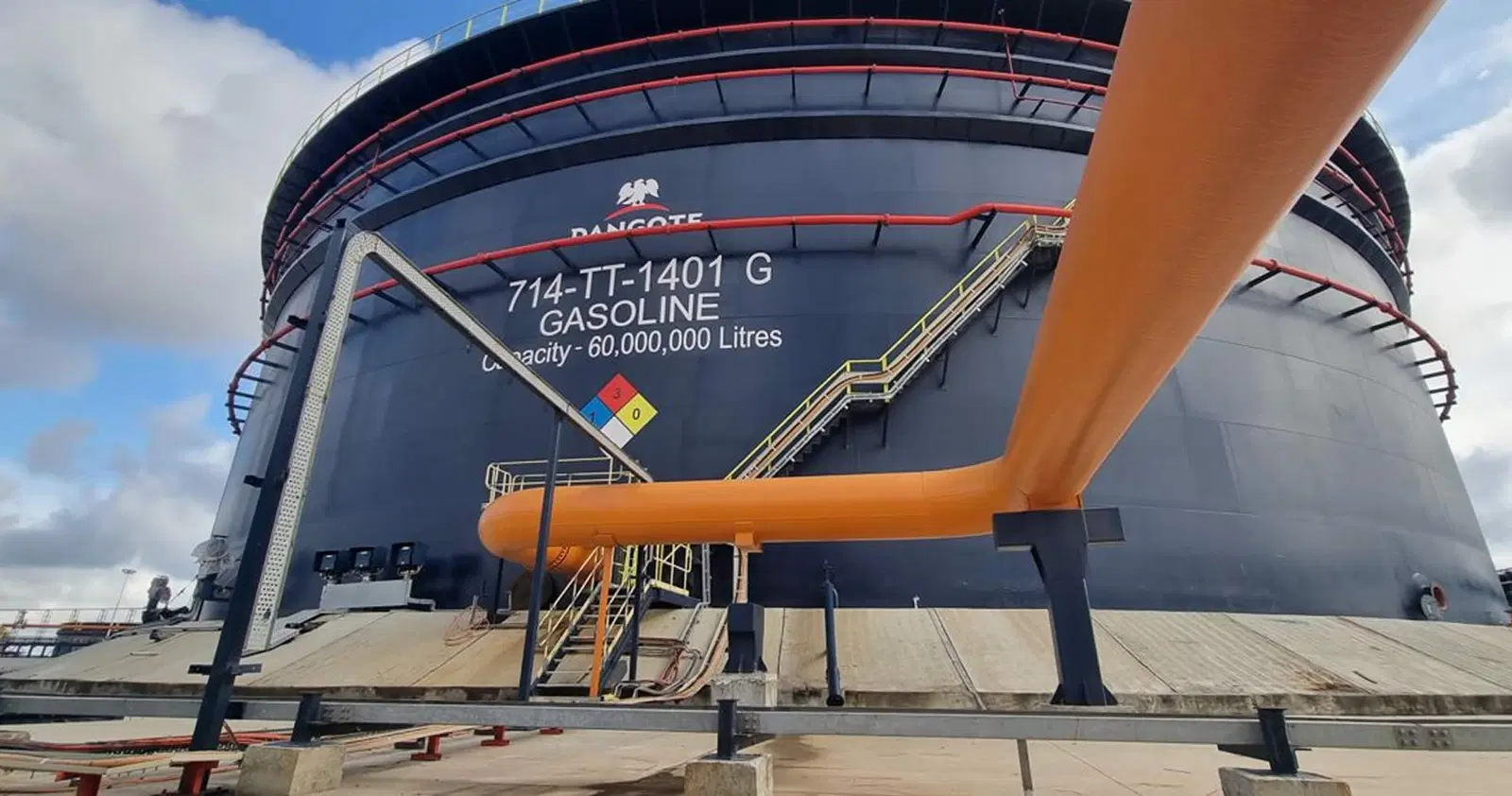
Nigeria’s domestic petrol supply experienced a significant surge, increasing by 111 per cent in 2025 to reach a record 3.8 billion litres in the first 10 months of the year, according to the Nigerian Midstream and Downstream Petroleum Regulatory Authority.
This dramatic increase, driven by the ramp-up of the Dangote Refinery and other local facilities, compares to the 1.8 billion litres supplied to the domestic market in 2024.
Engr. Farouk Ahmed, the Authority’s chief executive, announced this milestone, stating that the growth in domestic supply marks a turning point in the nation’s energy landscape, signalling a significant reduction in reliance on imported fuel and a major boost to local refining capacity.
Speaking at the 2025 Energy Correspondents Association of Nigeria Conference in Abuja, Ahmed described the achievement as a testament to the progress made since the Petroleum Industry Act’s implementation four years ago.
Ahmed declared: “Refined product supplies from local refineries to the domestic market have experienced drastic improvement. For example, PMS supply grew from 1.3 billion litres in 2024 to 3.8 billion litres in 2025, and the outlook is positive.”
The NMDPRA chief executive also emphasised that the Authority’s regulatory reforms have played a pivotal role in transforming the midstream and downstream oil and gas sector.
He said: “In the last 4 years, whenever I have had the opportunity to speak about our achievements and challenges at the NMDPRA, it always fills me with pride because on each occasion I can report that we are making very tangible progress at each step of the journey.”
The Authority has successfully gazetted 18 regulations and developed guidelines and standard operating procedures to ensure compliance and transparency.
Ahmed added: “We have also implemented strategies that have underscored our commitment to aligning regulatory oversight activities with national energy objectives and global best practices.”
He noted that crude supply to domestic refineries has also seen a dramatic increase, rising from about 20,000 barrels per day (bpd) in 2023 to over 40,000 bpd in 2025, which he attributed directly to the NMDPRA’s implementation of the PIA provisions.
Ahmed revealed that the Midstream and Downstream Gas Infrastructure Fund has invested over N287 billion in gas infrastructure projects, with 16 companies involved in 62 projects as of October 2025. He also revealed: “The MDGIF catalysed an additional $500 million investment to Gas infrastructure by leveraging on AFRIEXIM Bank MOU to expand energy access to drive economic development.”
Since 2021, the Authority has issued 23 ‘License To Establish’ for refineries, which, when fully operational, are projected to add over 850,000 bpd to Nigeria’s existing refining capacity.
Ahmed stated: “These new refineries will significantly boost our domestic refining capacity and reduce our dependence on imported products.”
Additionally, 10 gas distribution licenses have been issued for pipeline networks stretching 692km, connecting 412 customers and attracting an estimated $639.07 million in investment. Ahmed explained: “This distribution system has a multiplier effect across energy, agriculture, industry, manufacturing and socio-economic impacts.”
In its intervention, the Major Energy Marketers Association of Nigeria, represented by Mohammed Al-Kazeem, urged authorities to commit resources to build the technical, legal, and administrative skills needed across the new institutions and among industry partners.
MEMAN called for streamlining of processes and removing avoidable delays and review licensing and permit workflows with the objective of eliminating redundant steps, setting clear timelines and service level agreements, and digitising transactions where feasible.
MEMAN stated: “Ensure open access to infrastructure, enforce competition rules, guard against anti-competitive vertical integration, and make procurement and licensing processes transparent. A level playing field will lower prices, increase choice, encourage innovation, and protect consumers. Set clear, public metrics for success: safer operations, timely project deliveries, free and fair market outcomes, increased local content, and visible socio-economic benefits for host communities. Regular, transparent reporting will build trust and allow course correction.”
The Minister of State Petroleum (Gas), Ekperikpe Ekpo, who was represented by the Director of Gas, Ministry of Petroleum, Ruth Mela-Nunghe, stated that the gathering of media professionals, policymakers, and industry stakeholders was both timely and commendable as it also provides an essential platform to reflect on the progress made since the enactment of the PIA.
Ekpo said: “Yet, we must also acknowledge that there are gaps that require collective efforts to address, particularly in areas of cultural and community development, energy transition, and sustainable implementation of arts provision.”
Earlier, the ECAN chairman, John Ofikhenua, stated that the PIA has brought structure, transparency, and renewed confidence to the oil and gas industry.
He advised: “But our work is far from done. The PIA is not a finished product; it is a living document. As technology evolves, as global energy dynamics shift, and as the world races towards cleaner and smarter energy solutions, we too must evolve.”

