






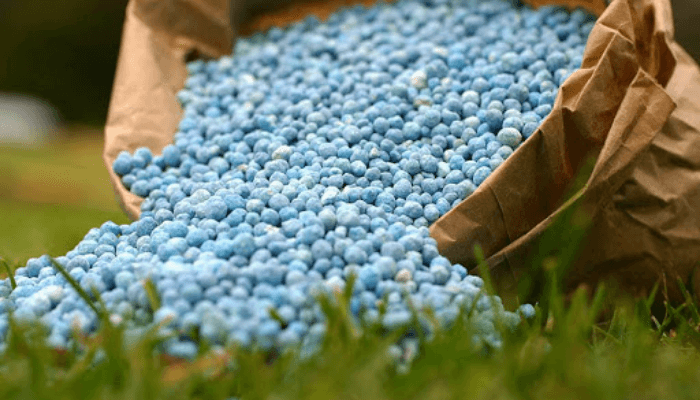
Demand for Dangote fertiliser has surged in recent times due to disruptions in global supplies caused by the ongoing United States–Israel conflict with Iran, according to a Bloomberg report.
The report quoted Devakumar Edwin, vice president of Dangote Industries Limited.
“Demand has gone up substantially due to the shortage in the global market,” Edwin told Bloomberg in an interview.
A major share of global fertiliser shipments typically moves through the Strait of Hormuz, the narrow waterway connecting the Persian Gulf to the Arabian Sea.
The conflict in Iran has effectively halted traffic in this corridor, limiting access to fertiliser exports from the region.
The disruption has affected supplies of key products such as urea and ammonia produced in Iran.
It has also pushed up natural gas prices, a critical input for fertiliser production.
Dangote’s fertiliser facility is Africa’s largest granulated urea plant, with an annual capacity of about three million tons of urea and ammonia.
The plant exports about 37 percent of its output to the United States.
It has previously stated aims to become the world’s largest exporter of urea within the next four years.
Africa currently imports more than six million metric tons of fertiliser each year.
This costly dependence weighs on agricultural productivity and exposes farmers to global supply shocks.
Last June, Aliko Dangote, president of the Dangote Group, unveiled plans to expand the $2.5 billion Dangote Fertiliser Plant.
The expansion will significantly increase production capacity.
It aims to reduce Africa’s heavy reliance on imported fertiliser and strengthen the continent’s self-sufficiency in agricultural inputs.
Dangote said at the time that the continent could become self-sufficient in fertiliser production within the next 40 months.
Earlier, Dangote announced that in the next two years, the company would be exporting almost 16,000 tons of fertiliser daily.
This would amount to about $7 million daily revenue for the federal government.
Dangote made this announcement during a courtesy visit to the headquarters of the Nigerian Ports Authority in Marina, Lagos, last year.
He added that, with the export of fertiliser, the company would be the country’s major source of foreign exchange earnings.
“In the next two years, we will be exporting about 16,000 tons of fertiliser. When you talk about 16,000 tons of fertiliser, it’s about $6.5 million to $7 million in revenue that will be coming into the country daily. With our export programme, our company will be the major supplier of foreign exchange earnings in Nigeria,” Dangote was quoted as saying.

