





A dramatic last-minute objection by Colombia at the closing session of COP30 in Belém, Brazil, failed to prevent what critics are calling an “empty deal” on global climate action.
Over nearly two weeks, momentum had built for a declaration to implement a fossil fuel phaseout, first agreed at COP28 in Dubai, with 82 countries backing a roadmap.
Yet, the final decision largely “reiterates stuff that’s already been agreed at previous meetings,” BBC correspondent Matt McGrath reported.
He noted that “There is nothing clear or obvious [in the final decision] about a move away from fossil fuels,” highlighting the lack of decisive language.
The document included only limited financial commitments for poorer countries, which McGrath described as “the equivalent of ‘the cheque’s in the post.’”
Colombia delayed the conference’s conclusion, citing a procedural lapse, with COP President André Corrêa Do Lago apologizing to Colombia, Uruguay, and Chile.
He said the decision could not be reopened but promised the issue could be revisited in six months at the UN’s interim COP meeting in Bonn.
In response to the ruling, Colombia said it would consult its own lawyers regarding the procedural handling of the summit.
UNFCCC executive secretary, Simon Stiell, praised delegates for navigating “stormy political waters” and said COP30 proved climate cooperation “is alive and kicking.”
Yet Nikki Reisch of the U.S. Center for International Environmental Law called the outcome “an empty deal,” noting real progress on fossil fuels is happening outside the UNFCCC, led by Colombia and Pacific Island states.
Sir David King of the UK Climate Crisis Group said the decision failed “the most basic test: does it secure a manageable future for humanity,” stressing that a fossil fuel phaseout is essential.
The absence of any language on phasing out fossil fuels was the summit’s most glaring gap.
Saudi Arabia, a key opponent, maintained that “we have to cut emissions regardless,” resisting explicit fossil fuel language.
Other countries, including Russia and India, also blocked progress on the inclusion of specific phaseout terminology.
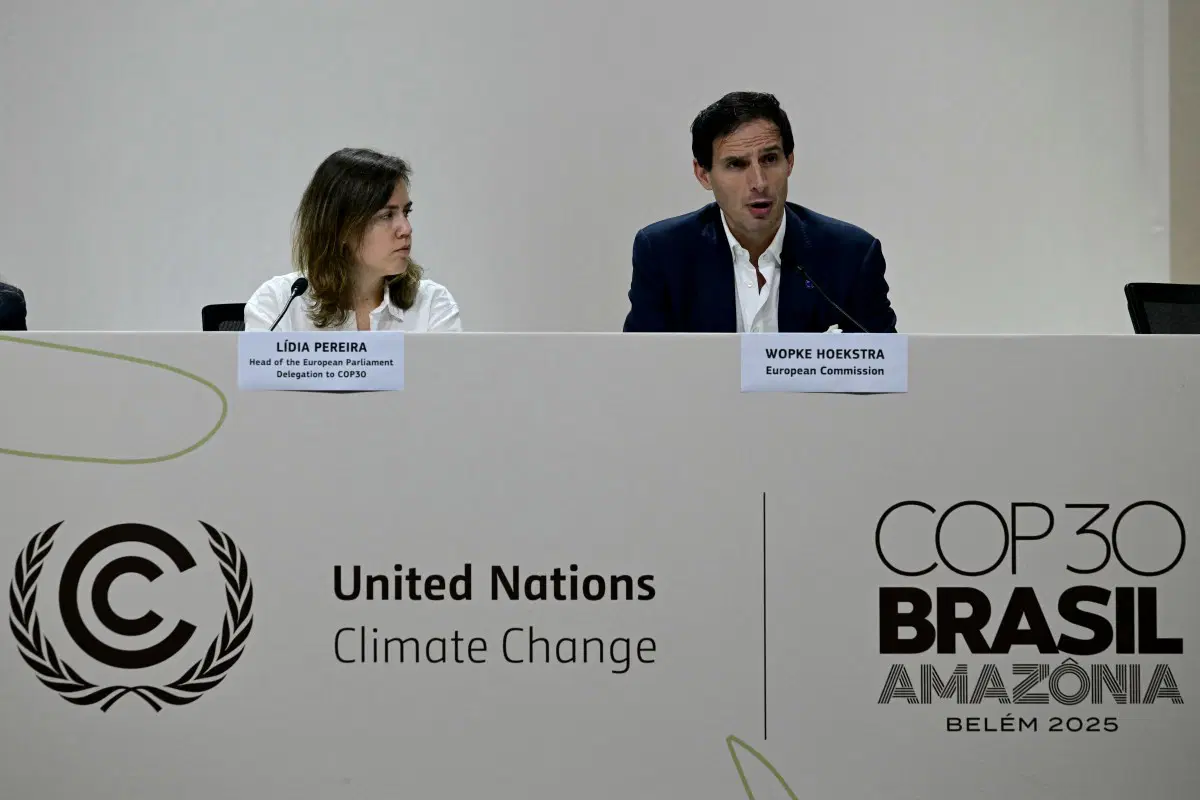
EU Climate Commissioner Wopke Hoekstra acknowledged disappointment but said the deal “is going in the right direction.”
Panama’s Juan Carlos Monterrey called it “complicity,” voicing strong opposition to the lack of ambition.
Germany’s Carsten Schneider described it as an “intermediate step” but promised continued EU support.
The summit saw modest progress on finance and forests, with wealthy nations agreeing to at least triple adaptation financing by 2035.
However, the Climate Action Network called the outcome “grim” for vulnerable countries.
Meanwhile, the Belém Action Mechanism was hailed as a breakthrough for rights and justice, supporting workers and communities affected by the fossil fuel transition.
Several deforestation initiatives were announced, including a $6-billion Brazilian rainforest fund and a $2.5-billion Congo Basin scheme, earning praise from Rainforest Foundation Norway.
COP30 also launched processes to align international trade with climate action.
Bill Hare, CEO of Climate Analytics, noted that although the fossil fuel phaseout roadmap “didn’t deliver as needed,” the summit nudged progress on forest protection, adaptation, and scrutiny of fossil fuel producers.
More than 90 countries support moving away from fossil fuels, though opposition from some states weakened the process.
Outside COP30, Colombia and Denmark announced they will host the First International Conference on the Just Transition Away from Fossil Fuels in Santa Marta next April.
Colombia’s Environment Minister Irene Vélez Torres emphasized the need to maintain momentum, stating, “We must keep the momentum, lead with bravery, rise to the challenge, and build a coalition of the willing.”
The Netherlands’ Deputy Prime Minister Sophie Hermans added, “There is a clear momentum to phase out fossil fuels… we must start a concrete roadmap that allows us to incorporate the new and leave the old behind.”

