
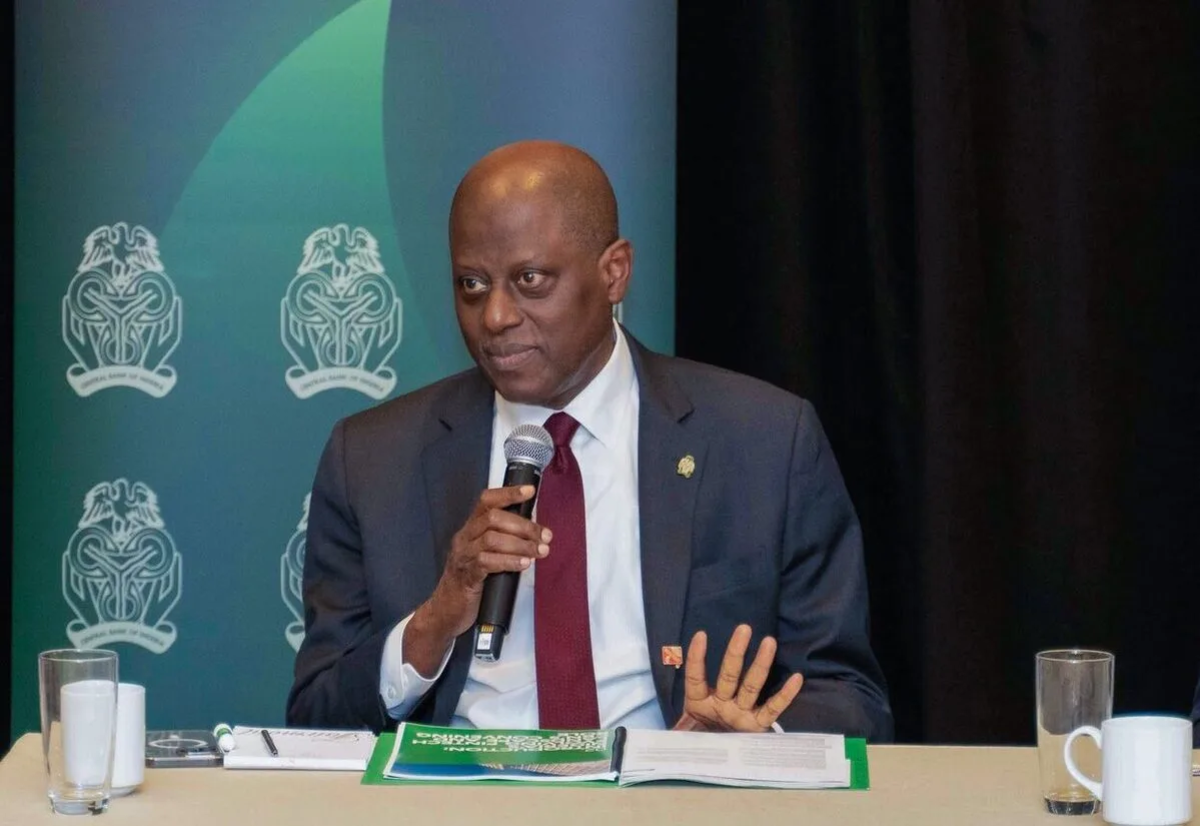
The Governor of the Central Bank of Nigeria, Olayemi Cardoso, has urged commercial banks and development finance institutions to strengthen collaboration to address financing challenges hindering Nigerian businesses from competing in international markets.
Cardoso said inadequate working capital remained a major obstacle to export growth, preventing businesses with confirmed orders from purchasing raw materials, obtaining certification, expanding production and financing shipments.
He spoke on Thursday in Abuja at a stakeholder forum organised by the Nigerian Export-Import Bank, with the theme, ‘Leveraging the AfCFTA for Enhanced Nigerian Export Competitiveness and Economic Diversification’.
The CBN governor was represented at the event by the Deputy Governor in charge of Financial System Stability, Isa Yuguda.
“A Nigerian firm may have a confirmed order but lack the working capital to purchase inputs, obtain certification, expand production, or finance shipment,” Cardoso said.
He added, “The objective should not be for development finance institutions to replace commercial banks, but to crowd them in.”
Cardoso urged NEXIM Bank to leverage its financing, guarantees, insurance and risk-sharing instruments to make viable export transactions bankable and attract increased private sector investment.
He warned that Nigeria’s reliance on a limited range of export commodities left the economy vulnerable to external shocks, emphasising that diversification must drive higher production, create jobs and generate sustainable foreign exchange earnings.
“Our ambition must extend beyond increasing export volumes. Nigeria must increase the value, sophistication, and competitiveness of what it exports,” he said.
Cardoso called for increased investment in manufacturing, agricultural processing, solid minerals, technology, services and the creative economy to strengthen Nigeria’s participation in the African Continental Free Trade Area.
On foreign exchange reforms, he said the CBN remained committed to improving market transparency, liquidity, price discovery and efficiency to help businesses plan cross-border transactions.
Cardoso called for increased investment in manufacturing, agricultural processing, solid minerals, technology, services and the creative economy to strengthen Nigeria’s participation in the African Continental Free Trade Area.
“Exporters are expected to comply with applicable documentation requirements and repatriate export proceeds within prescribed regulatory timelines,” he said.
On foreign exchange reforms, he said the CBN remained committed to improving market transparency, liquidity, price discovery and efficiency to help businesses plan cross-border transactions.